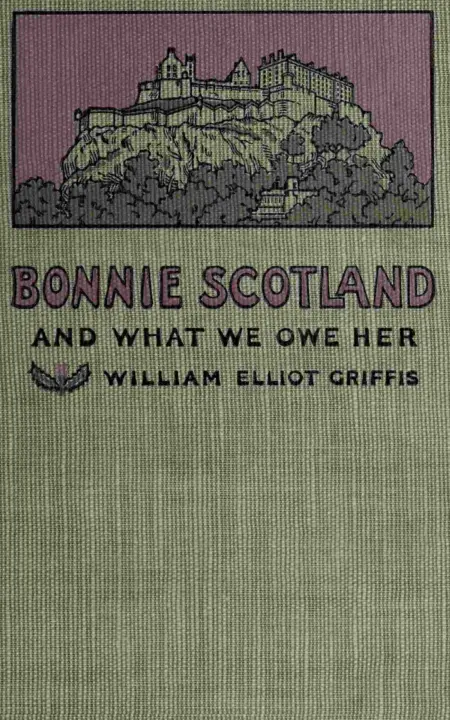
Bonnie Scotland and what we owe her
William Elliot Griffis
THE CLASSIC COLLECTION · 1918
"Dutch Fairy Tales for Young Folks" by William Elliot Griffis is a collection of charming short stories likely written in the late 19th century. The stories draw upon Dutch folklore and feature various magical creatures, such as mermaids, elves, and fairies, while weaving in cultural elements of the Netherlands. Through these tales, Griffis introduces young readers to a fantastical realm filled with moral lessons, whimsical adventures, and enchanting characters. The opening portion of the book presents a series of interconnected tales that introduce readers to a vibrant world of Dutch folklore. It begins with the story of a proud young mermaid living in a magical pool, who enjoys the company of her mermaid friends until a band of humans threatens her home. The young merman, who arrives to warn them, adds a humorous note to the story. Additionally, the narrative smoothly transitions into tales featuring a gluttonous boy named Klaas and the mischievous antics of elves, illustrating themes of desire, community, and the consequences of one’s actions. These engaging narratives set the tone for a delightful collection of fairy tales, emphasizing the imagination and adventures that await in Dutch cultural folklore.
Introduction adapted from the source catalogue; source summaries may be automatically generated.
Free to read · English · 49,338 words · No account needed
MAKE TIME FOR A GOOD BOOK
On by default. Untick to stop anonymous reading totals. Each page counts after 10 seconds in view. How this works.
Anonymous counting is on unless you have switched it off.
When the Van Eyck vrouw and the children saw how happy Daddy was, they each one wanted a pair. Then they asked him what he called them.
"Klompen," said he, in good Dutch, and klompen, or klomps, they are to
this day.
"I'll make a fortune out of this," said Van Eyck. "I'll set up a klomp-winkel (shop for wooden shoes) at once."
So, going out to the blacksmith's shop, in the village, he had the man who pounded iron fashion for him on his anvil, a set of tools, exactly like those used by the kabouter and the elf, which he had seen in his dream. Then he hung out a sign, marked "Wooden blocks for shoes." He made klomps for the little folks just out of the nursery, for boys and girls, for grown men and women, and for all who walked out-of-doors, in the street or on the fields.
Soon klomps came to be the fashion in all the country places. It was good manners, when you went into a house, to take off your wooden shoes and leave them at the door. Even in the towns and cities, ladies wore wooden slippers, especially when walking or working in the garden.
Klomps also set the fashion for soft, warm socks, and stockings made from sheep's wool. Soon, a thousand needles were clicking, to put a soft cushion between one's soles and toes and the wood. Women knitted, even while they walked to market, or gossiped on the streets. The klomp-winkels, or shops of the shoe carpenters, were seen in every village.
When rich beyond his day-dreams, Van Eyck had another joyful night vision. The next day, he wore a smiling countenance. Everybody, who met him on the street, saluted him and asked, in a neighborly way:
"Good-morning, Mynheer Bly-moe-dig (Mr. Cheerful). How do you sail
to-day?"
That's the way the Dutch talk--not "how do you do," but, in their watery country, it is this, "How do you sail?" or else, "Hoe gat het u al?" (How goes it with you, already?)
Then Van Eyck told his dream. It was this: The Moss Maiden and Trintje, the wood elf, came to him again at night and danced. They were lively and happy.
"What now?" asked the dreamer, smilingly, of his two visitors.
He had hardly got the question out of his mouth, when in walked a kabouter, all smutty with blacksmith work. In one hand, he grasped his tool box. In the other, he held a curious looking machine. It was a big lump of iron, set in a frame, with ropes to pull it up and let it fall down with a thump.
Your reading position is saved on this browser. Take it to another device with a library code. Reading pages adapt to text, rather than matching a printed edition.
William Elliot Griffis
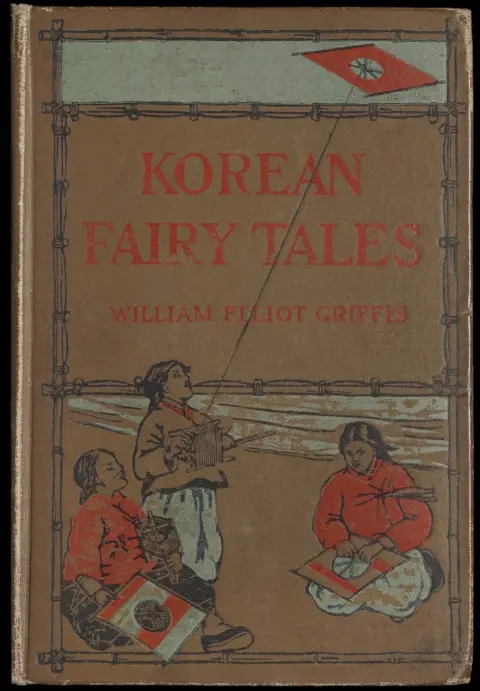
William Elliot Griffis
William Elliot Griffis
William Elliot Griffis
BEHIND THE BOOK
This eBook is for the use of anyone anywhere in the United States and most other parts of the world at no cost and with almost no restrictions whatsoever. You may copy it, give it away or re-use it under the terms of the Project Gutenberg License included with this eBook or online at www.gutenberg.org. If you are not located in the United States, you will have to check the laws of the country where you are located before using this eBook. Read the source licence.
The original source file, including credits and licence, is retained by this library. Request an original-format copy at no charge. Please include the book title and Project Gutenberg identifier #7871.
KEEP YOUR CURIOSITY GOING

Maurice Baring
Francis Greenleaf Allinson & Anne C. E. (Anne Crosby Emery) Allinson

Abby Morton Diaz
Helen Hunt Jackson
Mary Frances Blaisdell
Stuart Dodgson Collingwood