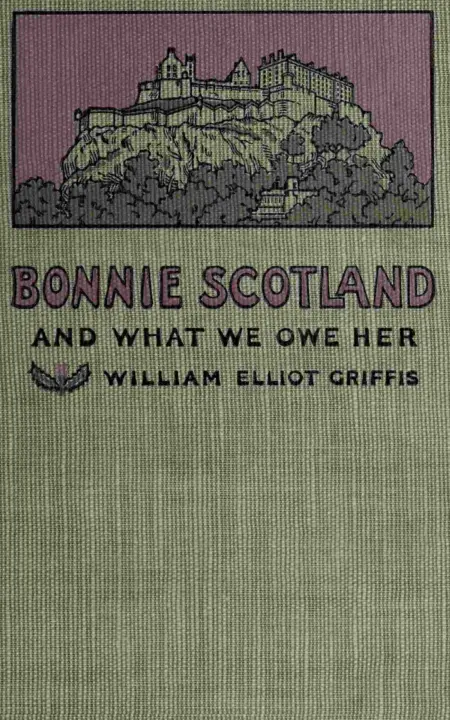
Bonnie Scotland and what we owe her
William Elliot Griffis
THE CLASSIC COLLECTION · 1918
"Dutch Fairy Tales for Young Folks" by William Elliot Griffis is a collection of charming short stories likely written in the late 19th century. The stories draw upon Dutch folklore and feature various magical creatures, such as mermaids, elves, and fairies, while weaving in cultural elements of the Netherlands. Through these tales, Griffis introduces young readers to a fantastical realm filled with moral lessons, whimsical adventures, and enchanting characters. The opening portion of the book presents a series of interconnected tales that introduce readers to a vibrant world of Dutch folklore. It begins with the story of a proud young mermaid living in a magical pool, who enjoys the company of her mermaid friends until a band of humans threatens her home. The young merman, who arrives to warn them, adds a humorous note to the story. Additionally, the narrative smoothly transitions into tales featuring a gluttonous boy named Klaas and the mischievous antics of elves, illustrating themes of desire, community, and the consequences of one’s actions. These engaging narratives set the tone for a delightful collection of fairy tales, emphasizing the imagination and adventures that await in Dutch cultural folklore.
Introduction adapted from the source catalogue; source summaries may be automatically generated.
Free to read · English · 49,338 words · No account needed
MAKE TIME FOR A GOOD BOOK
On by default. Untick to stop anonymous reading totals. Each page counts after 10 seconds in view. How this works.
Anonymous counting is on unless you have switched it off.
The merchant was now very happy. He told the captain to seek out and bring back what he himself might think was the best thing on earth; but to make sure, he must buy a cargo of wheat.
The skipper went on board, hoisted anchor and set sail. Using his man's wits, he also decided that wheat, which makes bread, was the very thing to be desired. In talking to his mates and sailors, they agreed with him. Thus, all the men, in this matter, were of one mind, and the captain dreamed only of jolly times when on shore. On other voyages, when he had hunted around for curiosities to please the wife of the boss, he had many and anxious thoughts; but now, he was care-free.
In Dantzig, all the ship's men had a good time, for the captain made "goed koop" (a fine bargain). Then the vessel, richly loaded with grain, turned its prow homeward. Arriving at Stavoren, the skipper reported to the merchant, to tell him of much money made, of a sound cargo obtained, of safe arrival, and, above all, plenty of what would please his wife; for what on earth could be more valuable than wheat, which makes bread, the staff of life?
At lunch time, when the merchant came home, his wife wanted to know what made him look so joyful. Had he made "goed koop" that day?
Usually, at meal time, this quiet man hardly spoke two words an hour. To tell the truth, he sometimes irritated his wife because of his silence, but to-day he was voluble.
The man of wealth answered, "I have a joyful surprise for you. I cannot tell you now. You must come with me and see."
After lunch, he took his wife on board the ship, giving a wink of his eye to the skipper, who nodded to the sailors, and then the stout fellows opened the hatches. There, loaded to the very deck, was the precious grain. The merchant looked up, expecting to see and hear his wife clap her hands with joy.
But the greedy woman turned her back on him, and flew into a rage.
"Throw it all overboard, into the water," she screamed. "You wretch, you
have deceived me."
The husband tried to calm her and explain that it was his thought to get wheat, as the world's best gift, hoping thus to please her.
At that moment, some hungry beggars standing on the wharf, heard the lady's loud voice, and falling on their knees cried to her:
"Please, madame, give us some of this wheat; we are starving."
Your reading position is saved on this browser. Take it to another device with a library code. Reading pages adapt to text, rather than matching a printed edition.
William Elliot Griffis
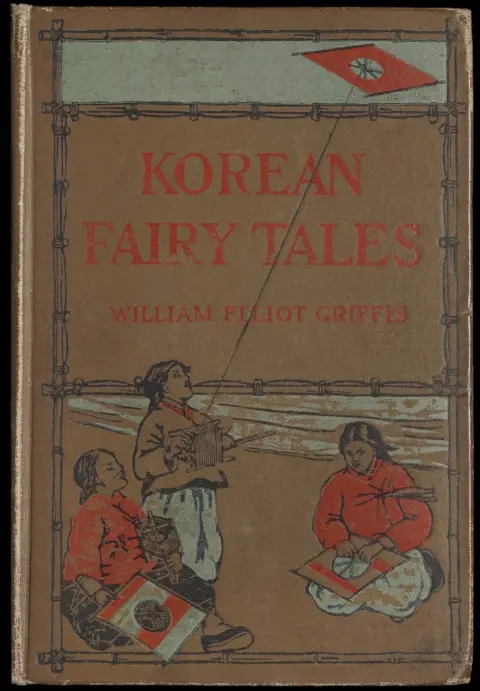
William Elliot Griffis
William Elliot Griffis
William Elliot Griffis
BEHIND THE BOOK
This eBook is for the use of anyone anywhere in the United States and most other parts of the world at no cost and with almost no restrictions whatsoever. You may copy it, give it away or re-use it under the terms of the Project Gutenberg License included with this eBook or online at www.gutenberg.org. If you are not located in the United States, you will have to check the laws of the country where you are located before using this eBook. Read the source licence.
The original source file, including credits and licence, is retained by this library. Request an original-format copy at no charge. Please include the book title and Project Gutenberg identifier #7871.
KEEP YOUR CURIOSITY GOING

Maurice Baring
Francis Greenleaf Allinson & Anne C. E. (Anne Crosby Emery) Allinson

Abby Morton Diaz
Helen Hunt Jackson
Mary Frances Blaisdell
Stuart Dodgson Collingwood