The orchestra and its instruments
Esther Singleton
THE CLASSIC COLLECTION · 1907
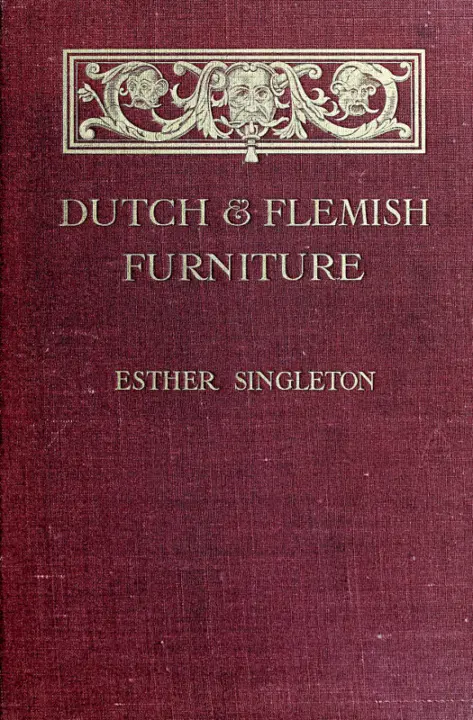
"Dutch and Flemish Furniture" by Esther Singleton is a historical account written in the early 20th century. This work explores the intricate history and craftsmanship of furniture from the Low Countries, focusing on how various artistic styles evolved from the Middle Ages through the Renaissance to the 19th century. The book likely delves into the impact of socio-political developments on furniture design and manufacturing, as well as the cultural exchanges between different European countries. The opening of the text provides background on the artistic and cultural evolution in the Low Countries, emphasizing the significant influence of the English and Flemish artisans on one another throughout history. Singleton highlights the interconnectedness of trade, craftsmanship, and socio-political relationships between England, France, and the Low Countries. This section sets the stage for a detailed exploration of the various furniture styles and artistic movements, indicating that subsequent chapters will draw upon historical events and artistic trends that shaped the distinctive styles found in Dutch and Flemish designs.
Introduction adapted from the source catalogue; source summaries may be automatically generated.
Free to read · English · 90,730 words · No account needed
MAKE TIME FOR A GOOD BOOK
On by default. Untick to stop anonymous reading totals. Each page counts after 10 seconds in view. How this works.
Anonymous counting is on unless you have switched it off.
And happy thrice would England be, If, while they’re living, we could see Our noble ladies but beginning To wear our wool of finest spinning, Or in such silks our workmen make, For which our merchants cloth to take; Which soon would bring them in such fashion As they’d be worn throughout this nation, By all degrees, and sex, and ages, From highest peers to lowest pages; Nor would the meanest trull, or besses, Delight to wear these Indian dresses, Which certainly would profit bring To them, their tenants, and their king.
To show how enormous was the trade with the East Indies at the end of the century, we need only examine the records of sales of the cargoes of three ships at the East India House in 1700. In this we omit all mention of sugar, tea, coffee, bezoar stones, ambergris, drugs of all sorts, sweetmeats, gems, musk, aloes, carpets, rugs, and all kinds of woven silk and cotton goods. The other goods, “besides great quantities unsold of toyes and small goods,” fetched over £200,000, which at the present day might represent three-quarters of a million sterling:
£ China-ware pieces 150,000 Fans 38,557 Lacquer’d sticks for fans 13,470 Lacquer’d trunks, escretors, bowls, cups, dishes, etc. 10,500 Lacquer’d tables inlaid 189 Lacquer’d panels in frames, painted and carved for rooms 47 Lacquer’d boards 178 Lacquer’d brushes 3,099 Lacquer’d tables not inlaid 277 Lacquer’d fans for fire 174 Lacquer’d boards for screens 54 Screens set in frames 71 Paper josses 1,799 Shells painted double gilt 281 Paper painted for fans 377 Images of copper, stone, wood and earth 600 Pictures 669 Brass and iron leaves for lanthorns Brass hinges in chests Embroideries for curtains, valloons and counterpanes
Among the textiles that were imported from the East Indies, Persia and China at the end of the seventeenth century, and used for curtains, upholstery, cushions, etc., were many varieties of wrought silks, “dyed Bengals,” and printed or stained “callicoes,” known under the following names:
Allibanies.
Allejaes.
Ammores.
Addecannees.
Agentbannies.
Atlasses.
Addaties.
Brawles.
Bengalis or Nilas.
China silks.
Chawters.
Cherconnees.
Chucklaes.
Checquered silks.
Carpetts.
Callawaypoose.
Canvas bolts.
Cuttannees.
Cuttannees, Striped.
Cuttannees, Flowered.
Cuttannees, Wrought.
Culgees.
Chints, Serunge.
Chints, Caddy.
Chints, Surrat.
Chints, Brampore.
Chints, Culme.
Chints, Pattanna,
Chints, Gulconda.
Chints, Wrought.
Damasks.
Derribasts.
Damask nankeens.
Elatches.
Elatches, Lingua.
Ginghams coloured.
Gelongs.
Gelongs, printed and painted.
Gelongs, striped.
Gorgoreas.
Gauzes.
Goachon Cherulas.
Guiney stripes.
Girdles.
Herba Taffeties.
Herba Lungees.
Hockings.
Jammawars.
Longes Flowered.
Mahobutt Bannes.
Mocha silks.
Muttrasses.
Nankeen Taffeties.
Nillaes.
Niccannees.
Paunches.
Pelongs.
Putkaes.
Peniascoes.
Phota Lungees.
Pallungpores.
Peniascoes or Penasses.
Pholcarees.
Quilts.
Romalls silk.
Romalls cotton.
Romalls serunge.
Rastaes.
Shalbasts.
Soofeys.
Sattins plain.
Satin nankeens.
Soops.
Seersuckers.
Sacerguntees.
Sooseys.
Shaulbasts.
Silk Lungees.
Taffeties.
Taffety nankeens.
Velvets.
Your reading position is saved on this browser. Take it to another device with a library code. Reading pages adapt to text, rather than matching a printed edition.
Esther Singleton
Esther Singleton
Esther Singleton
Esther Singleton
BEHIND THE BOOK
This eBook is for the use of anyone anywhere in the United States and most other parts of the world at no cost and with almost no restrictions whatsoever. You may copy it, give it away or re-use it under the terms of the Project Gutenberg License included with this eBook or online at www.gutenberg.org. If you are not located in the United States, you will have to check the laws of the country where you are located before using this eBook. Read the source licence.
The original source file, including credits and licence, is retained by this library. Request an original-format copy at no charge. Please include the book title and Project Gutenberg identifier #54552.
KEEP YOUR CURIOSITY GOING
Cécile Tormay

Moritz Busch
John L. Ransom
Frances Wright
Cécile Tormay

Mabel Potter Daggett