The orchestra and its instruments
Esther Singleton
THE CLASSIC COLLECTION · 1907
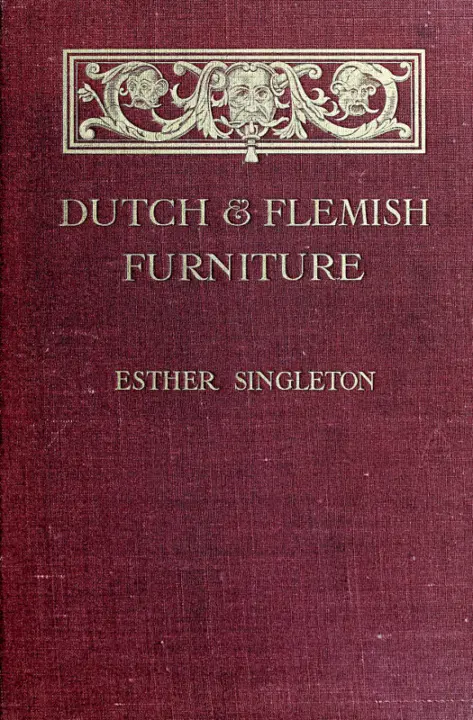
"Dutch and Flemish Furniture" by Esther Singleton is a historical account written in the early 20th century. This work explores the intricate history and craftsmanship of furniture from the Low Countries, focusing on how various artistic styles evolved from the Middle Ages through the Renaissance to the 19th century. The book likely delves into the impact of socio-political developments on furniture design and manufacturing, as well as the cultural exchanges between different European countries. The opening of the text provides background on the artistic and cultural evolution in the Low Countries, emphasizing the significant influence of the English and Flemish artisans on one another throughout history. Singleton highlights the interconnectedness of trade, craftsmanship, and socio-political relationships between England, France, and the Low Countries. This section sets the stage for a detailed exploration of the various furniture styles and artistic movements, indicating that subsequent chapters will draw upon historical events and artistic trends that shaped the distinctive styles found in Dutch and Flemish designs.
Introduction adapted from the source catalogue; source summaries may be automatically generated.
Free to read · English · 90,730 words · No account needed
MAKE TIME FOR A GOOD BOOK
On by default. Untick to stop anonymous reading totals. Each page counts after 10 seconds in view. How this works.
Anonymous counting is on unless you have switched it off.
“Also for Johanna, the biggest and finest Turkey-work carpet, a set of white flowered muslin curtains, a chintz flowered carpet, an East India cabinet with ebony foot wrought, the picture of Mrs. van Varick, the picture of Johanna, three china pots, one feather bed, one bolster, two cushions, one quilt, one white calico blanket.
“Also for Marinus, a Turkey-work carpet, a gold bell and chain, a blue satin flowered carpet, a calico ditto, a silver-headed cane, a Moorish tobacco-pipe, a calico nightgown, a hair brush, a red box, two East India cabinets with brass handles, a feather bed, bolster, quilt, two cushions and green blanket, a picture of J. Abramson, and a ‘large picture of images, sheep and ships that hung above the chimney.’
“Also for Rudolphus, a small ebony trunk with silver handles, a picture with a gilt frame, a cane with a silver head, a flowered carpet stitched with gold, a calico carpet, and a large picture of himself.
“Also for Cornelia, the second finest Turkey-work carpet, two pictures with glasses before them, a calico nightgown, a hair brush, a chintz flowered carpet, a small black cabinet with silver hinges, the picture of Cornelia Hester deceased, the picture of a flower pot, a china cup bound with silver, a large looking-glass with ebony frame, two white china cups with covers, a feather bed covered with checkered linen, a bolster, three wadding cushions, two feather ditto, one quilt and a homespun blanket.
“Also for Johanna and Cornelia, two glaasen cases with 39 pieces of
small china-ware, 11 Indian babyes, and 6 small and 6 larger china
dishes.
“Also for Marinus and Rudolphus, 23 pieces of china-ware.
“Also to be divided equally among them, 37 Dutch books 4º; and 46 ditto 8^{vo}; and 4 ditto folio; a chest with children’s babyes playthings and toys; and 13 ebony chairs.”
Mrs. van Varick’s home in New Amsterdam did not suffer in comparison with the rich Dutch houses in Holland. Her clothes, jewels and bequests to her children prove that her life was one of ease, luxury and fashion. Her house was not only furnished with every comfort known to the period, but was filled with curios, treasures from the Far East, rich furniture, and a fine collection of china and paintings. Her furniture included fine and richly upholstered bedsteads, tables, chairs, cabinets, glass cupboards for china, great Kasten, a handsome “painted wooden rack to set china-ware in,” six looking-glasses, and ten Indian looking-glasses, “two East India cane baskets with covers, one fine East India dressing-basket, one round ditto, two wooden gilt East India trays, lackered, and one round thing ditto.” Five brass hanging candlesticks and handle candlesticks, a double brass ditto, snuffers and extinguisher, a pair of brass standing candlesticks, and a standing candlestick with two brass candlesticks to it, prove that the house did not suffer for want of illumination. It was also bright with rich curtains and cushions. Among these were six satin cushions with gold flowers, a suit of serge bed-curtains and valance with silk fringe, six scarlet serge bed-curtains with valance and silk fringe, a green serge chimney cloth with fringe, two chimney cloths of flowered crimson gauge and six window curtains of the same, a painted chimney cloth, a calico curtain, a fine chintz carpet, many handsome Turkey-work carpets and white flowered muslin curtains. She had fourteen East India pictures, some with gilt and some with black frames, and twelve prints also in black and gilt frames, two maps with black frames, and about twenty well chosen paintings. Some of the subjects of these clearly show that they were in the style of Jan Steen, Dou, etc. In addition to landscapes, battles and fruit-pieces, the inventory notes “two pictures of ships with black ebony frames,” “one picture of the Apostle,” “one large flower pot,” “one with a rummer,” “one birdcage and purse, etc.,” “a large horse battle,” and “a large picture of roots.”
Your reading position is saved on this browser. Take it to another device with a library code. Reading pages adapt to text, rather than matching a printed edition.
Esther Singleton
Esther Singleton
Esther Singleton
Esther Singleton
BEHIND THE BOOK
This eBook is for the use of anyone anywhere in the United States and most other parts of the world at no cost and with almost no restrictions whatsoever. You may copy it, give it away or re-use it under the terms of the Project Gutenberg License included with this eBook or online at www.gutenberg.org. If you are not located in the United States, you will have to check the laws of the country where you are located before using this eBook. Read the source licence.
The original source file, including credits and licence, is retained by this library. Request an original-format copy at no charge. Please include the book title and Project Gutenberg identifier #54552.
KEEP YOUR CURIOSITY GOING
Cécile Tormay

Moritz Busch
John L. Ransom
Frances Wright
Cécile Tormay

Mabel Potter Daggett