THE CLASSIC COLLECTION✦An outlaw’s diary: the CommuneCLASSIC FREE BOOKS
An outlaw’s diary: the Commune
Cécile Tormay
THE CLASSIC COLLECTION · 1907
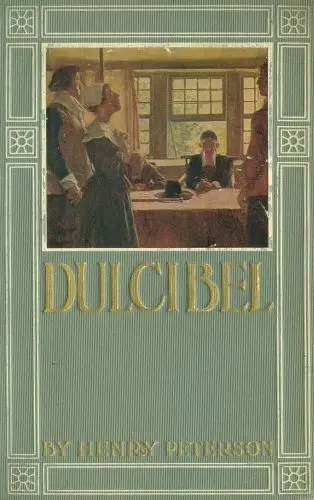
"Dulcibel: A Tale of Old Salem" by Henry Peterson is a historical novel written in the early 20th century. Set during the infamous Salem witch trials, it focuses on the life of Dulcibel Burton, an orphaned heiress navigating the dangerous social landscape of Salem village amidst accusations of witchcraft and local rivalries. The story seems to delve into themes of love, jealousy, and the fervor of the Puritan community, with Dulcibel caught in a web of emotional and societal conflict. The opening portion introduces readers to the historical backdrop of Salem village and its tumultuous atmosphere fueled by disputes and witchcraft hysteria. We meet Jethro Sands, who grapples with his feelings for Dulcibel, while she faces growing complications in her relationships, particularly with Jethro and his rival, Leah Herrick. As tensions rise, the text hints at the burgeoning witchcraft accusations that will soon envelop the village, showcasing the characters’ interpersonal dynamics against this rapidly unfolding historical drama. This initial glimpse establishes the tone and introduces key players in a narrative that interweaves romance with the treacherous nature of societal fears.
Introduction adapted from the source catalogue; source summaries may be automatically generated.
Free to read · English · 77,749 words · No account needed
MAKE TIME FOR A GOOD BOOK
On by default. Untick to stop anonymous reading totals. Each page counts after 10 seconds in view. How this works.
Anonymous counting is on unless you have switched it off.
"I do not torment them."
"Who then does torment them?"
"It may be that Sarah Osburn does, for I do not."
"Her answers," says the official report, "were very quick, sharp and
malignant."
It must be remembered in reading these reports, that the accused were not allowed any counsel, either at the preliminary examinations, or on the trials; that the apparent sufferings of the children were very great, producing almost a frenzied state of feeling in the crowd who looked on; and that they themselves were often as much puzzled as their accusers, to account for what was taking place before their eyes.
In the examination of Sarah Osburn, we have similar questions and similar answers. In addition, however, three witnesses alleged that she had said that very morning, that she was "more like to be bewitched herself." Mr. Hathorne asked why she said that. She answered that either she saw at one time, or dreamed that she saw, a thing like an Indian, all black, which did pinch her in the neck, and pulled her by the back part of the head to the door of the house. And there was also a lying spirit.
"What lying spirit was this?"
"It was a voice that I thought I heard."
"What did it say to you?"
"That I should go no more to meeting; but I said I would, and did go the
next Sabbath day."
"Were you ever tempted further?"
"No."
"Why did you yield then to the Devil, not to go to meeting for the last
three years?"
"Alas! I have been sick all that time, and not able to go."
Then Tituba was brought in. Tituba was in the "circle" or an attendant and inspirer of the "circle" from the first; and had marvelous things to tell. How it was that the "children" turned against her and accused her, I do not know; but probably she had practised so much upon them in various ways, that she really was guilty of trying to do the things she was charged with.
"Tituba, why do you hurt these children?"
"Tituba does not hurt 'em."
"Who does hurt them then?"
"The debbil, for all I knows.'
"Did you ever see the Devil?" Tituba gave a low laugh. "Of course I've seen the debbil. The debbil came an' said, 'Serb me, Tituba.' But I would not hurt the child'en."
"Who else have you seen?"
"Four women. Goody Osburn and Sarah Good, and two other women. Dey all
hurt de child'en."
"How does the Devil appear to you?"
"Sometimes he is like a dog, and sometimes like a hog. The black dog always goes with a yellow bird."
Your reading position is saved on this browser. Take it to another device with a library code. Reading pages adapt to text, rather than matching a printed edition.
BEHIND THE BOOK
This eBook is for the use of anyone anywhere in the United States and most other parts of the world at no cost and with almost no restrictions whatsoever. You may copy it, give it away or re-use it under the terms of the Project Gutenberg License included with this eBook or online at www.gutenberg.org. If you are not located in the United States, you will have to check the laws of the country where you are located before using this eBook. Read the source licence.
The original source file, including credits and licence, is retained by this library. Request an original-format copy at no charge. Please include the book title and Project Gutenberg identifier #20569.
KEEP YOUR CURIOSITY GOING
Cécile Tormay

Moritz Busch
Coulson Kernahan
John L. Ransom

Maurice Baring
Frances Wright