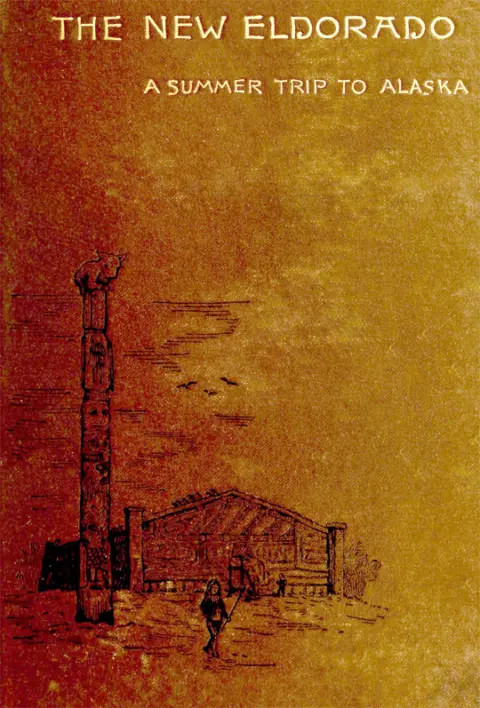
The New Eldorado: A Summer Journey to Alaska
Maturin M. (Maturin Murray) Ballou
THE CLASSIC COLLECTION · 1885
"Due South; or, Cuba Past and Present" by Maturin M. Ballou is a historical account written in the late 19th century. The narrative centers around the author's observations during a voyage to the tropical regions, particularly focusing on Cuba, its people, culture, and political climate, while also highlighting the beauty of its landscape and flora. Ballou aims to present a comprehensive view of Cuba, intertwining his personal experiences with broader historical and social commentary. At the start of the book, the author recounts his departure from Boston amidst a snowstorm and his journey to Nassau, where he contrasts the cold northern climate with the tropical warmth he anticipates. He describes the enchanting beauty of the Bahama Islands, noting the diverse flora and fauna, and paints a vivid picture of the local atmosphere filled with colorful characters. Ballou reflects on the socioeconomic condition of the islands, mentioning the remnants of a once-thriving community, the influence of piracy, and the challenges the local population faces amidst political turmoil. This opening portion effectively sets the stage for a deeper exploration of Cuba, blending personal narrative with rich descriptions and social critique.
Introduction adapted from the source catalogue; source summaries may be automatically generated.
Free to read · English · 92,066 words · No account needed
MAKE TIME FOR A GOOD BOOK
On by default. Untick to stop anonymous reading totals. Each page counts after 10 seconds in view. How this works.
Anonymous counting is on unless you have switched it off.
Though the modern machinery, as lately adopted on the plantations, is very expensive, still the result achieved by it is so much superior to that of the old methods of manufacture that the small planters are being driven from the market. Slave labor cannot compete with machinery. The low price of sugar renders economy imperative in all branches of the business, in order to leave a margin for profit. A planter informed the author that he should spread all of his molasses upon the cane-fields this year as a fertilizer, rather than send it to a distant market and receive only what it cost. He further said that thousands of acres of sugar-cane would be allowed to rot in the fields this season, as it would cost more to cut, grind, pack, and send it to market than could be realized for the manufactured article. Had the price of sugar remained this year at a figure which would afford the planters a fair profit, it might have been the means of tiding over the chasm of bankruptcy which has long stared them in the face, and upon the brink of which they now stand. But with a more than average crop, both as to quantity and quality, whether to gather it or not is a problem. Under these circumstances it is difficult to say what is to become, financially, of the people of Cuba. Sugar is their great staple, but all business has been equally depressed upon the island, under the bane of civil wars, extortionate taxation, and oppressive rule.
If you visit Cienfuegos you will take rooms at the Hotel Union, as being the least objectionable of the two public houses which the city contains, and there you will make the acquaintance of Jane, who is an institution in herself. Indeed, she will doubtless board your ship when it first arrives, so as to enlighten you concerning the excellences of the Union over its rival establishment, which will also be sure to be represented. Jane is interpreter and general factotum of that delectable posada, the Union, and being the only one in the house who speaks either French or English, she becomes an important factor in your calculations. Jane's nationality is a pleasing mystery, but she may be classed as a Portuguese quadroon. Venus did not preside at her birth, but, by means of the puff-ball and egg-shell powder, she strives to harmonize her mottled features. Being interpreter, waitress, hotel-runner, and chambermaid, she is no idler, and fully earns the quarter eagle you naturally hand her at leave-taking. In visiting the neighboring sugar plantation Jane acts as your guide, on which occasion her independence will be sure to challenge admiration. She salutes slave or master with equal familiarity, conducts you through each process of the elaborate works, from the engine to the crushing mill, and so on, until you reach the centrifugal machine, where the glistening crystals of pure sugar fall into an open receptacle ready for packing and shipment. She takes you into the slave-quarters among the pickaninnies, hens, pigs, and pigeons, looking on blandly and chewing huge pieces of cane while you distribute the bright ten cent pieces with which you filled your pocket at starting. If Jane slyly pinches a papoose and causes it to yell, it is only for fun; she means no harm, though the dusky mite gets smartly slapped by its mother for misbehaving. The cabin floor of bare earth is sure to be covered with these little naked, sprawling objects, like ants. On the way back to town Jane orders the postilion to drive into the private grounds of a palatial Cuban residence, where she boldly announces herself and party to the proprietor in good rolling Spanish. It is the home of Señor N----, a wealthy merchant of the city. We are received as though we belonged to the royal family. The hospitable owner speaks English fluently, and answers our thousand and one questions with tireless courtesy, takes us into his superb fruit garden (of which more anon), then introduces us to his domestic quarters, where everything appears refined, faultlessly neat, and tasteful. If you go to the railroad station, as usual the evening before departure, in order to secure tickets and get your baggage labeled,--for the cars start in the morning before daylight,--Jane will accompany you, riding by your side in the victoria. Excuse her if she orders the calash thrown back, as she appears bonnetless in a loud, theatrical costume, trimmed with red and yellow, and carrying a bouquet in her freckled hands. It is her opportunity, and she looks triumphantly at the street loungers in passing. If you are charged on your bill a Delmonico price for a mythical lunch to be taken with you on the journey to Matanzas, and which Jane has forgotten to put up, pay without wrangling; it saves time and temper.
Your reading position is saved on this browser. Take it to another device with a library code. Reading pages adapt to text, rather than matching a printed edition.
Maturin M. (Maturin Murray) Ballou
Maturin M. (Maturin Murray) Ballou
Maturin M. (Maturin Murray) Ballou
Maturin M. (Maturin Murray) Ballou
BEHIND THE BOOK
This eBook is for the use of anyone anywhere in the United States and most other parts of the world at no cost and with almost no restrictions whatsoever. You may copy it, give it away or re-use it under the terms of the Project Gutenberg License included with this eBook or online at www.gutenberg.org. If you are not located in the United States, you will have to check the laws of the country where you are located before using this eBook. Read the source licence.
The original source file, including credits and licence, is retained by this library. Request an original-format copy at no charge. Please include the book title and Project Gutenberg identifier #30130.
KEEP YOUR CURIOSITY GOING
Wilfrid Scawen Blunt
Wilfrid Scawen Blunt

E. W. (Edgar Watson) Howe
Cécile Tormay

Moritz Busch
John L. Ransom