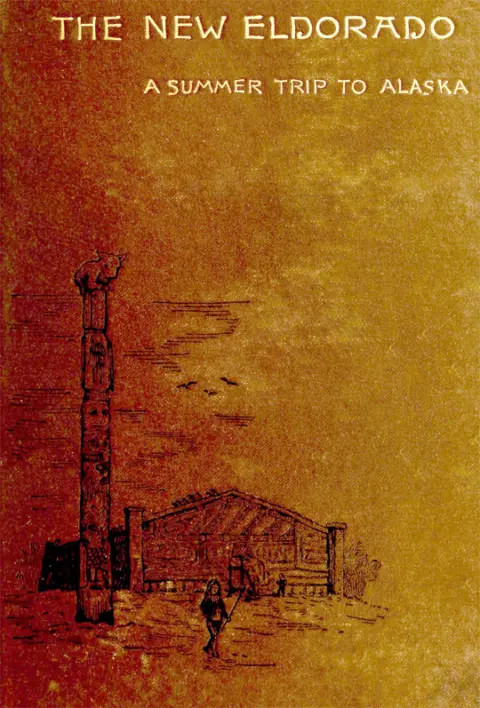
The New Eldorado: A Summer Journey to Alaska
Maturin M. (Maturin Murray) Ballou
THE CLASSIC COLLECTION · 1885
"Due South; or, Cuba Past and Present" by Maturin M. Ballou is a historical account written in the late 19th century. The narrative centers around the author's observations during a voyage to the tropical regions, particularly focusing on Cuba, its people, culture, and political climate, while also highlighting the beauty of its landscape and flora. Ballou aims to present a comprehensive view of Cuba, intertwining his personal experiences with broader historical and social commentary. At the start of the book, the author recounts his departure from Boston amidst a snowstorm and his journey to Nassau, where he contrasts the cold northern climate with the tropical warmth he anticipates. He describes the enchanting beauty of the Bahama Islands, noting the diverse flora and fauna, and paints a vivid picture of the local atmosphere filled with colorful characters. Ballou reflects on the socioeconomic condition of the islands, mentioning the remnants of a once-thriving community, the influence of piracy, and the challenges the local population faces amidst political turmoil. This opening portion effectively sets the stage for a deeper exploration of Cuba, blending personal narrative with rich descriptions and social critique.
Introduction adapted from the source catalogue; source summaries may be automatically generated.
Free to read · English · 92,066 words · No account needed
MAKE TIME FOR A GOOD BOOK
On by default. Untick to stop anonymous reading totals. Each page counts after 10 seconds in view. How this works.
Anonymous counting is on unless you have switched it off.
Old Havana is certainly eclipsed by the really fine broad streets and the palatial buildings which have sprung up outside of her ancient limits. In point of picturesqueness the old town has precedence. Near where the Indian Paseo and the Plaza de Isabella II. join each other, a portion of the old wall which once surrounded the city is still to be seen, with its crumbling bastions and ivy-grown débris. Sufficient is left to show that the wall was a remarkably substantial one and an efficient defense against the modes of attack prevalent when it was built. The Indian Paseo commences opposite the Campo de Marte, and is so called from the large marble fountain dedicated to that aboriginal idea. This elaborate structure was executed in Italy at large expense. Its principal figure is an Indian maiden, allegorical of Havana, supporting a shield bearing the arms of the city. These paseos are admirably ornamented on either side by a continuous line of laurel trees whose thick foliage gives admirable shade. On either side of the long central promenade the well-paved streets are broad and handsome, being ornamented with high buildings of a domestic and public character and of good architectural effect. The Matanzas & Havana Railroad depot is situated just opposite one end of the Campo de Marte, its freight yard extending also along the Paseo for an entire block, detracing much from the fine effect of the broad street. The trains and noisy engines being thus brought into the midst of the dwellings and business centre of the city render it very objectionable. The guests of the Telegrafo Hotel can bear testimony as to the nuisance thus created, being awakened at all sorts of unreasonable hours by the engine bell and steam whistle.
The Botanical Garden is situated about a mile from the city proper, adjoining which are the attractive grounds of the Governor General's country-house. Both are open to the public and richly repay a visit. The Governor's grounds are shaded by a great variety of tropical trees and flowers. Here was seen what is called the water rose, pink in color and nearly double the size of our pond lily, recalling the Egyptian lotus, to which family it would seem it must belong. Altogether, the place is a wilderness of blossoms, composed of exotic and native flowers. There is also an interesting aviary to be seen here, and a small artificial lake is covered with curious web-footed birds and brilliant-feathered ducks. The gardens seem to be neglected, but they are very lovely in their native luxuriance. Dead wood and decaying leaves are always a concomitant of such gardens in the low latitudes. If the roses and heliotropes are in full bloom, some other flowering shrub alongside is taking its rest and looks rusty, so that the whole garden is never in a glow of beauty at one time, as is the case with us in June. The noble alley of palms, the great variety of trees, blossoms, and shrubs, the music of the fountains, and the tropical flavor permeating everything were all in the harmony of languid beauty. The coral tree, that lovely freak of vegetation, was in bloom, its small but graceful stem, seven or eight feet in height, being topped above the gracefully pendent leaves with a bit of vegetable coral of deepest red, and in the form of the sea growth from which it takes its name. The star cactus was in full flower, the scarlet buds starting out from the flat surface of the thick leaves after a queer and original fashion. The bread-fruit tree, with its large, melon-like product, hung heavy with the nourishing esculent. The Carolina tree, with gorgeous blossoms like military pompons, blazed here and there, overshadowing the large, pure white, and beautiful campanile, with hanging flowers, like metallic bells, after which the plant is named. Here too was a great variety of the scarlet hibiscus and the garland of night (galan de noche), which grows like a young palm to eight or nine feet, throwing out from the centre-of its drooping foliage a cluster of brown blossoms tipped with white, shaped like a mammoth bunch of grapes. It blooms at night and is fragrant only by moon and starlight. Cuba presents an inexhaustible field for the botanist, and in its wilder portions recalls the island of Ceylon in the Indian Ocean. As Ceylon is called the pearl of India so is Cuba the pearl of the Antilles.
Your reading position is saved on this browser. Take it to another device with a library code. Reading pages adapt to text, rather than matching a printed edition.
Maturin M. (Maturin Murray) Ballou
Maturin M. (Maturin Murray) Ballou
Maturin M. (Maturin Murray) Ballou
Maturin M. (Maturin Murray) Ballou
BEHIND THE BOOK
This eBook is for the use of anyone anywhere in the United States and most other parts of the world at no cost and with almost no restrictions whatsoever. You may copy it, give it away or re-use it under the terms of the Project Gutenberg License included with this eBook or online at www.gutenberg.org. If you are not located in the United States, you will have to check the laws of the country where you are located before using this eBook. Read the source licence.
The original source file, including credits and licence, is retained by this library. Request an original-format copy at no charge. Please include the book title and Project Gutenberg identifier #30130.
KEEP YOUR CURIOSITY GOING
Wilfrid Scawen Blunt
Wilfrid Scawen Blunt

E. W. (Edgar Watson) Howe
Cécile Tormay

Moritz Busch
John L. Ransom