THE CLASSIC COLLECTION✦Exiles: A Play in Three ActsCLASSIC FREE BOOKS
Exiles: A Play in Three Acts
James Joyce
THE CLASSIC COLLECTION · 1914
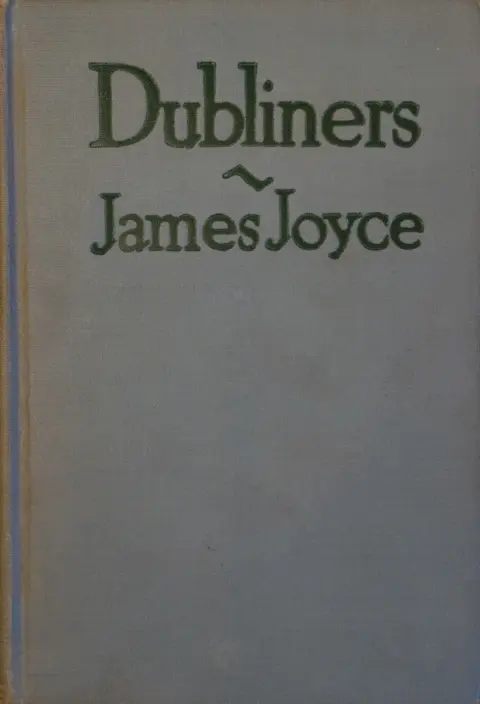
"Dubliners" by James Joyce is a collection of fifteen short stories written from 1904 to 1907 and published in 1914. Set in early twentieth-century Dublin, these stories portray Irish middle-class life through a lens of paralysis and disillusionment. Joyce holds up a mirror to his countrymen, exploring themes of nationalism, Catholicism, and British rule. The collection progresses chronologically from childhood through public life, with characters experiencing moments of sudden self-understanding. Each story captures lives marked by stagnation, failed dreams, and the struggle for spiritual liberation in a city caught at history's crossroads.
Introduction adapted from the source catalogue; source summaries may be automatically generated.
Free to read · English · 68,856 words · No account needed
MAKE TIME FOR A GOOD BOOK
On by default. Untick to stop anonymous reading totals. Each page counts after 10 seconds in view. How this works.
Anonymous counting is on unless you have switched it off.
“He told me: ‘What do you think of a Lord Mayor of Dublin sending out for a pound of chops for his dinner? How’s that for high living?’ says he. ‘Wisha! wisha,’ says I. ‘A pound of chops,’ says he, ‘coming into the Mansion House.’ ‘Wisha!’ says I, ‘what kind of people is going at all now?’”
At this point there was a knock at the door, and a boy put in his head.
“What is it?” said the old man.
“From the Black Eagle,” said the boy, walking in sideways and depositing a basket on the floor with a noise of shaken bottles.
The old man helped the boy to transfer the bottles from the basket to the table and counted the full tally. After the transfer the boy put his basket on his arm and asked:
“Any bottles?”
“What bottles?” said the old man.
“Won’t you let us drink them first?” said Mr Henchy.
“I was told to ask for the bottles.”
“Come back tomorrow,” said the old man.
“Here, boy!” said Mr Henchy, “will you run over to O’Farrell’s and ask him to lend us a corkscrew—for Mr Henchy, say. Tell him we won’t keep it a minute. Leave the basket there.”
The boy went out and Mr Henchy began to rub his hands cheerfully,
saying:
“Ah, well, he’s not so bad after all. He’s as good as his word,
anyhow.”
“There’s no tumblers,” said the old man.
“O, don’t let that trouble you, Jack,” said Mr Henchy. “Many’s the good man before now drank out of the bottle.”
“Anyway, it’s better than nothing,” said Mr O’Connor.
“He’s not a bad sort,” said Mr Henchy, “only Fanning has such a loan of him. He means well, you know, in his own tinpot way.”
The boy came back with the corkscrew. The old man opened three bottles and was handing back the corkscrew when Mr Henchy said to the boy:
“Would you like a drink, boy?”
“If you please, sir,” said the boy.
The old man opened another bottle grudgingly, and handed it to the boy.
“What age are you?” he asked.
“Seventeen,” said the boy.
As the old man said nothing further, the boy took the bottle and said: “Here’s my best respects, sir,” to Mr Henchy, drank the contents, put the bottle back on the table and wiped his mouth with his sleeve. Then he took up the corkscrew and went out of the door sideways, muttering some form of salutation.
“That’s the way it begins,” said the old man.
“The thin edge of the wedge,” said Mr Henchy.
Your reading position is saved on this browser. Take it to another device with a library code. Reading pages adapt to text, rather than matching a printed edition.
BEHIND THE BOOK
This eBook is for the use of anyone anywhere in the United States and most other parts of the world at no cost and with almost no restrictions whatsoever. You may copy it, give it away or re-use it under the terms of the Project Gutenberg License included with this eBook or online at www.gutenberg.org. If you are not located in the United States, you will have to check the laws of the country where you are located before using this eBook. Read the source licence.
The original source file, including credits and licence, is retained by this library. Request an original-format copy at no charge. Please include the book title and Project Gutenberg identifier #2814.
KEEP YOUR CURIOSITY GOING
Coulson Kernahan

Maurice Baring
Frances Wright
Cécile Tormay

Frederic Jesup Stimson

W. H. P. (William Henry Pope) Jarvis