THE CLASSIC COLLECTION✦Exiles: A Play in Three ActsCLASSIC FREE BOOKS
Exiles: A Play in Three Acts
James Joyce
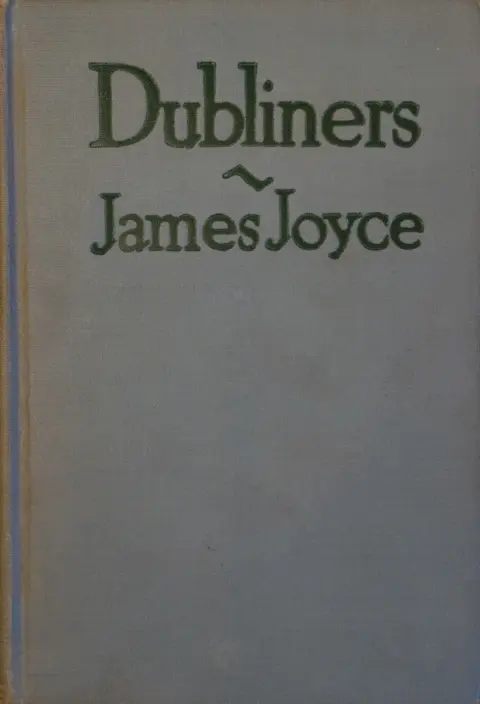
THE CLASSIC COLLECTION · 1914
"Dubliners" by James Joyce is a collection of fifteen short stories written from 1904 to 1907 and published in 1914. Set in early twentieth-century Dublin, these stories portray Irish middle-class life through a lens of paralysis and disillusionment. Joyce holds up a mirror to his countrymen, exploring themes of nationalism, Catholicism, and British rule. The collection progresses chronologically from childhood through public life, with characters experiencing moments of sudden self-understanding. Each story captures lives marked by stagnation, failed dreams, and the struggle for spiritual liberation in a city caught at history's crossroads.
Introduction adapted from the source catalogue; source summaries may be automatically generated.
Free to read · English · 68,856 words · No account needed
MAKE TIME FOR A GOOD BOOK
On by default. Untick to stop anonymous reading totals. Each page counts after 10 seconds in view. How this works.
Anonymous counting is on unless you have switched it off.
When their turn to cross had come he was still perplexed and inattentive. Miss Ivors promptly took his hand in a warm grasp and said in a soft friendly tone:
“Of course, I was only joking. Come, we cross now.”
When they were together again she spoke of the University question and Gabriel felt more at ease. A friend of hers had shown her his review of Browning’s poems. That was how she had found out the secret: but she liked the review immensely. Then she said suddenly:
“O, Mr Conroy, will you come for an excursion to the Aran Isles this summer? We’re going to stay there a whole month. It will be splendid out in the Atlantic. You ought to come. Mr Clancy is coming, and Mr Kilkelly and Kathleen Kearney. It would be splendid for Gretta too if she’d come. She’s from Connacht, isn’t she?”
“Her people are,” said Gabriel shortly.
“But you will come, won’t you?” said Miss Ivors, laying her warm hand
eagerly on his arm.
“The fact is,” said Gabriel, “I have just arranged to go——”
“Go where?” asked Miss Ivors.
“Well, you know, every year I go for a cycling tour with some fellows
and so——”
“But where?” asked Miss Ivors.
“Well, we usually go to France or Belgium or perhaps Germany,” said
Gabriel awkwardly.
“And why do you go to France and Belgium,” said Miss Ivors, “instead of visiting your own land?”
“Well,” said Gabriel, “it’s partly to keep in touch with the languages and partly for a change.”
“And haven’t you your own language to keep in touch with—Irish?” asked
Miss Ivors.
“Well,” said Gabriel, “if it comes to that, you know, Irish is not my
language.”
Their neighbours had turned to listen to the cross-examination. Gabriel glanced right and left nervously and tried to keep his good humour under the ordeal which was making a blush invade his forehead.
“And haven’t you your own land to visit,” continued Miss Ivors, “that you know nothing of, your own people, and your own country?”
“O, to tell you the truth,” retorted Gabriel suddenly, “I’m sick of my own country, sick of it!”
“Why?” asked Miss Ivors.
Gabriel did not answer for his retort had heated him.
“Why?” repeated Miss Ivors.
They had to go visiting together and, as he had not answered her, Miss
Ivors said warmly:
“Of course, you’ve no answer.”
Your reading position is saved on this browser. Take it to another device with a library code. Reading pages adapt to text, rather than matching a printed edition.
BEHIND THE BOOK
This eBook is for the use of anyone anywhere in the United States and most other parts of the world at no cost and with almost no restrictions whatsoever. You may copy it, give it away or re-use it under the terms of the Project Gutenberg License included with this eBook or online at www.gutenberg.org. If you are not located in the United States, you will have to check the laws of the country where you are located before using this eBook. Read the source licence.
The original source file, including credits and licence, is retained by this library. Request an original-format copy at no charge. Please include the book title and Project Gutenberg identifier #2814.
KEEP YOUR CURIOSITY GOING
Coulson Kernahan

Maurice Baring
Frances Wright
Cécile Tormay

Frederic Jesup Stimson

W. H. P. (William Henry Pope) Jarvis