THE CLASSIC COLLECTION✦Exiles: A Play in Three ActsCLASSIC FREE BOOKS
Exiles: A Play in Three Acts
James Joyce
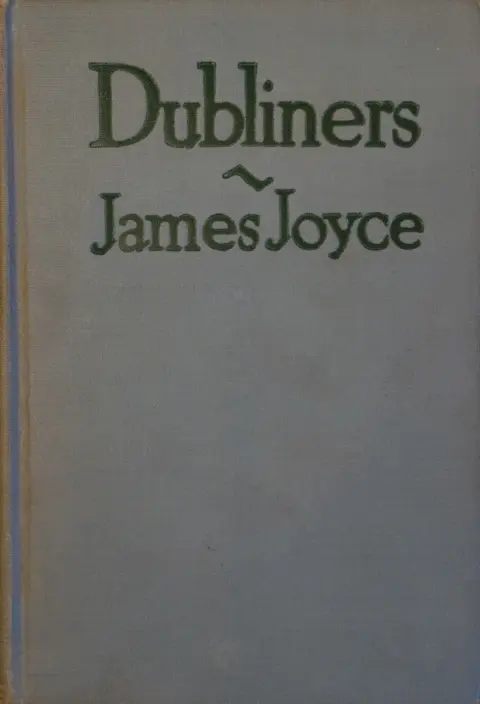
THE CLASSIC COLLECTION · 1914
"Dubliners" by James Joyce is a collection of fifteen short stories written from 1904 to 1907 and published in 1914. Set in early twentieth-century Dublin, these stories portray Irish middle-class life through a lens of paralysis and disillusionment. Joyce holds up a mirror to his countrymen, exploring themes of nationalism, Catholicism, and British rule. The collection progresses chronologically from childhood through public life, with characters experiencing moments of sudden self-understanding. Each story captures lives marked by stagnation, failed dreams, and the struggle for spiritual liberation in a city caught at history's crossroads.
Introduction adapted from the source catalogue; source summaries may be automatically generated.
Free to read · English · 68,856 words · No account needed
MAKE TIME FOR A GOOD BOOK
On by default. Untick to stop anonymous reading totals. Each page counts after 10 seconds in view. How this works.
Anonymous counting is on unless you have switched it off.
“There was many a good man went to the penny-a-week school with a sod of turf under his oxter,” said Mr Kernan sententiously. “The old system was the best: plain honest education. None of your modern trumpery....”
“Quite right,” said Mr Power.
“No superfluities,” said Mr Fogarty.
He enunciated the word and then drank gravely.
“I remember reading,” said Mr Cunningham, “that one of Pope Leo’s poems was on the invention of the photograph—in Latin, of course.”
“On the photograph!” exclaimed Mr Kernan.
“Yes,” said Mr Cunningham.
He also drank from his glass.
“Well, you know,” said Mr M’Coy, “isn’t the photograph wonderful when you come to think of it?”
“O, of course,” said Mr Power, “great minds can see things.”
“As the poet says: Great minds are very near to madness,” said Mr
Fogarty.
Mr Kernan seemed to be troubled in mind. He made an effort to recall the Protestant theology on some thorny points and in the end addressed Mr Cunningham.
“Tell me, Martin,” he said. “Weren’t some of the popes—of course, not our present man, or his predecessor, but some of the old popes—not exactly ... you know ... up to the knocker?”
There was a silence. Mr Cunningham said:
“O, of course, there were some bad lots.... But the astonishing thing is this. Not one of them, not the biggest drunkard, not the most ... out-and-out ruffian, not one of them ever preached ex cathedra a word of false doctrine. Now isn’t that an astonishing thing?”
“That is,” said Mr Kernan.
“Yes, because when the Pope speaks ex cathedra,” Mr Fogarty explained, “he is infallible.”
“Yes,” said Mr Cunningham.
“O, I know about the infallibility of the Pope. I remember I was younger then.... Or was it that——?”
Mr Fogarty interrupted. He took up the bottle and helped the others to a little more. Mr M’Coy, seeing that there was not enough to go round, pleaded that he had not finished his first measure. The others accepted under protest. The light music of whisky falling into glasses made an agreeable interlude.
“What’s that you were saying, Tom?” asked Mr M’Coy.
“Papal infallibility,” said Mr Cunningham, “that was the greatest scene in the whole history of the Church.”
“How was that, Martin?” asked Mr Power.
Mr Cunningham held up two thick fingers.
“In the sacred college, you know, of cardinals and archbishops and bishops there were two men who held out against it while the others were all for it. The whole conclave except these two was unanimous. No! They wouldn’t have it!”
“Ha!” said Mr M’Coy.
Your reading position is saved on this browser. Take it to another device with a library code. Reading pages adapt to text, rather than matching a printed edition.
BEHIND THE BOOK
This eBook is for the use of anyone anywhere in the United States and most other parts of the world at no cost and with almost no restrictions whatsoever. You may copy it, give it away or re-use it under the terms of the Project Gutenberg License included with this eBook or online at www.gutenberg.org. If you are not located in the United States, you will have to check the laws of the country where you are located before using this eBook. Read the source licence.
The original source file, including credits and licence, is retained by this library. Request an original-format copy at no charge. Please include the book title and Project Gutenberg identifier #2814.
KEEP YOUR CURIOSITY GOING
Coulson Kernahan

Maurice Baring
Frances Wright
Cécile Tormay

Frederic Jesup Stimson

W. H. P. (William Henry Pope) Jarvis