THE CLASSIC COLLECTION✦Exiles: A Play in Three ActsCLASSIC FREE BOOKS
Exiles: A Play in Three Acts
James Joyce
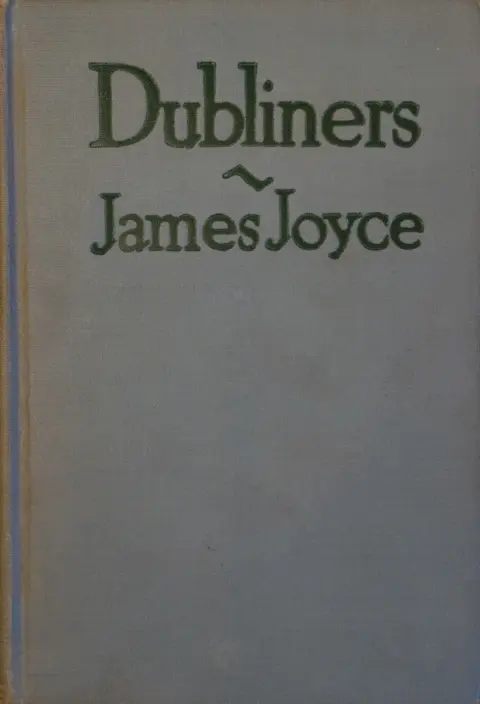
THE CLASSIC COLLECTION · 1914
"Dubliners" by James Joyce is a collection of fifteen short stories written from 1904 to 1907 and published in 1914. Set in early twentieth-century Dublin, these stories portray Irish middle-class life through a lens of paralysis and disillusionment. Joyce holds up a mirror to his countrymen, exploring themes of nationalism, Catholicism, and British rule. The collection progresses chronologically from childhood through public life, with characters experiencing moments of sudden self-understanding. Each story captures lives marked by stagnation, failed dreams, and the struggle for spiritual liberation in a city caught at history's crossroads.
Introduction adapted from the source catalogue; source summaries may be automatically generated.
Free to read · English · 68,856 words · No account needed
MAKE TIME FOR A GOOD BOOK
On by default. Untick to stop anonymous reading totals. Each page counts after 10 seconds in view. How this works.
Anonymous counting is on unless you have switched it off.
“O, Father Tom Burke,” said Mr Cunningham, “that was a born orator. Did you ever hear him, Tom?”
“Did I ever hear him!” said the invalid, nettled. “Rather! I heard
him....”
“And yet they say he wasn’t much of a theologian,” said Mr Cunningham.
“Is that so?” said Mr M’Coy.
“O, of course, nothing wrong, you know. Only sometimes, they say, he didn’t preach what was quite orthodox.”
“Ah! ... he was a splendid man,” said Mr M’Coy.
“I heard him once,” Mr Kernan continued. “I forget the subject of his discourse now. Crofton and I were in the back of the ... pit, you know ... the——”
“The body,” said Mr Cunningham.
“Yes, in the back near the door. I forget now what.... O yes, it was on the Pope, the late Pope. I remember it well. Upon my word it was magnificent, the style of the oratory. And his voice! God! hadn’t he a voice! The Prisoner of the Vatican, he called him. I remember Crofton saying to me when we came out——”
“But he’s an Orangeman, Crofton, isn’t he?” said Mr Power.
“‘Course he is,” said Mr Kernan, “and a damned decent Orangeman too. We went into Butler’s in Moore Street—faith, I was genuinely moved, tell you the God’s truth—and I remember well his very words. Kernan, he said, we worship at different altars, he said, but our belief is the same. Struck me as very well put.”
“There’s a good deal in that,” said Mr Power. “There used always to be crowds of Protestants in the chapel where Father Tom was preaching.”
“There’s not much difference between us,” said Mr M’Coy.
“We both believe in——”
He hesitated for a moment.
“... in the Redeemer. Only they don’t believe in the Pope and in the
mother of God.”
“But, of course,” said Mr Cunningham quietly and effectively, “our religion is the religion, the old, original faith.”
“Not a doubt of it,” said Mr Kernan warmly.
Mrs Kernan came to the door of the bedroom and announced:
“Here’s a visitor for you!”
“Who is it?”
“Mr Fogarty.”
“O, come in! come in!”
Your reading position is saved on this browser. Take it to another device with a library code. Reading pages adapt to text, rather than matching a printed edition.
BEHIND THE BOOK
This eBook is for the use of anyone anywhere in the United States and most other parts of the world at no cost and with almost no restrictions whatsoever. You may copy it, give it away or re-use it under the terms of the Project Gutenberg License included with this eBook or online at www.gutenberg.org. If you are not located in the United States, you will have to check the laws of the country where you are located before using this eBook. Read the source licence.
The original source file, including credits and licence, is retained by this library. Request an original-format copy at no charge. Please include the book title and Project Gutenberg identifier #2814.
KEEP YOUR CURIOSITY GOING
Coulson Kernahan

Maurice Baring
Frances Wright
Cécile Tormay

Frederic Jesup Stimson

W. H. P. (William Henry Pope) Jarvis