THE CLASSIC COLLECTION✦A dead man’s diaryCLASSIC FREE BOOKS
A dead man’s diary
Coulson Kernahan
THE CLASSIC COLLECTION · 1887
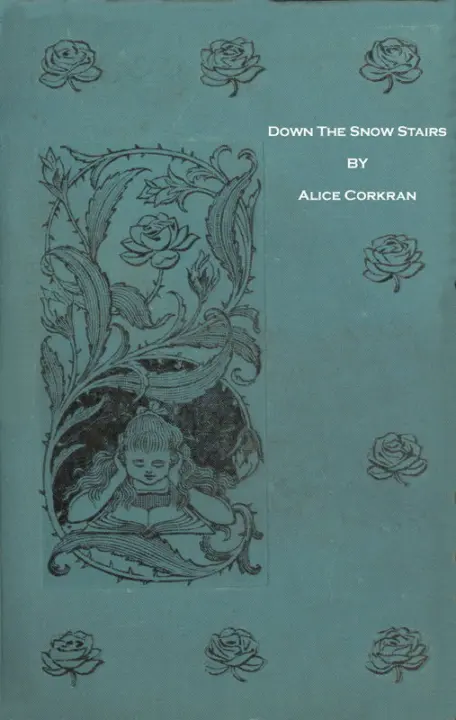
"Down the Snow Stairs; Or, From Good-Night to Good-Morning" by Alice Corkran is a children's fantasy book written in the late 19th century. The story revolves around a young girl named Kitty, who is deeply worried about her sick brother Johnnie. Set during Christmas, Kitty is torn by guilt over a decision that led to his illness, setting the stage for a magical journey that explores themes of innocence, mischief, and the ramifications of one's actions. At the start of the narrative, Kitty lies awake on Christmas Eve, haunted by her brother's illness and the pain she feels for having taken him outside to play in the snow. The sorrow of not being able to see him weighs heavily on her heart, compelling her to sneak into Johnnie’s room while he sleeps. Their tender, albeit bittersweet conversation touches on Kitty's feelings of guilt and desire for reconciliation. As she reminisces about their bond, a magical snowman beckons her on a whimsical adventure, framing her journey into a fantastical world meant to uncover deeper truths about herself and the nature of childhood. This opening sets the tone for a blend of both real and surreal experiences that await Kitty, ultimately leading her to confront her fears and desires in a world filled with enchanting possibilities.
Introduction adapted from the source catalogue; source summaries may be automatically generated.
Free to read · English · 37,917 words · No account needed
MAKE TIME FOR A GOOD BOOK
On by default. Untick to stop anonymous reading totals. Each page counts after 10 seconds in view. How this works.
Anonymous counting is on unless you have switched it off.
“In the glass palace you will see,” cried the children.
They joined hands round Kitty and danced more and more gayly, more and more quickly. The music grew merrier, and the sound seemed to get into Kitty’s head and into her feet. It set them dancing and made her feel giddy. Little joy bells seemed beating in her ears. They were not Christmas bells. “The prettiest little girl in all the world!” they seemed to ring again and again, backward and forward, so that she could not hear the guardian child’s sigh, “Silly, silly Kitty!”
The boy pulled her along, the dancers pressed around her and pushed her softly toward the glass palace.
There came a sound of singing.
“Listen,” said the boy; “everything is singing about you.”
Sure enough, the children, the birds, the breeze, the peacocks, the swans, the grasshoppers, sang, murmured, screamed, hummed:
“Do you know the violet’s hue? Do you know the heart’s-ease dyes? Brighter, deeper is the blue Shining in sweet Kitty’s eyes.”
“Violets!” murmured Kitty; “and Cousin Charlie said they were no bluer than skimmed milk.”
“Have you seen the marigold
Glowing in the sunshine fair?
It is dim when you behold
Sunshine caught in Kitty’s hair.”
“And nurse keeps calling it a mop!” Kitty muttered with some
indignation.
“Just like her,” grunted the naughty sprite. “But we are now with people who appreciate us.”
Kitty was so absorbed thinking of how little nurse and Cousin Charlie admired her that she missed the next verse, until it came to the last line, then she heard:
“Oh! I wish I had heard what they sang about my nose,” she exclaimed
regretfully.
“Your dear funny cocked nose,” whispered Johnnie’s voice a long way off.
Kitty started. How faint her guardian child had become. He was just a pale, glimmering, hovering figure.
“That is a false song you are singing. My eyes are not violets, my hair is not gold, my nose is not—” Kitty stopped breathless; she had not heard what they had sung about her nose.
“Resist! resist!” cried the guardian child, who had flown back to her
shoulder.
“Resist those kind children, who admire you!” growled the sprite
reproachfully.
“Pretty Kitty!—our Queen Kitty!” cried all the dancers.
With a laugh they lifted Kitty from her feet and carried her toward the palace. As she approached she caught sight of her face reflected on a sunflower. She saw the sprite standing up very straight on her left shoulder, with chest puffed out, and head perked jauntily on one side. She thought of the vain children in Punishment Land.
Your reading position is saved on this browser. Take it to another device with a library code. Reading pages adapt to text, rather than matching a printed edition.
BEHIND THE BOOK
This eBook is for the use of anyone anywhere in the United States and most other parts of the world at no cost and with almost no restrictions whatsoever. You may copy it, give it away or re-use it under the terms of the Project Gutenberg License included with this eBook or online at www.gutenberg.org. If you are not located in the United States, you will have to check the laws of the country where you are located before using this eBook. Read the source licence.
The original source file, including credits and licence, is retained by this library. Request an original-format copy at no charge. Please include the book title and Project Gutenberg identifier #57413.
KEEP YOUR CURIOSITY GOING
Coulson Kernahan

Maurice Baring
Frances Wright
Cécile Tormay
Francis Greenleaf Allinson & Anne C. E. (Anne Crosby Emery) Allinson

Frederic Jesup Stimson