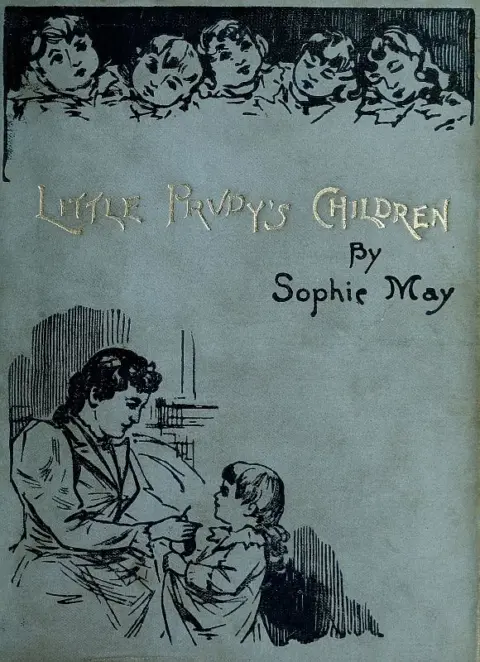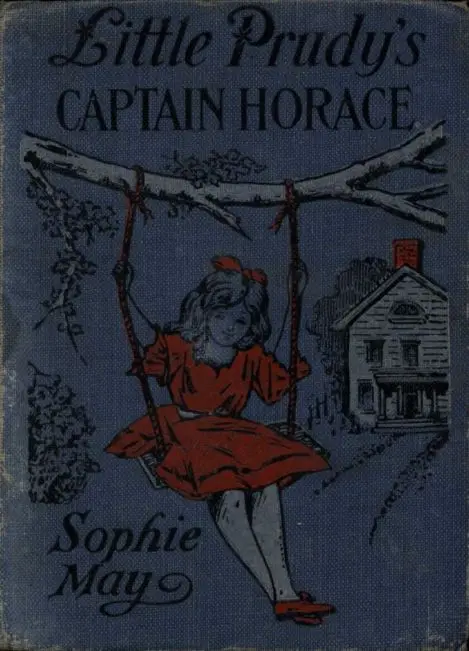
Little Prudy’s Captain Horace
Sophie May
THE CLASSIC COLLECTION · 1869
"Dotty Dimple at Play" by Sophie May is a children's novel written in the late 19th century. The story revolves around Dotty Dimple, a spirited little girl, as she navigates her adventures between home and the experiences she encounters while visiting friends. The book emphasizes themes of childhood innocence, imagination, and the excitement of exploration, particularly in relation to Dotty's interactions with the blind children at the asylum they visit. The opening of the book introduces Dotty Dimple and her cousin Katie as they prepare for a journey to Indianapolis, where they will visit the Blind Asylum. The narrative captures the essence of their youthful exuberance and naivety, as they share playful banter and express their excitement about traveling in the train. As they arrive at the asylum, Dotty is struck by the sight of the blind children and is filled with curiosity and compassion. Her conversations reveal her innocence, as she tries to understand the concept of blindness and the lives of the children she meets, setting the stage for her growth and understanding throughout the novel.
Introduction adapted from the source catalogue; source summaries may be automatically generated.
Free to read · English · 23,609 words · No account needed
MAKE TIME FOR A GOOD BOOK
On by default. Untick to stop anonymous reading totals. Each page counts after 10 seconds in view. How this works.
Anonymous counting is on unless you have switched it off.
"Pretty well for me to make believe I was a thief, and was going to steal! 'Who is this strange little girl?' said he; 'it looks like--'"
She heard voices near the cellar door. What if Norah should come down after butter? Dotty was not prepared for that. She could not hide in the keg of lard, of course; and what should she do?
"My head is tipside up; I can't think." Then she began to wonder how long she could live down there, in case she was not discovered.
"I s'pose I can climb up on the swing shelf, and sleep there nights. I can hide behind things in the daytime, and when I'm hungry I can eat out of the jars and boxes."
The sound of voices came down distinctly from the kitchen overhead. Dotty crouched behind an apple barrel, and listened. Grandma Read was talking to Mrs. Parlin, who seemed to be in another room.
"Mary, my glasses are gone this time," said she. "If little Alice were only here, I should set her to hunting."
"She don't know I'm in the house this minute," thought Dotty; "no,
under the house. Dear me!"
With that she walked softly up the stairs, and listened at the door-latch; for the sound of her grandmother's voice was encouraging, and Dotty, in her loneliness, longed to be near the dear people of the family, even if she could not see them.
"Edward," said her mother,--what music there was in her voice!--"if you are going after that dear child, you'd better take a shawl to wrap her in, for it is snowing fast. And be sure to tell her we love her dearly, every one of us, and don't believe she will ever run away again."
"O, was her papa going after her? Did they love her, after all? Were they willing to keep her in the house?"
Dotty opened the door before she knew it. "O, mamma, mamma!" cried she, rushing into her mother's arms.
"Why, Dotty, you darling child, where did you come from?" exclaimed Mrs. Parlin, in great surprise, kissing the little, dirty girl, and taking her right to her heart, in spite of the coal-dust.
"If you'll let me stay at home," gasped Dotty, "if you'll let me stay at home, I'll live in the kitchen, and won't go near the table."
"Where did you come from?" said Mr. Parlin, kissing a clean place on Dotty's black face, and laughing under his breath.
"I came through the cellar window, papa."
"Through the cellar window, child?"
"Yes, papa; I didn't s'pose you'd care!"
Your reading position is saved on this browser. Take it to another device with a library code. Reading pages adapt to text, rather than matching a printed edition.
BEHIND THE BOOK
This eBook is for the use of anyone anywhere in the United States and most other parts of the world at no cost and with almost no restrictions whatsoever. You may copy it, give it away or re-use it under the terms of the Project Gutenberg License included with this eBook or online at www.gutenberg.org. If you are not located in the United States, you will have to check the laws of the country where you are located before using this eBook. Read the source licence.
The original source file, including credits and licence, is retained by this library. Request an original-format copy at no charge. Please include the book title and Project Gutenberg identifier #10320.
KEEP YOUR CURIOSITY GOING
Coulson Kernahan

Maurice Baring
Frances Wright
Cécile Tormay

Frederic Jesup Stimson

W. H. P. (William Henry Pope) Jarvis