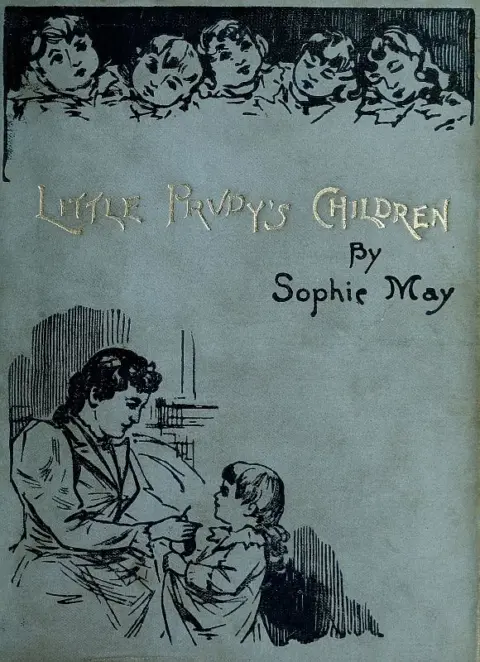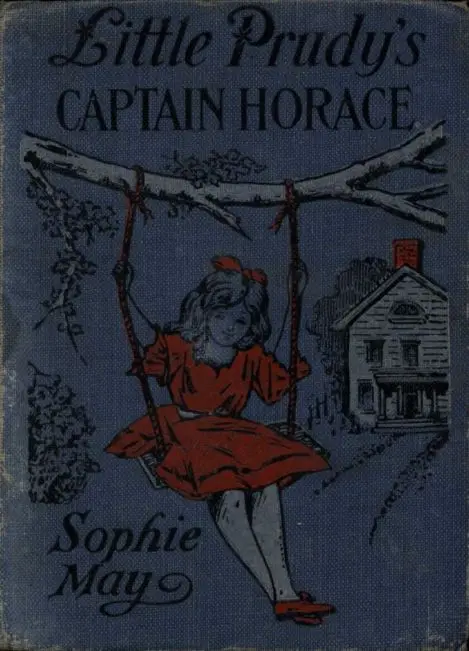
Little Prudy’s Captain Horace
Sophie May
THE CLASSIC COLLECTION · 1869
"Dotty Dimple at Play" by Sophie May is a children's novel written in the late 19th century. The story revolves around Dotty Dimple, a spirited little girl, as she navigates her adventures between home and the experiences she encounters while visiting friends. The book emphasizes themes of childhood innocence, imagination, and the excitement of exploration, particularly in relation to Dotty's interactions with the blind children at the asylum they visit. The opening of the book introduces Dotty Dimple and her cousin Katie as they prepare for a journey to Indianapolis, where they will visit the Blind Asylum. The narrative captures the essence of their youthful exuberance and naivety, as they share playful banter and express their excitement about traveling in the train. As they arrive at the asylum, Dotty is struck by the sight of the blind children and is filled with curiosity and compassion. Her conversations reveal her innocence, as she tries to understand the concept of blindness and the lives of the children she meets, setting the stage for her growth and understanding throughout the novel.
Introduction adapted from the source catalogue; source summaries may be automatically generated.
Free to read · English · 23,609 words · No account needed
MAKE TIME FOR A GOOD BOOK
On by default. Untick to stop anonymous reading totals. Each page counts after 10 seconds in view. How this works.
Anonymous counting is on unless you have switched it off.
Uncle Henry did not like to part with his bright little niece. She had been so docile and affectionate during her visit, that he began to think her very lovely, and to wonder he had ever supposed she had a wayward temper.
The ride to Indianapolis was a very pleasant one. Katie thought she had the care of the whole party, and her little face was full of anxiety.
"Don't you tubble yourself, mamma," said She; "I'll look out the winner, and tell you when we get there."
"Don't let her fall out, Horace," said Mrs. Clifford; "I have a headache, and you must watch her."
"Has you got a headache, mamma? I's solly. Lean 'gainst ME, mamma."
Horace wished the conductor had been in that car, so he could have seen Miss Flyaway trying to prop her mother's head against her own morsel of a shoulder--about as secure a resting-place as a piece of thistle-down.
"When was it be dinner-time?" said she at last, growing very tired of so much care, and beginning to think "'Naplis" was a long way off.
But they arrived there at last, and found Mr. Parlin waiting for them at the depot. After they had all been refreshed by a nice dinner, and Flyaway had caught a nap, which took her about as long as it takes a fly to eat his breakfast, then Mr. Parlin suggested that they should visit the Blind Asylum.
"Is it where they make blinds?" asked Dotty.
"O, no," replied Mr. Parlin; "it is a school where blind children
are taught."
"What is they when they is blind, uncle Eddard?"
"They don't see, my dear."
Flyaway shut her eyes, just to give herself an idea of their condition, and ran against Horace, who saved her from falling.
"I was velly blind, then, Hollis," said she, "and that's what is it."
"I don't see," queried Dotty,--"I don't see how people that can't see can see to read; so what's the use to go to school?"
"They read by the sense of feeling; the letters are raised," said Mr. Parlin. "But here we are at the Institute."
They were in the pleasantest part of the city, standing before some beautiful grounds which occupied an entire square, and were enclosed by an iron fence. In front of the building grew trees and shrubs, and on each side was a play-ground for the children.
"Why, that house has windows," cried Dotty. "I don't see what people want of windows when they can't see."
"Nor me needer," echoed Katie. "What um wants winners, can't see out of?"
Your reading position is saved on this browser. Take it to another device with a library code. Reading pages adapt to text, rather than matching a printed edition.
BEHIND THE BOOK
This eBook is for the use of anyone anywhere in the United States and most other parts of the world at no cost and with almost no restrictions whatsoever. You may copy it, give it away or re-use it under the terms of the Project Gutenberg License included with this eBook or online at www.gutenberg.org. If you are not located in the United States, you will have to check the laws of the country where you are located before using this eBook. Read the source licence.
The original source file, including credits and licence, is retained by this library. Request an original-format copy at no charge. Please include the book title and Project Gutenberg identifier #10320.
KEEP YOUR CURIOSITY GOING
Coulson Kernahan

Maurice Baring
Frances Wright
Cécile Tormay

Frederic Jesup Stimson

W. H. P. (William Henry Pope) Jarvis