
Last letters from the living dead man
David Patterson (Spirit) Hatch

THE CLASSIC COLLECTION · 1923
"Dostoevsky" by André Gide is a work of literary criticism and biographical essays written in the early 20th century. It probes the life, thought, and artistry of Fyodor Dostoevsky, arguing for his primacy as a psychologist and moral visionary whose fiction wrestles with inner, spiritual conflicts rather than merely social ones. The focus is on how Dostoevsky’s characters embody living problems—religious, ethical, and existential—rendered with vivid humanity rather than abstract doctrine. The opening of this study presents Arnold Bennett’s introduction praising Gide’s insight and situating the book as a landmark in understanding Russian psychology, followed by a translator’s note explaining its origins as 1922 lectures and the sources quoted. Gide’s preface defends Dostoevsky against Western charges of irrationality, stressing his concern with the individual’s relation to self and God, the lifelike fluidity of his characters, and the uncompromising labor behind his art. In a long section drawn from correspondence, Gide sketches Dostoevsky’s aversion to letter-writing, lifelong poverty, humility in begging for help, ferocious work ethic and revisions, debilitating epilepsy, gambling and debts, intense family duties, and a worldview mixing Russian nationalism with a universal mission, Orthodoxy with a Christ-centered humanism, and individualism joined to self-sacrifice—all of which left him outside parties and programs. At the start of the addresses, Gide contrasts Rousseau’s self-conscious pose with Dostoevsky’s unposed humility, then recounts the youthful bohemian years, arrest in the Petrashevsky affair, mock execution, and Siberian exile, quoting letters that vividly depict the journey, brutal prison conditions, and the convict’s resilient hope and compassion he both received and offered.
Introduction adapted from the source catalogue; source summaries may be automatically generated.
Free to read · English · 53,689 words · No account needed
MAKE TIME FOR A GOOD BOOK
On by default. Untick to stop anonymous reading totals. Each page counts after 10 seconds in view. How this works.
Anonymous counting is on unless you have switched it off.
Pyotr Stepanovitch imagines the crime he is planning will strengthen the bonds between the conspirators he heads and over whom he feels his control weakening. He reckons that each individual party to the plot, having shared in the crime, will feel his complicity and be unable, indeed will not dare, to break away. Who is to be sacrificed?
Pyotr Stepanovitch is still undecided. It is necessary that the victim should present himself spontaneously.
The conspirators are met together in a large room; in the course of conversation, the question is asked, “Can there be, even now, an informer in our midst?” An extraordinary commotion follows this remark: everybody begins to talk at once.
“‘Gentlemen, if that is so,’ Verhovensky went on, ‘I have compromised myself more than anyone, and so I will ask you to answer one question, if you care to, of course. You are all perfectly free.’
“‘What question? What question?’ every one clamoured.
“‘A question that will make it clear whether we are to remain together, or take up our hats and go our several ways without speaking.’
“‘The question! The question!’
“‘If any one of us knew of a proposed political murder, would he, in view of the consequences, go to give information, or would he stay at home and await events? Opinions may differ on this point. The answer to the question will tell us clearly whether we are to separate, or to remain together, and for far longer than this one evening.’
“After which Pyotr Stepanovitch begins to interrogate apart several members of this secret society. He is interrupted.
“‘It’s an unnecessary question. Every one will make the same answer. There are no informers here.’
“‘What’s that gentleman getting up for?’ cried the girl student.
“‘That’s Shatov. What are you getting up for?’ cried the lady of the
house.
“Shatov did, in fact, stand up. He was holding his cap in his hand and looking at Verhovensky. Apparently he wanted to say something to him, but was hesitating. His face was pale and wrathful, but he controlled himself. He did not say one word, but in silence walked towards the door.
“‘Shatov, this won’t make things better for you!’ Verhovensky called after him enigmatically.
“‘But it will for you, since you are a spy and a scoundrel!’ Shatov shouted to him from the door as he went out.
“Shouts and exclamations again.
“‘That’s what comes of a test,’ cried a voice.”[126]
Thus the victim is marked, and by his own hand. Haste is imperative: Shatov’s murder must anticipate his denunciation.
Your reading position is saved on this browser. Take it to another device with a library code. Reading pages adapt to text, rather than matching a printed edition.
BEHIND THE BOOK
This eBook is for the use of anyone anywhere in the United States and most other parts of the world at no cost and with almost no restrictions whatsoever. You may copy it, give it away or re-use it under the terms of the Project Gutenberg License included with this eBook or online at www.gutenberg.org. If you are not located in the United States, you will have to check the laws of the country where you are located before using this eBook. Read the source licence.
The original source file, including credits and licence, is retained by this library. Request an original-format copy at no charge. Please include the book title and Project Gutenberg identifier #76944.
KEEP YOUR CURIOSITY GOING
David Patterson (Spirit) Hatch

David Patterson (Spirit) Hatch

David Patterson (Spirit) Hatch

Ralph Waldo Emerson

Maurice Baring
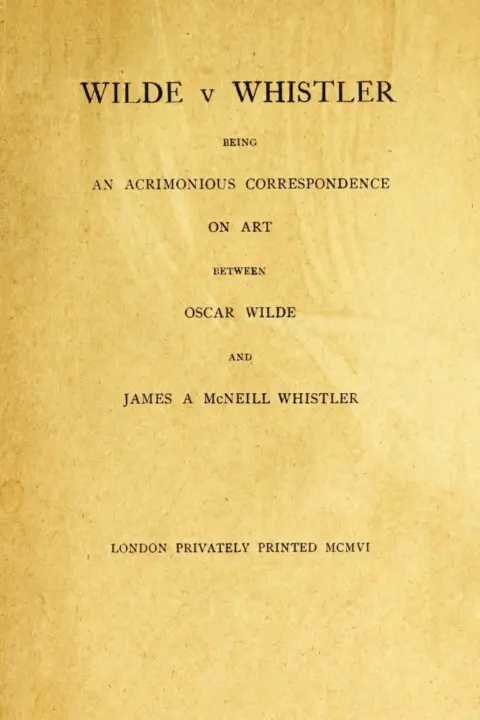
Oscar Wilde & James McNeill Whistler