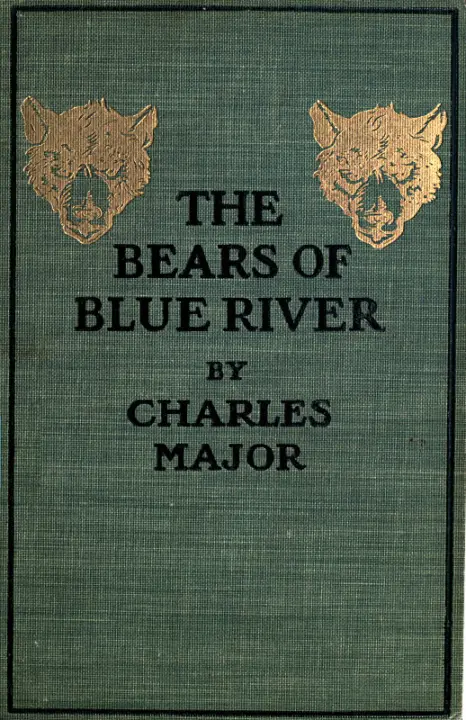
The Bears of Blue River
Charles Major
THE CLASSIC COLLECTION · 1902
"Dorothy Vernon of Haddon Hall" by Charles Major is a historical novel written during the early 20th century. The narrative follows the life of its titular character, Dorothy Vernon, and explores themes of love, lineage, and feudal loyalty in a richly described Elizabethan England. The story is told in part by Sir Malcolm Vernon, a cousin to Dorothy, who finds himself caught between his past, his affection for the deposed Queen Mary, and his duty to his family and heritage. At the start of the novel, readers are introduced to Malcolm, who reflects on his tumultuous past and his quest for safety at Haddon Hall after fleeing danger in Scotland. As he arrives at the hall, he discovers that his childhood cousin, Dorothy, has grown into an unexpectedly beautiful young woman. The dynamics of family obligations, romantic entanglements, and the weight of historical feuds become apparent as Malcolm grapples with the prospect of marrying Dorothy to preserve his family name. The opening sets the stage for a complex interplay of emotions and conflicts, hinting at the tension between personal desires and familial expectations amidst the backdrop of political intrigue involving their kin and the reigning monarch, Queen Elizabeth.
Introduction adapted from the source catalogue; source summaries may be automatically generated.
Free to read · English · 116,699 words · No account needed
MAKE TIME FOR A GOOD BOOK
On by default. Untick to stop anonymous reading totals. Each page counts after 10 seconds in view. How this works.
Anonymous counting is on unless you have switched it off.
"Doll," said Sir George, "I thought you were at the stile with a man. I was mistaken. It was the Faxton girl. I beg your pardon, my daughter. I did you wrong."
"You do me wrong in many matters, father," replied Dorothy.
"Perhaps I do," her father returned, "perhaps I do, but I mean for the best. I seek your happiness."
"You take strange measures at times, father, to bring about my happiness,"
she replied.
"Whom God loveth He chasteneth," replied Sir George, dolefully.
"That manner of loving may be well enough for God," retorted Dorothy with no thought of irreverence, "but for man it is dangerous. Whom man loves he should cherish. A man who has a good, obedient daughter--one who loves him--will not imprison her, and, above all, he will not refuse to speak to her, nor will he cause her to suffer and to weep for lack of that love which is her right. A man has no right to bring a girl into this world and then cause her to suffer as you--as you--"
She ceased speaking and sought refuge in silent feminine eloquence--tears. One would have sworn she had been grievously injured that night.
"But I am older than you, Doll, and I know what is best for your
happiness," said Sir George.
"There are some things, father, which a girl knows with better, surer knowledge than the oldest man living. Solomon was wise because he had so many wives from whom he could absorb wisdom."
"Ah, well!" answered Sir George, smiling in spite of himself, "you will
have the last word."
"Confess, father," she retorted quickly, "that you want the last word
yourself."
"Perhaps I do want it, but I'll never have it," returned Sir George; "kiss me, Doll, and be my child again."
"That I will right gladly," she answered, throwing her arms about her father's neck and kissing him with real affection. Then Sir George said good night and started to leave. At the door he stopped, and stood for a little time in thought.
"Dorothy," said he, speaking to Lady Crawford, "I relieve you of your duty as a guard over Doll. She may go and come when she chooses."
"I thank you, George," said Aunt Dorothy. "The task has been painful to
me."
Dorothy went to her father and kissed him again, and Sir George departed.
When the door was closed, Lady Crawford breathed a great sigh and said: "I thank Heaven, Dorothy, he does not know that you have been out of your room. How could you treat me so cruelly? How could you deceive me?"
Your reading position is saved on this browser. Take it to another device with a library code. Reading pages adapt to text, rather than matching a printed edition.
Charles Major
Charles Major
Charles Major
Charles Major
BEHIND THE BOOK
This eBook is for the use of anyone anywhere in the United States and most other parts of the world at no cost and with almost no restrictions whatsoever. You may copy it, give it away or re-use it under the terms of the Project Gutenberg License included with this eBook or online at www.gutenberg.org. If you are not located in the United States, you will have to check the laws of the country where you are located before using this eBook. Read the source licence.
The original source file, including credits and licence, is retained by this library. Request an original-format copy at no charge. Please include the book title and Project Gutenberg identifier #14671.
KEEP YOUR CURIOSITY GOING
Cécile Tormay

Moritz Busch
Coulson Kernahan
John L. Ransom

Maurice Baring
Frances Wright