Rhymes and Jingles
Mary Mapes Dodge
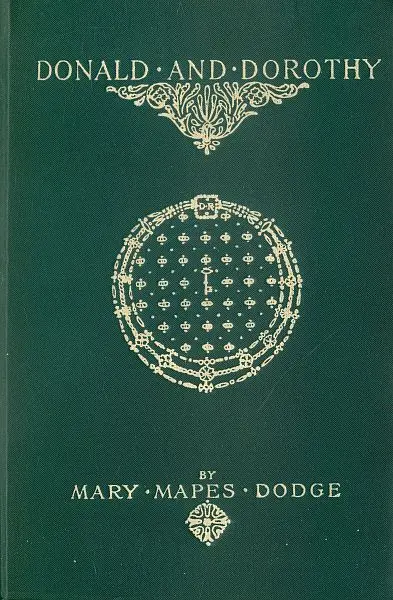
THE CLASSIC COLLECTION · 1883
"Donald and Dorothy" by Mary Mapes Dodge is a children's novel written in the late 19th century. The story revolves around the lives of two siblings, Donald and Dorothy Reed, who are being raised by their Uncle George after the tragic loss of their parents. As they navigate their childhood, the narrative explores themes of family, love, and growing up through the enchanting dynamics of their daily adventures and challenges. The opening of the book introduces the reader to the household where Donald and Dorothy live, along with their loyal dog Nero, and hints at the gentle, yet somewhat tumultuous atmosphere created by the children's upbringing. We see a glimpse of their lively personalities as they engage in a conversation about their uncle and the family dynamics that have unfolded over the years. The chapter sets a whimsical tone, filled with childlike curiosity, as Dorothy expresses her longing to understand more about their family history, while Donald attempts to provide support and reassurance. With a mixture of humor and tenderness, we begin to understand the close bond shared between the siblings and the struggles they face, laying the groundwork for their adventures to come.
Introduction adapted from the source catalogue; source summaries may be automatically generated.
Free to read · English · 82,215 words · No account needed
MAKE TIME FOR A GOOD BOOK
On by default. Untick to stop anonymous reading totals. Each page counts after 10 seconds in view. How this works.
Anonymous counting is on unless you have switched it off.
"Oui, oui, Monsieur,--pardonnez," said Donald, thus reminded. From that moment he and the now radiant Monsieur Bajeau got on finely together, for Donald's French was much better than Monsieur's English; and, in truth, the young man was very willing to practise speaking it in the retirement of this quaint little shop. Their conversation shall be translated here, however.
"Have you ever seen this before, sir?" asked Donald, taking the precious necklace from the box and handing it to him over the little counter.
"No," answered the shop-keeper, shaking his head as he took the trinket. "Ah! that is very pretty. No, not a very old chain. It is modern, but very odd--very fine--unique, we say. Here are letters," as he turned the clasp and examined its under side. "What are they? They are so small. Your young eyes are sharp. Eh?" Here Monsieur bent his head and looked inquiringly at Donald from over his spectacles.
"D. R.," said Don.
"Ah, yes! D. R.; now I see," as he turned them to the light. "D. R.,--that is strange! Now, I think I have seen those same engraved letters before. Why, my young friend, as I look at this little chain, something carries the years away and I am a younger man. It brings very much to mind--Hold!--No, it is all gone now. I must have made a mistake."
Donald's heart beat faster.
"Did you make the chain?" he asked.
"No, no, never. I never made a chain like it--but I have seen that chain before. The clasp is very--very--You know how it opens?"
"It is rusty inside," explained Donald, leaning forward anxiously, lest it should be injured. "We need not open it." Then controlling his excitement, he asked as calmly as he could:
"You have seen it before, Monsieur?"
"I have seen it. Where is the key?"
"The key, Monsieur? What do you mean?"
"The key that opens the clasp," returned the Frenchman, with sudden impatience. This American boy began to appear rather stupid in Monsieur's eyes. Donald looked at him in amazement.
"Does it lock?"
"Does it lock?" echoed Monsieur. "Why, see here;" and with these words he tried to press the upper part of the clasp aside. It stuck at first, but finally yielded, sliding around from the main part on an invisible little pivot, and disclosing a very small key-hole.
Donald stared at it in hopeful bewilderment. Evidently his uncle had failed to find this key-hole, so deftly concealed!
The old man eyed his visitor shrewdly. Having been for some time a dealer in rare bric-a-brac, he prided himself on being up to the tricks of persons who had second-hand treasures to sell.
Your reading position is saved on this browser. Take it to another device with a library code. Reading pages adapt to text, rather than matching a printed edition.
BEHIND THE BOOK
This eBook is for the use of anyone anywhere in the United States and most other parts of the world at no cost and with almost no restrictions whatsoever. You may copy it, give it away or re-use it under the terms of the Project Gutenberg License included with this eBook or online at www.gutenberg.org. If you are not located in the United States, you will have to check the laws of the country where you are located before using this eBook. Read the source licence.
The original source file, including credits and licence, is retained by this library. Request an original-format copy at no charge. Please include the book title and Project Gutenberg identifier #28856.
KEEP YOUR CURIOSITY GOING
Coulson Kernahan

Maurice Baring
Frances Wright
Cécile Tormay

Frederic Jesup Stimson

W. H. P. (William Henry Pope) Jarvis