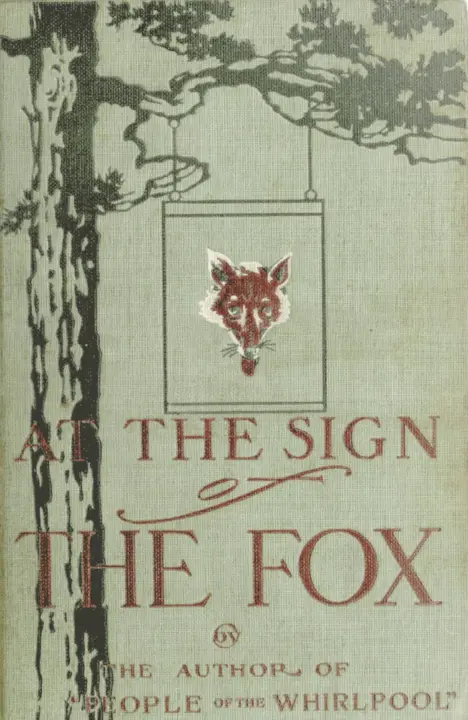
At the Sign of the Fox: A Romance
Mabel Osgood Wright
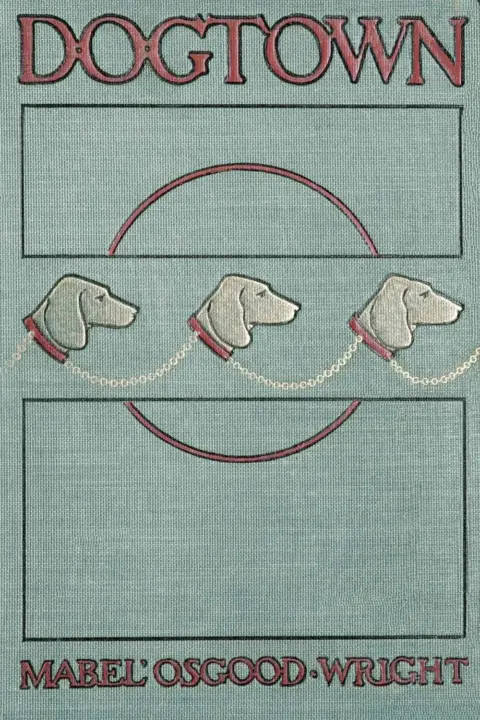
THE CLASSIC COLLECTION · 1902
"Dogtown" by Mabel Osgood Wright is a charming novel written in the early 20th century. The story revolves around the Waddles family and their many pets, particularly focusing on a clever beagle named Happy and Waddles, the family’s distinguished and dignified dog. Set against the backdrop of a whimsical dog-filled community, the book explores themes of friendship, loyalty, and the delightful nature of life shared with animals. The opening of "Dogtown" introduces readers to a delightful afternoon in a quaint rural setting, where various animal characters are at play. We meet Happy, a beagle with a gentle disposition, and Waddles, the Mayor of Dogtown, who is portrayed as a wise protector of canine etiquette. Anne, a young girl in the household, shares a deep bond with both the dogs, hinting at a narrative rich in animal companionship and the joys of country living. Additionally, we encounter Aunt Prue, whose attempt to visit turns into humorous chaos involving cats and dogs, setting the stage for the lively interactions and adventures that are to follow throughout the novel.
Introduction adapted from the source catalogue; source summaries may be automatically generated.
Free to read · English · 73,877 words · No account needed
MAKE TIME FOR A GOOD BOOK
On by default. Untick to stop anonymous reading totals. Each page counts after 10 seconds in view. How this works.
Anonymous counting is on unless you have switched it off.
The next day Waddles had a long call from Mr. Wolf, Miss Jule’s old St. Bernard, and after the usual pleasant exchange of sniffs and other greetings the two adjourned to the south side of the orchard wall, which, topping a slope, commanded a wide stretch of country. Here, lying back to back so that eye, ear, and nose might have as wide a range as possible, they proceeded to “watch out” for game.
Mr. Wolf, otherwise known as Ben Uncas, and Waddles were the leading members of a curious sort of club that hunted fur, and, as a usual thing, let feathers severely alone. This club now numbered six members of various sizes and breeds, and when the queerly assorted pack started off for a day or night outing, the House People of Dogtown, hearing the babel of cries, said, “Ben Uncas & Co. are on the war-path!”
Until this particular season the club had consisted of the St. Bernard, its leader, Waddles, Colin, Tip, and Quick; now Hamlet had been initiated, and was one of the most daring members, especially in the matter of sometimes swimming down even the web-footed muskrats, who sought safety by taking to the water.
The animals that the club hunted ranged in size from meadow-mice, moles, chipmunks, muskrats, rabbits, skunks, woodchucks, foxes, coons, and occasionally a rare and wily opossum, while these native animals were liberally punctuated by an assortment of cats. Now this matter of cat hunting by Ben Uncas & Co. has a very dreadful sound, and requires a word of explanation.
It had its origin in what some shiftless sort of House People called “their tender feelings” in this way. Any number of people living in the farms and on the country edge of the village kept cats which they fed and housed after a fashion, but when kittens were born, instead of humanely destroying those for which they could not care, they simply shifted the responsibility to the poor kittens, allowing them to grow up as best they might and provide for themselves.
Those that did not starve to death soon formed a roving band of feline bandits of every age, sex, and colour, that haunted deserted barns, remote haymows, and even hollow trees in the deep woods, living by preying upon song and game birds, rabbits, and barnyard fowls.
Waddles’s fierce old enemy, Tiger, the miller’s cat, had been adopted from this race, and so constantly had Waddles, as well as Mr. Wolf and the smaller dogs, heard the cry of “cats!” and been called to hunt the enemy from a chicken coop or an orchard full of nestlings, that they regarded wildcats as lawful hunting.
Your reading position is saved on this browser. Take it to another device with a library code. Reading pages adapt to text, rather than matching a printed edition.
Mabel Osgood Wright
Mabel Osgood Wright
Mabel Osgood Wright
Mabel Osgood Wright
BEHIND THE BOOK
This eBook is for the use of anyone anywhere in the United States and most other parts of the world at no cost and with almost no restrictions whatsoever. You may copy it, give it away or re-use it under the terms of the Project Gutenberg License included with this eBook or online at www.gutenberg.org. If you are not located in the United States, you will have to check the laws of the country where you are located before using this eBook. Read the source licence.
The original source file, including credits and licence, is retained by this library. Request an original-format copy at no charge. Please include the book title and Project Gutenberg identifier #64041.
KEEP YOUR CURIOSITY GOING
Coulson Kernahan

Maurice Baring
Frances Wright
Cécile Tormay

Frederic Jesup Stimson

W. H. P. (William Henry Pope) Jarvis