THE CLASSIC COLLECTION✦My diaries, being a personal narrative of events 1888-1914, Part 2 (1900-1914)CLASSIC FREE BOOKS
My diaries, being a personal narrative of events 1888-1914, Part 2 (1900-1914)
Wilfrid Scawen Blunt
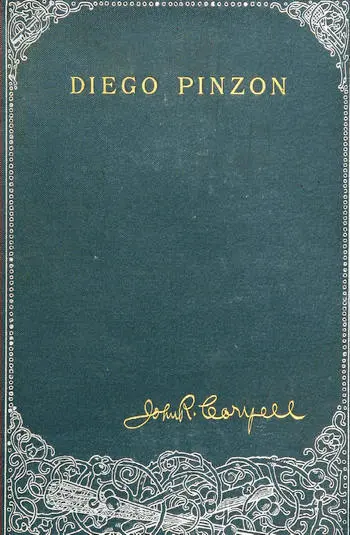
THE CLASSIC COLLECTION · 1891
"Diego Pinzon and the Fearful Voyage He Took Into the Unknown Ocean A.D. 1492" by John Russell Coryell is a historical novel written in the late 19th century. The story is centered on the young Diego Pinzon, who is drawn into an adventure as he becomes embroiled in an expedition led by his cousin, the formidable Martin Alonzo Pinzon, and the renowned explorer, Christopher Columbus. The narrative captures the excitement and trepidation associated with the treacherous voyage across uncharted waters during a pivotal moment in history. The opening of the novel introduces readers to the convent of La Rabida in Andalusia, where the atmosphere is charged with anticipation as preparations for Columbus's voyage unfold. Diego, the clever and mischievous nephew of the bold sailor Martin Alonzo, reflects on the peculiar events leading to this monumental expedition while engaging in childhood antics with his friends. However, Diego's lightheartedness is soon overshadowed by the gravity of his impending participation in this dangerous journey. As he navigates the dynamics of his family's legacy, the pressures from his condescending cousin, and the burgeoning malevolence among some crew members, readers can sense the blend of adventure and peril that awaits him on the high seas.
Introduction adapted from the source catalogue; source summaries may be automatically generated.
Free to read · English · 53,132 words · No account needed
MAKE TIME FOR A GOOD BOOK
On by default. Untick to stop anonymous reading totals. Each page counts after 10 seconds in view. How this works.
Anonymous counting is on unless you have switched it off.
“Yes,” said Diego, who understood him, “if she comes back, she will go
there.”
“And will not go hunting around for us,” suggested Juan.
“Why should she?” said Diego, and they both fell into a silence.
“Diego,” said Juan presently, in a startled tone, “I think--”
“Well, what do you think?” demanded Diego, glancing around in alarm.
“I think the flood tide is taking us inshore,” answered Juan.
And so it was of a certainty. Diego did not turn pale; for he was already that, but he showed in his eyes how he dreaded such a thing. Then he put his hand on the sailor’s knife which was in its sheath by his side, and said, with a half-sob:
“I will fight till I die.”
“And I,” said Juan. Then hope whispered courage, and he said quickly; “but we may get ashore undiscovered, and be able to make our way to the mountain yonder. Then, if the ship does come back--”
“It will. It certainly will,” said Diego, catching eagerly at the hope.
“We shall be there to meet her,” went on Juan. “Unless she should come and go before we can get there.”
“Oh,” said Diego, his courage rising with the prospect of doing something for himself, “if she comes back she will stay a day or two days, surely. Why not? As well come ashore at that point as another.”
“Besides,” said Juan, “we shall get something to eat ashore, and I am
hungry.”
“That maize bread would taste good,” said Diego, “or potatoes.”
“Well,” said Juan, sighing, “perhaps these cannibals don’t eat such
things.”
“We can get fruit enough, anyhow,” said Diego, shuddering at the thought of the food the people did eat.
They were being carried inshore very perceptibly, and after a little while they crouched down in the canoe and allowed nothing but their heads to be visible. They saw nobody for a long time, and later saw only a few children, who returned to the woods after playing about for a short time.
The current set in strongest towards a rocky promontory, and they were rejoiced, indeed, when they saw themselves being carried thitherward; for, as Diego said, it was very likely that the savages were very near the shore, and only remained in the woods for the sake of the shade, and would be certain to see them if they were to go ashore on the open beach, whereas they could go ashore under the cliff that made the end of the promontory, and remain there in safety until darkness came on, if that should prove necessary.
Your reading position is saved on this browser. Take it to another device with a library code. Reading pages adapt to text, rather than matching a printed edition.
BEHIND THE BOOK
This eBook is for the use of anyone anywhere in the United States and most other parts of the world at no cost and with almost no restrictions whatsoever. You may copy it, give it away or re-use it under the terms of the Project Gutenberg License included with this eBook or online at www.gutenberg.org. If you are not located in the United States, you will have to check the laws of the country where you are located before using this eBook. Read the source licence.
The original source file, including credits and licence, is retained by this library. Request an original-format copy at no charge. Please include the book title and Project Gutenberg identifier #50281.
KEEP YOUR CURIOSITY GOING
Wilfrid Scawen Blunt
Wilfrid Scawen Blunt

E. W. (Edgar Watson) Howe
Cécile Tormay

Moritz Busch
Coulson Kernahan