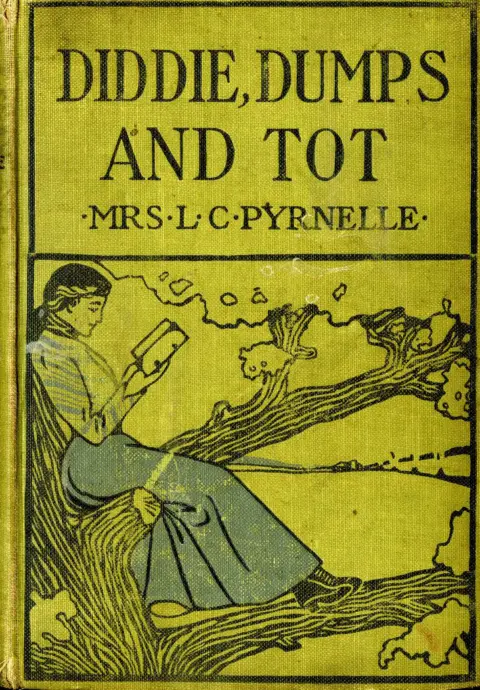
Diddie, Dumps, and Tot; Or, Plantation Child-Life
Louise Clarke Pyrnelle
THE CLASSIC COLLECTION · 1882
"Diddie, Dumps & Tot; or, Plantation Child-Life" by Louise Clarke Pyrnelle is a fictional narrative that captures the childhood experiences of three little girls on a Southern plantation in the mid-19th century. The story unfolds through the adventures of Diddie, Dumps, and Tot, who interact affectionately with the enslaved individuals on their plantation, showcasing the complexities of their relationships in a historical context. The narrative aims to preserve the folk stories, games, and traditions of Southern slaves, reflecting a formative period that the author sought to immortalize. The opening of the book introduces Diddie, Dumps, and Tot, the daughters of Major Waldron, who live in a big house surrounded by both beautiful gardens and their enslaved caregivers, including the nurturing 'Mammy' and various other figures who help raise them. The description paints a vivid picture of plantation life and the closeness between the children and their caregivers. As the story progresses, we learn about their playful interactions, festive celebrations, and the lessons they receive from the adults around them. The text establishes a nostalgic tone as it explores the contrasts and connections between the lives of the white children and the enslaved individuals, illustrating a world soon to change.
Introduction adapted from the source catalogue; source summaries may be automatically generated.
Free to read · English · 43,376 words · No account needed
MAKE TIME FOR A GOOD BOOK
On by default. Untick to stop anonymous reading totals. Each page counts after 10 seconds in view. How this works.
Anonymous counting is on unless you have switched it off.
"An' did he marry the Robin?" asked Diddie.
"Now I done tol' yer all I know," said Uncle Bob. "I gun yer de tale jes like I hyearn it, an' I ain't er gwine ter make up nuffin', an' tell yer wat I dunno ter be de truff. Efn dar's any mo' ter it, den I ain't neber hyearn hit. I gun yer de tale jes like hit wuz gunt ter me, an' efn yer ain't satisfied wid hit, den I can't holp it."
"But we are satisfied, Uncle Bob," said Diddie. "It was a very pretty tale, and we are much obliged to you."
"Yer mo'n welcome, honey," said Uncle Bob, soothed by Diddie's answer--"yer mo'n welcome; but hit's gittin' too late fur you chil'en ter be out; yer'd better be er gittin' toerds home."
Here the little girls looked at each other in some perplexity, for they knew Diddie had been missed, and they were afraid to go to the house.
"Uncle Bob," said Diddie, "we've done er wrong thing this evenin': we ran away fum Miss Carrie, an' we're scared of papa; he might er lock us all up in the library, an' talk to us, an' say he's 'stonished an' mortified, an' so we're scared to go home."
"Umph!" said Uncle Bob; "you chil'en is mighty bad, anyhow."
"I think we're heap mo' better'n we're bad," said Dumps.
"Well, dat mout er be so," said the old man; "I ain't er 'sputin' it, but you chil'en comes fum er mighty high-minded stock uv white folks, an' hit ain't becomin' in yer fur ter be runnin' erway an' er hidin' out, same ez oberseer's chil'en, an' all kin' er po' white trash."
"We are sorry about it now, Uncle Bob," said Diddie "but what would you 'vize us to do?" "Well, my invice is dis," said Uncle Bob, "fur ter go ter yer pa, an' tell him de truff; state all de konkumstances des like dey happen; don't lebe out none er de facks; tell him you're sorry yer 'haved so onstreperous, an' ax him fur ter furgib yer; an' ef he do, wy dat's all right; an' den ef he don't, wy yer mus' 'bide by de kinsequonces. But fuss, do, fo' yer axes fur furgibness, yer mus' turn yer min's ter repintunce. Now I ax you chil'en dis, Is--you--sorry--dat--you--runned--off? an'--is--you--'pentin'--uv--wadin'--in--de--ditch?"
Uncle Bob spoke very slowly and solemnly, and in a deep tone; and Diddie, feeling very much as if she had been guilty of murder, replied,
"Yes, I am truly sorry, Uncle Bob."
Dumps and Tot and the three little darkies gravely nodded their heads in
assent.
Your reading position is saved on this browser. Take it to another device with a library code. Reading pages adapt to text, rather than matching a printed edition.
Louise Clarke Pyrnelle
BEHIND THE BOOK
This eBook is for the use of anyone anywhere in the United States and most other parts of the world at no cost and with almost no restrictions whatsoever. You may copy it, give it away or re-use it under the terms of the Project Gutenberg License included with this eBook or online at www.gutenberg.org. If you are not located in the United States, you will have to check the laws of the country where you are located before using this eBook. Read the source licence.
The original source file, including credits and licence, is retained by this library. Request an original-format copy at no charge. Please include the book title and Project Gutenberg identifier #17146.
KEEP YOUR CURIOSITY GOING
Cécile Tormay

Moritz Busch
Coulson Kernahan
John L. Ransom

Maurice Baring
Frances Wright