THE CLASSIC COLLECTION✦Diddie, Dumps & Tot; or, Plantation child-lifeCLASSIC FREE BOOKS
Diddie, Dumps & Tot; or, Plantation child-life
Louise Clarke Pyrnelle
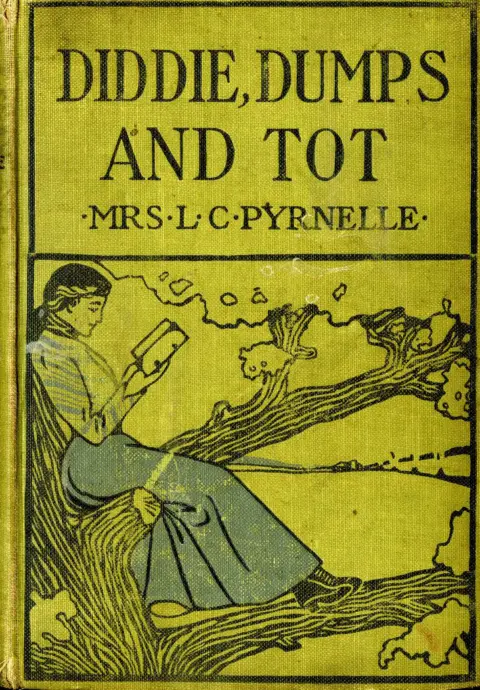
THE CLASSIC COLLECTION · 1882
"Diddie, Dumps, and Tot; Or, Plantation Child-Life" by Louise Clarke Pyrnelle is a children's novel written in the late 19th century, specifically in the 1880s. The story centers around the lives of three sisters, Diddie, Dumps, and Tot, who are the daughters of a Southern planter living on a cotton plantation in Mississippi. The narrative captures their unique childhood experiences, relationships with the enslaved household members, and the vibrant, often whimsical world of plantation life during this period. The opening of the novel introduces the charm and innocence of the sisters, highlighting their fondness for their caretakers and the playful nature of their lives amid plantation traditions. The children are depicted in various scenarios, from enjoying tea parties in their gardens to engaging in imaginative play with the other children on the plantation. It sets the scene for a tapestry of tales, filled with the happiness, simplicity, and innocence of early childhood, while also touching on the complex social dynamics of their environment. The reader is invited to relish in the joyous moments and the deep connections between the children and their caregivers, establishing a foundation for stories that celebrate both tradition and family life on the plantation.
Introduction adapted from the source catalogue; source summaries may be automatically generated.
Free to read · English · 45,055 words · No account needed
MAKE TIME FOR A GOOD BOOK
On by default. Untick to stop anonymous reading totals. Each page counts after 10 seconds in view. How this works.
Anonymous counting is on unless you have switched it off.
“‘Who on-tied, who on-tied Po’ Nancy Jane O?’
An’ de frog, he turnt roun,’ he did, an’ he wave his han’ roun’ his head, an’ he holler back,
“‘Pig-un-a-wa-ya, Pig-un-a-wa-ya, hooo-hooo!’
“Atter Nancy Jane O got erhead er de birds, den de hardes’ flyin’ wuz thu wid; so she jes went ’long, an’ went ’long, kin’ er easy like, tell she got ter de stone; an’ she lit on er’ simmon-bush close ter de crick, an’ Pigunawaya he slipt off, he did, an’ he hist up his feet, an’ he gin er jump, kerchug he went down inter de water; an’ by’mby hyear he come wid de stone in his mouf. Den he mount on Nancy Jane O, he did; an’, mun, she wuz so proud, she an’ de frog bof, tell dey flew all roun’ an’ roun’, an’ Nancy Jane O, she ’gun ter sing,
“‘Who on-tied, who on-tied Po’ Nancy Jane O?’
An’ de frog he ans’er back,
“‘Pig-un-a-wa-ya, Pig-un-a-wa-ya, hooo-hooo!’
“An’ wile dey wuz er singing’ an’ er j’yin’ uv deyselves, hyear come de birds; an’ de frog he felt so big, caze he’d got de stone, tell he stood up on Nancy Jane O’s back, he did, an’ he tuck’n shuck de stone at de birds, an’ holler at ’em,
“‘O Pig-un-a-wa-ya, Pig-un-a-wa-ya, hoo-hooo!’
An’ jes ez he said dat, he felt hisse’f slippin’, an’ dat made him clutch on ter Po’ Nancy Jane O, an’ down dey bof’ went tergedder kersplash, right inter de crick.
“De frog he fell slap on ter er big rock, an’ bust his head all ter pieces; an’ Po’ Nancy Jane O sunk down in de water an’ got drownded; an’ dat’s de een’.”
“Did the king get the stone, Aunt Edy?” asked Dumps.
“Wy no, chile; don’t yer know de mole he’s blin’ tell yit? ef’n he could er got dat stone, he could er seen out’n his eyes befo’ now. But I ain’t got no time ter fool ’long er you chil’en. I mus’ git marster’s shuts done, I mus’.”
And Aunt Edy turned to her ironing-table, as if she didn’t care for company; and Dumps and Tot, seeing that she was tired of them, went back to the house, Tot singing,
“Who on-tied, who on-tied Po’ Nanty Dane O?”
and Dumps answering back,
“Pig-un-a-wa-ya, Pig-un-a-wa-ya, hooo-hooo!”
Your reading position is saved on this browser. Take it to another device with a library code. Reading pages adapt to text, rather than matching a printed edition.
BEHIND THE BOOK
This eBook is for the use of anyone anywhere in the United States and most other parts of the world at no cost and with almost no restrictions whatsoever. You may copy it, give it away or re-use it under the terms of the Project Gutenberg License included with this eBook or online at www.gutenberg.org. If you are not located in the United States, you will have to check the laws of the country where you are located before using this eBook. Read the source licence.
The original source file, including credits and licence, is retained by this library. Request an original-format copy at no charge. Please include the book title and Project Gutenberg identifier #4992.
KEEP YOUR CURIOSITY GOING
Coulson Kernahan

Maurice Baring
Frances Wright
Cécile Tormay

Frederic Jesup Stimson

W. H. P. (William Henry Pope) Jarvis