THE CLASSIC COLLECTION✦Diddie, Dumps & Tot; or, Plantation child-lifeCLASSIC FREE BOOKS
Diddie, Dumps & Tot; or, Plantation child-life
Louise Clarke Pyrnelle
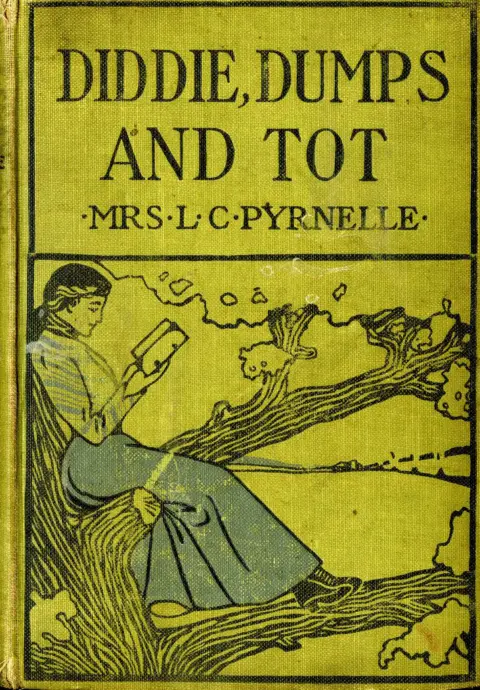
THE CLASSIC COLLECTION · 1882
"Diddie, Dumps, and Tot; Or, Plantation Child-Life" by Louise Clarke Pyrnelle is a children's novel written in the late 19th century, specifically in the 1880s. The story centers around the lives of three sisters, Diddie, Dumps, and Tot, who are the daughters of a Southern planter living on a cotton plantation in Mississippi. The narrative captures their unique childhood experiences, relationships with the enslaved household members, and the vibrant, often whimsical world of plantation life during this period. The opening of the novel introduces the charm and innocence of the sisters, highlighting their fondness for their caretakers and the playful nature of their lives amid plantation traditions. The children are depicted in various scenarios, from enjoying tea parties in their gardens to engaging in imaginative play with the other children on the plantation. It sets the scene for a tapestry of tales, filled with the happiness, simplicity, and innocence of early childhood, while also touching on the complex social dynamics of their environment. The reader is invited to relish in the joyous moments and the deep connections between the children and their caregivers, establishing a foundation for stories that celebrate both tradition and family life on the plantation.
Introduction adapted from the source catalogue; source summaries may be automatically generated.
Free to read · English · 45,055 words · No account needed
MAKE TIME FOR A GOOD BOOK
On by default. Untick to stop anonymous reading totals. Each page counts after 10 seconds in view. How this works.
Anonymous counting is on unless you have switched it off.
Diddie having taken this decided stand, there was nothing for it but to let Old Billy be of the party; and peace being thus restored, the children continued their way, and were soon on the lumber-pile. Diddie at once opened her hotel. Chris was the chambermaid, Riar was the waiter, and Dilsey was the man to take the omnibus down for the passengers. Dumps and Tot, who were to be the boarders, withdrew to the gin-house steps, which was to be the depot, to await the arrival of the omnibus.
“I want ter go to the hotel,” said Dumps, as Dilsey came up rolling the wheelbarrow—“me an’ my three little chil’en.”
“Yes, marm, jes git in,” said Dilsey, and Dumps, with her wax baby and a rag doll for her little daughters, and a large cotton-stalk for her little boy, took a seat in the omnibus. Dilsey wheeled her up to the hotel, and Diddie met her at the door.
“What is your name, madam?” she inquired.
“My name is Mrs. Dumps,” replied the guest, “an’ this is my little boy, an’ these is my little girls.”
“Oh, Dumps, you play so cur’us,” said Diddie; “who ever heard of anybody bein’ named Mrs. Dumps? there ain’t no name like that.”
“Well, I don’t know nothin’ else,” said Dumps; “I couldn’t think of
nothin’.”
“Sposin’ you be named Mrs. Washington, after General Washington?” said Diddie, who was now studying a child’s history of America, and was very much interested in it.
“All right,” said Dumps; and Mrs. Washington, with her son and daughters, was assigned apartments, and Chris was sent up with refreshments, composed of pieces of old cotton-bolls and gray moss, served on bits of broken china.
The omnibus now returned with Tot and her family, consisting of an India-rubber baby with a very cracked face, and a rag body that had once sported a china head, and now had no head of any kind; but it was nicely dressed, and there were red shoes on the feet; and it answered Tot’s purpose very well.
“Dese my ’itty dirls,” said Tot, as Diddie received her, “an’ I tome in de bumberbuss.”
“What is your name?” asked Diddie.
“I name—I name—I name—Miss Gin-house,” said Tot, who had evidently never thought of a name, and had suddenly decided upon gin-house, as her eye fell upon that object.
“No, no, Tot, that’s a thing; that ain’t no name for folks,” said Diddie. “Let’s play you’re Mrs. Bunker Hill; that’s a nice name.”
Your reading position is saved on this browser. Take it to another device with a library code. Reading pages adapt to text, rather than matching a printed edition.
BEHIND THE BOOK
This eBook is for the use of anyone anywhere in the United States and most other parts of the world at no cost and with almost no restrictions whatsoever. You may copy it, give it away or re-use it under the terms of the Project Gutenberg License included with this eBook or online at www.gutenberg.org. If you are not located in the United States, you will have to check the laws of the country where you are located before using this eBook. Read the source licence.
The original source file, including credits and licence, is retained by this library. Request an original-format copy at no charge. Please include the book title and Project Gutenberg identifier #4992.
KEEP YOUR CURIOSITY GOING
Coulson Kernahan

Maurice Baring
Frances Wright
Cécile Tormay

Frederic Jesup Stimson

W. H. P. (William Henry Pope) Jarvis