THE CLASSIC COLLECTION✦Diddie, Dumps & Tot; or, Plantation child-lifeCLASSIC FREE BOOKS
Diddie, Dumps & Tot; or, Plantation child-life
Louise Clarke Pyrnelle
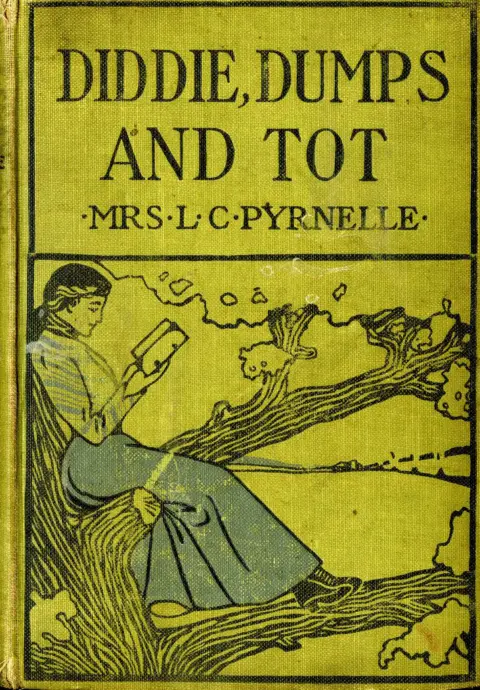
THE CLASSIC COLLECTION · 1882
"Diddie, Dumps, and Tot; Or, Plantation Child-Life" by Louise Clarke Pyrnelle is a children's novel written in the late 19th century, specifically in the 1880s. The story centers around the lives of three sisters, Diddie, Dumps, and Tot, who are the daughters of a Southern planter living on a cotton plantation in Mississippi. The narrative captures their unique childhood experiences, relationships with the enslaved household members, and the vibrant, often whimsical world of plantation life during this period. The opening of the novel introduces the charm and innocence of the sisters, highlighting their fondness for their caretakers and the playful nature of their lives amid plantation traditions. The children are depicted in various scenarios, from enjoying tea parties in their gardens to engaging in imaginative play with the other children on the plantation. It sets the scene for a tapestry of tales, filled with the happiness, simplicity, and innocence of early childhood, while also touching on the complex social dynamics of their environment. The reader is invited to relish in the joyous moments and the deep connections between the children and their caregivers, establishing a foundation for stories that celebrate both tradition and family life on the plantation.
Introduction adapted from the source catalogue; source summaries may be automatically generated.
Free to read · English · 45,055 words · No account needed
MAKE TIME FOR A GOOD BOOK
On by default. Untick to stop anonymous reading totals. Each page counts after 10 seconds in view. How this works.
Anonymous counting is on unless you have switched it off.
“De Lord, seein, he wuz spilte, he didn’t ’low fur ter finish ’im, an’ wuz des ’bout’n ter thow ’im ’way, wen de white man axt fur ’im; so de Lord he finished ’im up des like he wuz, wid his skin black an’ his hyar kunkt up, an’ he gun ’im ter de white man, an’ I see he’s got ’im plum tell yit.”
“Was it you, Daddy?” asked Dumps.
“Wy , no, honey, hit wan’t me, hit wuz my forecisters.”
“What’s a forecister, Daddy?” asked Diddie, rather curious about the
relationship.
“Yer forecisters,” explained Daddy, “is dem uv yer way back folks, wat’s born’d fo’ you is yerse’f, an’ fo’ yer pa is. Now, like my ole marster, yer pa’s gran’pa, wat riz me in ole Furginny, he’s you chil’en’s forecister; an’ dis nigger wat I’m tellin’ yer ’bout’n, he waz my fuss forecister; an’ dats’ de way dat I’ve allers hyearn dat he come ter be black, an’ his hyar kinky; an’ I b’lieves hit, too, caze er nigger’s de sleepies’-headed critter dey is; an’ den, ’sides dat’ I’ve seed er heap er niggers in my time, but I ain’t nuber seed dat nigger yit wat’s wite, an’ got straight hyar on his head.
“Now I ain’t er talkin’ ’bout’n murlatters, caze dey ain’t no reg’lar folks ’tall; dey’s des er mixtry. Dey ain’t white, an’ dey ain’t black, an’ dey ain’t nuffin’; dey’s des de same kin’ er folks ez de muel is er horse!
“An’ den dar’s Injuns; dey’s ergin ernudder kin’ er folks.
“I usen ter hyear ’em say dat de deb’l made de fuss Injun. He seed de Lord er makin’ folks, an’ he ’lowed he’d make him some; so he got up his dut and his water, an’ all his ’grejunces, an’ he went ter wuck; an’ wedder he cooked him too long, ur wedder he put in too much red clay fur de water wat he had, wy, I ain’t nuber hyeard; but den I known de deb’l made ’im, caze I allers hyearn so; an’, mo’n dat, I done seed ’em fo’ now, an’ dey got mighty dev’lish ways. I wuz wid yer gran’pa at Fort Mimms, down erbout Mobile, an’ I seed ’em killin’ folks an’ sculpin’ uv ’em; an, mo’n dat, ef’n I hadn’t er crope under er log, an’ flattent myse’f out like er allergator, dey’d er got me; an’ den, ergin, dey don’t talk like no folks. I met er Injun one time in de road, an’ I axed ’im wuz he de man wat kilt an’ sculpt Sis Leah, wat usen ter b’longst ter yer gran’pa, an’ wat de Injuns kilt. I axt ’im ’ticklur, caze I had my axe erlong, an’ ef’n he wuz de man, I ’lowed fur ter lay him out. But, bless yer life, chile, he went on fur ter say,
Your reading position is saved on this browser. Take it to another device with a library code. Reading pages adapt to text, rather than matching a printed edition.
BEHIND THE BOOK
This eBook is for the use of anyone anywhere in the United States and most other parts of the world at no cost and with almost no restrictions whatsoever. You may copy it, give it away or re-use it under the terms of the Project Gutenberg License included with this eBook or online at www.gutenberg.org. If you are not located in the United States, you will have to check the laws of the country where you are located before using this eBook. Read the source licence.
The original source file, including credits and licence, is retained by this library. Request an original-format copy at no charge. Please include the book title and Project Gutenberg identifier #4992.
KEEP YOUR CURIOSITY GOING
Coulson Kernahan

Maurice Baring
Frances Wright
Cécile Tormay

Frederic Jesup Stimson

W. H. P. (William Henry Pope) Jarvis