THE CLASSIC COLLECTION✦Diddie, Dumps & Tot; or, Plantation child-lifeCLASSIC FREE BOOKS
Diddie, Dumps & Tot; or, Plantation child-life
Louise Clarke Pyrnelle
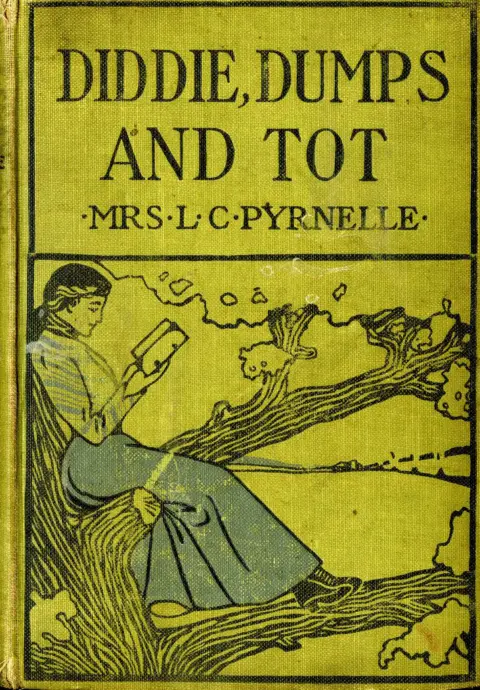
THE CLASSIC COLLECTION · 1882
"Diddie, Dumps, and Tot; Or, Plantation Child-Life" by Louise Clarke Pyrnelle is a children's novel written in the late 19th century, specifically in the 1880s. The story centers around the lives of three sisters, Diddie, Dumps, and Tot, who are the daughters of a Southern planter living on a cotton plantation in Mississippi. The narrative captures their unique childhood experiences, relationships with the enslaved household members, and the vibrant, often whimsical world of plantation life during this period. The opening of the novel introduces the charm and innocence of the sisters, highlighting their fondness for their caretakers and the playful nature of their lives amid plantation traditions. The children are depicted in various scenarios, from enjoying tea parties in their gardens to engaging in imaginative play with the other children on the plantation. It sets the scene for a tapestry of tales, filled with the happiness, simplicity, and innocence of early childhood, while also touching on the complex social dynamics of their environment. The reader is invited to relish in the joyous moments and the deep connections between the children and their caregivers, establishing a foundation for stories that celebrate both tradition and family life on the plantation.
Introduction adapted from the source catalogue; source summaries may be automatically generated.
Free to read · English · 45,055 words · No account needed
MAKE TIME FOR A GOOD BOOK
On by default. Untick to stop anonymous reading totals. Each page counts after 10 seconds in view. How this works.
Anonymous counting is on unless you have switched it off.
“Dilsey don’t know how to tree no ’possums,” said Riar, contemptuously, after they had walked for some time, and anxiously looked up into every tree they passed.
“Yes I kin,” retorted Dilsey; “I kin tree ’em jes ez same ez er dog, ef’n dar’s any ’possums fur ter tree; but I can’t make ’possums, do; an’ ef dey ain’t no ’possums, den I can’t tree ’em, dat’s all.”
“Maybe they don’t come out on the Fourf uv July,” said Dumps. “Maybe ’possums keeps it same as peoples,”
“Now, maybe dey duz,” said Dilsey, who was glad to have some excuse for her profitless ’possum-hunting; and the children, being fairly tired out, started back to the creek bank, when they came upon Uncle Snake-bit Bob, wandering through the woods, and looking intently on the ground.
“What are you looking for, Uncle Bob?” asked Diddie.
“Des er few buckeyes, honey,” answered the old man.
“What you goin’ ter du with ’em?” asked Dumps, as the little girls joined him in his search.
“Well, I don’t want ter die no drunkard, myse’f,” said Uncle Bob, whose besetting sin was love of whiskey.
“Does buckeyes keep folks from dying drunkards?” asked Dumps.
“Dat’s wat dey sez; an’ I ’lowed I’d lay me in er few caze I’ve allers hyearn dat dem folks wat totes a buckeye in dey lef’ britches pocket, an’ den ernudder in de righthan’ coat pocket, dat dey ain’t gwine die no drunkards.”
“But if they would stop drinkin’ whiskey they wouldn’t die drunkards anyhow, would they, Uncle Bob?”
“Well, I dunno, honey; yer pinnin’ de ole nigger mighty close; de whiskey mout hab sump’n ter do wid it; I ain’t ’sputin’ dat—but wat I stan’s on is dis: dem folks wat I seed die drunk, dey nuber had no buckeyes in dey pockets; caze I ’members dat oberseer wat Marse Brunson had, he died wid delirums treums, an’ he runned, he did, fur ter git ’way fum de things wat he seed atter him; an’ he jumped into de riber, an’ got drownded; an’ I wuz dar wen dey pulled ’im out; an’ I sez ter Brer John Small, who wuz er standin’ dar, sez I, now I lay yer he ain’t got no buckeyes in his pockets; and wid dat me’n Brer John we tuck’n turnt his pockets wrong side outerds; an’ bless yer soul, chile, hit wuz jes like I say; DAR WAN’T NO BUCKEYES DAR! Well, I’d b’lieved in de ole sayin’ befo’, but dat jes kin’ter sot me on it fas’er ’n eber; an’ I don’t cyar wat de wedder is, nor wat de hurry is; hit may rain an’ hit may shine, an’ de time may be er pressin’, but ole Rob he don’t stir out’n his house mornin’s ’cep’n he’s got buckeyes in his pockets. But I seed ’em gittin’ ready fur dinner as I comed erlong, an’ you chil’en better be er gittin’ toerds de table.”
Your reading position is saved on this browser. Take it to another device with a library code. Reading pages adapt to text, rather than matching a printed edition.
BEHIND THE BOOK
This eBook is for the use of anyone anywhere in the United States and most other parts of the world at no cost and with almost no restrictions whatsoever. You may copy it, give it away or re-use it under the terms of the Project Gutenberg License included with this eBook or online at www.gutenberg.org. If you are not located in the United States, you will have to check the laws of the country where you are located before using this eBook. Read the source licence.
The original source file, including credits and licence, is retained by this library. Request an original-format copy at no charge. Please include the book title and Project Gutenberg identifier #4992.
KEEP YOUR CURIOSITY GOING
Coulson Kernahan

Maurice Baring
Frances Wright
Cécile Tormay

Frederic Jesup Stimson

W. H. P. (William Henry Pope) Jarvis