THE CLASSIC COLLECTION✦A Christmas Carol The original manuscriptCLASSIC FREE BOOKS
A Christmas Carol The original manuscript
Charles Dickens
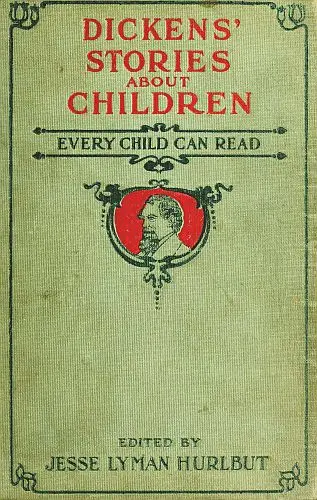
THE CLASSIC COLLECTION · 1909
"Dickens' Stories About Children Every Child Can Read" by Charles Dickens is a collection of children's tales crafted in the late 19th century. The volume features selected stories that highlight various aspects of child life, showcasing the memorable characters created by Dickens, such as Tiny Tim and Little Nell. This compilation aims to present these cherished tales in a form accessible for children, allowing them to engage with the unique adventures and moral lessons inherent in Dickens' work. The opening of this anthology introduces readers to Trotty Veck and his daughter Meg, emphasizing their humble but cheerful existence amidst poverty. Trotty, a ticket porter, spends his day filled with small joys despite the harshness of life, while Meg brings warmth and love into their home. The narrative captures the bond they share, as it explores themes of love, sacrifice, and the resilience of the human spirit against difficult circumstances. Additionally, it hints at larger societal issues, setting the stage for the poignant stories that follow throughout the collection.
Introduction adapted from the source catalogue; source summaries may be automatically generated.
Free to read · English · 63,289 words · No account needed
MAKE TIME FOR A GOOD BOOK
On by default. Untick to stop anonymous reading totals. Each page counts after 10 seconds in view. How this works.
Anonymous counting is on unless you have switched it off.
But the old gentleman was not the only person who raised the hue-and-cry. The Dodger and Master Bates, unwilling to attract public attention by running down the open street, had merely retired into the very first doorway round the corner. They no sooner heard the cry, and saw Oliver running, than, guessing exactly how the matter stood, they issued forth with great quickness; and shouting "Stop thief!" too, joined in the pursuit like good citizens.
Away they ran, pell-mell, helter-skelter, slap-dash; tearing, yelling, screaming, knocking down the passengers as they turn the corners, rousing up the dogs, and astonishing the fowls; and making streets, squares, and courts re-echo with the sound.
At last a burly fellow struck Oliver a terrible blow and he went down upon the pavement; and the crowd eagerly gathered round him, each newcomer jostling and struggling with the others to catch a glimpse. "Stand aside!" "Give him a little air!" "Nonsense! he don't deserve it!" "Where's the gentleman?" "Here he is, coming down the street." "Make room there for the gentleman!" "Is this the boy, sir?"
Oliver lay covered with mud and dust, and bleeding from the mouth, looking wildly round upon the heap of faces that surrounded him, when the old gentleman was officiously dragged and pushed into the circle by the foremost of the pursuers.
"Yes," said the gentleman, "I am afraid it is the boy."
"Afraid!" murmured the crowd. "That's a good 'un!"
"Poor fellow!" said the gentleman, "he has hurt himself."
"I did that, sir," said a great lubberly fellow, stepping forward; "and preciously I cut my knuckle agin his mouth. I stopped him, sir."
The fellow touched his hat with a grin, expecting something for his pains; but the old gentleman, eyeing him with an expression of dislike, looked anxiously round, as if he contemplated running away himself; which it is very possible he might have attempted to do, and thus have afforded another chase, had not a police officer (who is generally the last person to arrive in such cases) at that moment made his way through the crowd, and seized Oliver by the collar.
"Come, get up," said the man, roughly.
"It wasn't me, indeed, sir. Indeed, indeed, it was two other boys," said Oliver, clasping his hands passionately and looking round. "They are here somewhere."
"Oh no, they ain't," said the officer. He meant this to be ironical, but it was true besides; for the Dodger and Charley Bates had filed off down the first convenient court they came to. "Come, get up!"
"Don't hurt him," said the old gentleman, compassionately.
Your reading position is saved on this browser. Take it to another device with a library code. Reading pages adapt to text, rather than matching a printed edition.
Charles Dickens
Samuel McChord Crothers & Charles Dickens

Rebecca Harding Davis & Thomas De Quincey & Charles Dickens & Nathaniel Hawthorne & Edward Bulwer Lytton, Baron Lytton & Edgar Allan Poe & Harriet Elizabeth Prescott Spofford

Charles Dickens
BEHIND THE BOOK
This eBook is for the use of anyone anywhere in the United States and most other parts of the world at no cost and with almost no restrictions whatsoever. You may copy it, give it away or re-use it under the terms of the Project Gutenberg License included with this eBook or online at www.gutenberg.org. If you are not located in the United States, you will have to check the laws of the country where you are located before using this eBook. Read the source licence.
The original source file, including credits and licence, is retained by this library. Request an original-format copy at no charge. Please include the book title and Project Gutenberg identifier #32241.
KEEP YOUR CURIOSITY GOING
Coulson Kernahan

Maurice Baring
Frances Wright
Cécile Tormay

Frederic Jesup Stimson

W. H. P. (William Henry Pope) Jarvis