A Speckled Bird
Augusta J. (Augusta Jane) Evans
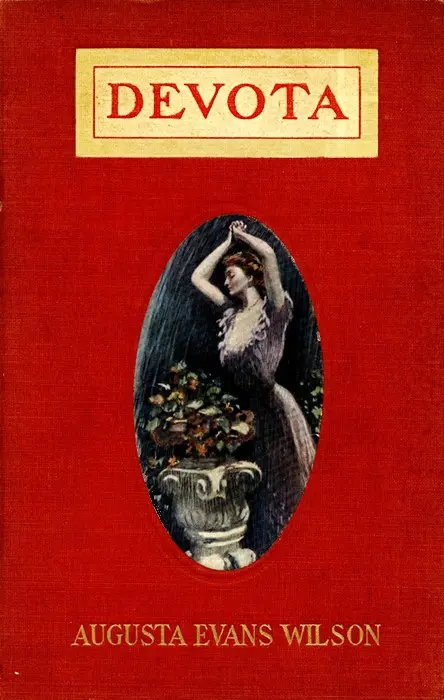
THE CLASSIC COLLECTION · 1907
"Devota" by Augusta J. Evans is a romantic novel written in the early 20th century. The book explores themes of love, redemption, and social expectation, delving into the lives of characters who navigate personal and interpersonal challenges in a context filled with propriety and societal norms. The narrative revolves around the titular character, Devota Lindsay, whose backstory is steeped in tragedy and complexity. The story follows Devota as she grapples with the repercussions of past decisions and family legacy while aiming to reconcile her feelings of guilt and desire for love with her moral convictions. She has a tumultuous relationship with the powerful Governor Royal Armitage, who is haunted by his own past. As political and personal challenges intertwine, their journey toward mutual understanding becomes fraught with tension and emotional depth. Throughout the novel, the characters confront societal judgments, personal desires, and the quest for true love, culminating in an exploration of their inner strengths and weaknesses. Ultimately, "Devota" is not just a tale of romantic entanglements but a rich canvas that portrays the conflict between personal ambition and ethical responsibility.
Introduction adapted from the source catalogue; source summaries may be automatically generated.
Free to read · English · 13,369 words · No account needed
MAKE TIME FOR A GOOD BOOK
On by default. Untick to stop anonymous reading totals. Each page counts after 10 seconds in view. How this works.
Anonymous counting is on unless you have switched it off.
"Had you allowed me the liberty of approach? I obeyed your command, I followed the line you dictated, I rigidly refrained from word or letter and I accorded you the silence you demanded. My mother urged me to venture some overture for reconciliation, and just before her death I found a letter she had addressed to you in my behalf. Self-respect forced me to expostulate, and at her bedside I burned that letter. At least I am entitled to your thanks that in no degree have I attempted to invade the territory, from which I was so ignominiously ejected."
"In saying good-night, and also an eternal good-bye, I beg your Excellency's acceptance of my thorough appreciation of, and thanks for your courteous and consistent compliance with my wishes."
She turned away quickly, but his hand fell upon her shoulder.
"Devota! Devota!"
"Governor Armitage exceeds even his official rights, and usurps a privilege I grant no man. Do not touch me.
He shook her gently as one might a wayward child, and her haughty repose could no longer defy the tender, glowing eyes so close to her own.
"How much longer do you intend to impale us both on the iron cross of your cruel, despotic pride? Since the responsibility for our meeting here is yours, not mine, I will speak at last, and you shall listen. For a time, after you forsook me, I bore up bravely, sustained by the belief that my banishment was temporary, because I felt assured that vindication, though tardy, was inevitable. Sooner than I dared to hope that woful tragedy removed all suspicion from me, lifted me back at once to the position of which my slanderers had robbed me, and I exulted in the anticipation of our speedy reunion; watched the hour of every mail delivery. After you went abroad the second time I realized that my doom was permanent, that your proud obstinacy would prevent you from ever lifting a finger to recall me, and then I grew desperately bitter. About six years ago I was tempted to find some relief by a change of conditions that were reducing me to callous cynicism. I set to work diligently to cultivate an affection for a very lovely woman I thought it possible I might win by persistent devotion. I longed to forget, to supplant you, to cast you out of my life as completely as you had exiled me; but despite all efforts when I tried to picture her as mistress of my home, as sharing my name, my heart revolted. Your haunting face rose before me, your dear, beautiful hands seemed to steal into mine as in the days when they belonged to me. I abandoned such futile struggles and accepted the lonely lot that could not be averted. So long as you remained Miss Lindsay I had the right to recall all that was so precious thirteen years ago. Then came the supreme trial; it was the general opinion of your social world that Kingdon had won his suit, and that the day of his marriage was not distant. I knew he was worthy, was the most admired and envied man in our State, and it seemed incredible you should not accept the glittering future he offered. You cannot realize the maddening torture that seizes a man, when he thinks that the one woman in all the world who holds his heart in the hollow of her hand will be clasped in the arms of another entitled to call her his wife! So keen was my suffering that I think the damned would not have changed places with me. Then Kingdon suddenly altered the date of sailing, and in bidding me good-bye told me you had twice rejected him. Business had called me to your city, and after his farewell visit that night I could not bear the noise and bustle of the hotel. I walked about the parks and up and down the streets, and though the sleet was falling I wandered to the avenue where your great stone house towers above all others. Standing on the pavement in front I listened to the city clock clanging two A.M. A light shone from an upper window; elsewhere all was dark. Only granite walls shut me from sight of one whose precious lips had felt the touch of mine. As I stood in the pelting sleet, over the silence of the night I heard a sound that seemed to come from the opening heavens. An organ roll thrilling that 'Adagio' no fingers but yours had ever adequately interpreted to me. Our Adagio--yours and mine--sanctified by blessed associations with the hallowed days of our betrothal. As I listened, the dreary lost years rolled away as a black curtain, and in the limelight of memory I saw again all our surroundings on that last happy evening when you played for me; the misty purple of mountain heights, the ferny gorges where scarlet rhododendrons flared their torches, the clustering honeysuckle whose chalices swung in the breeze, and you--my promised bride--seated at the piano, the sunset glow burnishing your hair, your white dress and floating blue ribbons. I knew your touch; the passionately tender, closing chords drifted like a whisper from our past, like an answer from your soul to the call of mine, and it told me why Kingdon could never claim you. Ah! tears gathered, dripped; happy tears. I knew then you could not forget, and since that night I have found grim comfort in the belief that only your inexorable, merciless pride stood between us. Sweetheart of my young manhood, darling of my lonely, weary old heart, will you crucify us both until death ends all?"
Your reading position is saved on this browser. Take it to another device with a library code. Reading pages adapt to text, rather than matching a printed edition.
Augusta J. (Augusta Jane) Evans
BEHIND THE BOOK
This eBook is for the use of anyone anywhere in the United States and most other parts of the world at no cost and with almost no restrictions whatsoever. You may copy it, give it away or re-use it under the terms of the Project Gutenberg License included with this eBook or online at www.gutenberg.org. If you are not located in the United States, you will have to check the laws of the country where you are located before using this eBook. Read the source licence.
The original source file, including credits and licence, is retained by this library. Request an original-format copy at no charge. Please include the book title and Project Gutenberg identifier #43080.
KEEP YOUR CURIOSITY GOING
Coulson Kernahan

Maurice Baring
Frances Wright
Cécile Tormay

Frederic Jesup Stimson

W. H. P. (William Henry Pope) Jarvis