THE CLASSIC COLLECTION✦An outlaw’s diary: the CommuneCLASSIC FREE BOOKS
An outlaw’s diary: the Commune
Cécile Tormay
THE CLASSIC COLLECTION · 1920
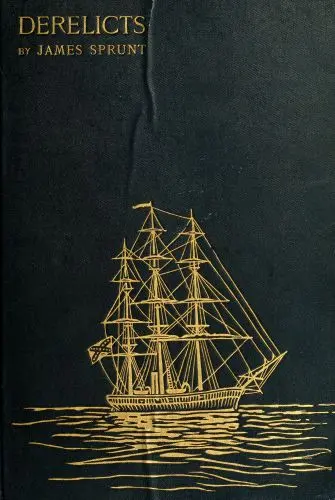
"Derelicts: An Account of Ships Lost at Sea in General Commercial Traffic" by James Sprunt is a historical account written in the early 20th century. The work discusses the fate of numerous vessels that were abandoned at sea, particularly during the American Civil War, detailing blockade runners and other ships lost along the North Carolina coast. It captures the narrative of their journeys, the challenges they faced, and the broader implications of maritime navigation during a turbulent period in U.S. history. The opening of the book sets the stage by introducing the author's long-standing interest in the stories of derelict ships and the blockade runners that encountered various fates during the Civil War. Sprunt reflects on episodes from his own life, including his role as a paymaster on some of these ships, conveying a deep sense of nostalgia and urgency to document these stories before they fade from memory. He establishes that many of these derelict ships still hold their secrets, and introduces the term "derelict" within a legal context, while describing the dangers they pose to maritime traffic. The beginning of the book combines personal recollections, historical insights, and vivid imagery of life at sea, drawing readers into the perilous world of nautical adventures amidst the backdrop of war.
Introduction adapted from the source catalogue; source summaries may be automatically generated.
Free to read · English · 59,755 words · No account needed
MAKE TIME FOR A GOOD BOOK
On by default. Untick to stop anonymous reading totals. Each page counts after 10 seconds in view. How this works.
Anonymous counting is on unless you have switched it off.
"The capture seems to have been well and gallantly made by Acting Master Breck. Captain Ridgely, senior officer, commends his spirit and promptness. I hope that the department, in view of this especial and other good service on the part of Acting Master Breck, will favorably consider my application for his promotion.
"The Ella and Annie, I am informed, was built at Wilmington, Del., is of light draft, fast, and would, I think, be very convenient for general purposes in this squadron, being available either for inside or outside service. I would suggest that she be purchased by Government and sent to this squadron, if, after examination, she be found suitable.
"I have the honor to be, Sir,
"Very respectfully yours,
"S.P. Lee,
"Acting Rear Admiral,
"Comdg. North Atlantic Blockading Squadron.
"Hon. Gideon Welles,
"Secretary of the Navy, Washington, D.C."
(Report of Acting Master Breck, U.S. Navy, Commanding U.S.S. Niphon.)
"U.S.S. 'Niphon,'
"Off New Inlet,
"November 9, 1863.
"Sir: I have the honor to report that on the morning of this date, while near the beach, saw a blockade runner running along the beach; gave chase, fired several guns and rockets, but at last lost sight of her; stood back to my station and steamed along the beach to the north and about 5.30 a.m. saw another steamer running along the shore to the southward; stood in to cut him off, when he turned directly toward me, evidently with the intention of running me down, which I avoided, in part, owing to this vessel answering her helm with great quickness. He struck me forward, both vessels running at great speed. As we came together, I fired a broadside--grape, canister, and shell--and immediately boarded him and took possession. In securing the prisoners a lot of shavings and a slow match attached to a keg of powder were found in the run, the captain acknowledging his intention to destroy the vessel. The collision broke bowsprit, stove all my starboard boats, broke beam, also some planks near the wood ends, damaged guard, chain plates, and caused her decks to leak badly. We have three men wounded; also four of the crew of the Confederate steamer, one dangerously, by grape or shell. The blockade runner, which proved to be the Ella and Annie, of Charleston, S.C., is 905 tons; is in good order with the exception of numerous shot holes in her upper works. Her cargo consists, as near as we can ascertain, of rifles, salt, saltpeter, paper, and hardware. She is a Confederate steamer, officered mostly [by men] of the Confederate Navy. She was captured off Masonboro Inlet in four fathoms water, eighteen miles north of Fort Fisher; no vessel in signal distance or in sight immediately after her capture. Steamed toward the fleet, and in about half an hour made the mastheads of a vessel which proved to be the U.S.S. Shenandoah, and shortly after seven o'clock came to anchor about three miles north of the senior officer's usual station. About half an hour afterwards the Shenandoah came to anchor near us, and contrary to the usual custom the senior officer sent his own prize master on board. Transferred the following officers and crew on board the Ella and Annie by order of senior officer: Acting Ensign J.J. Reagean, Acting Third Assistant Engineer J.J. Sullivan, one fireman, one ordinary seaman, three landsmen, and two black refugees.
Your reading position is saved on this browser. Take it to another device with a library code. Reading pages adapt to text, rather than matching a printed edition.
BEHIND THE BOOK
This eBook is for the use of anyone anywhere in the United States and most other parts of the world at no cost and with almost no restrictions whatsoever. You may copy it, give it away or re-use it under the terms of the Project Gutenberg License included with this eBook or online at www.gutenberg.org. If you are not located in the United States, you will have to check the laws of the country where you are located before using this eBook. Read the source licence.
The original source file, including credits and licence, is retained by this library. Request an original-format copy at no charge. Please include the book title and Project Gutenberg identifier #56277.
KEEP YOUR CURIOSITY GOING
Cécile Tormay

Moritz Busch
John L. Ransom
Frances Wright
Cécile Tormay

Mabel Potter Daggett