THE CLASSIC COLLECTION✦An outlaw’s diary: the CommuneCLASSIC FREE BOOKS
An outlaw’s diary: the Commune
Cécile Tormay
THE CLASSIC COLLECTION · 1920
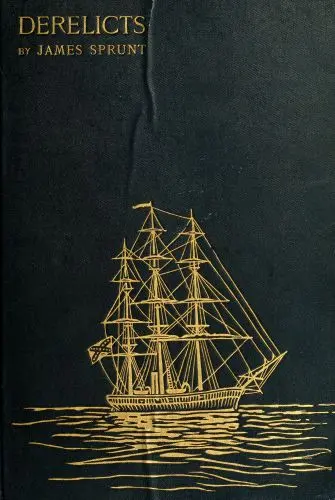
"Derelicts: An Account of Ships Lost at Sea in General Commercial Traffic" by James Sprunt is a historical account written in the early 20th century. The work discusses the fate of numerous vessels that were abandoned at sea, particularly during the American Civil War, detailing blockade runners and other ships lost along the North Carolina coast. It captures the narrative of their journeys, the challenges they faced, and the broader implications of maritime navigation during a turbulent period in U.S. history. The opening of the book sets the stage by introducing the author's long-standing interest in the stories of derelict ships and the blockade runners that encountered various fates during the Civil War. Sprunt reflects on episodes from his own life, including his role as a paymaster on some of these ships, conveying a deep sense of nostalgia and urgency to document these stories before they fade from memory. He establishes that many of these derelict ships still hold their secrets, and introduces the term "derelict" within a legal context, while describing the dangers they pose to maritime traffic. The beginning of the book combines personal recollections, historical insights, and vivid imagery of life at sea, drawing readers into the perilous world of nautical adventures amidst the backdrop of war.
Introduction adapted from the source catalogue; source summaries may be automatically generated.
Free to read · English · 59,755 words · No account needed
MAKE TIME FOR A GOOD BOOK
On by default. Untick to stop anonymous reading totals. Each page counts after 10 seconds in view. How this works.
Anonymous counting is on unless you have switched it off.
There were two blockade runners named Kate, but they were quite different as to origin and enterprise. The first one of that name was an American-built steamer, previously in the coast trade. She was commanded by Capt. Thomas J. Lockwood, and it was this vessel that brought to Wilmington on the 6th of August, 1862, the fearful plague of yellow fever, which raged for ten weeks and carried off 446 of our people. After several successful voyages she ran ashore above Fiddler's Dreen, near Southport, and went to pieces.
About twenty years ago I related in Justice Clark's North Carolina Regimental Histories, published in five volumes, 1901, an incident in the career of this steamer Kate which may be worth repeating:
On one occasion in the Kate Lockwood had run inside the line of blockaders at the Main Bar some distance up the beach, and suddenly took the ground while jammed between an anchored man-of-war and the breakers. The blockader did not see him, although so near that no one on board the Kate was permitted to speak above a whisper. The tide was near the last of the ebb and there were only a few hours of darkness in which to work. George C. McDougal, chief engineer and Captain Lockwood's brother-in-law, always ready for an emergency, had promptly loaded the safety valve down with a bag of iron castings to prevent any noise from escaping steam, and when it became absolutely necessary the steam was blown off very gently under the water. The boats were lowered noiselessly and several passengers and a lot of valuables landed in the surf on the lee side of the vessel, with orders to proceed to Fort Caswell in the distance. At first it seemed impossible to save the ship, as any noise from her paddles would inevitably have led to her destruction by the blockaders, which were seen plainly only a cable's length from the Kate's perilous position. Lockwood held a consultation with his trusted engineer, and decided to open the gangway and quietly slide overboard a lot of lead wire in heavy coils, which was part of the inward cargo, and which was intended to be cut into bullets by the Confederate Government. This served to lighten the ship and also as an effectual bulkhead which prevented the vessel from working higher up on the beach when the tide turned, and the discharge went on for some time without apparent effect; but the rising tide soon after began to bump the bilges of the vessel against the sand bank inside. Lockwood proposed an attempt to back clear or to beach her at once, but the "Boss," as McDougal was called, calmly showed him that unless they were sure of floating clear on the first attempt they would never be permitted to make a second trial, as the paddles would surely betray them to the fleet. Another fifteen minutes that seemed an hour of suspense, and the captain again urged immediate action, but the imperturbable engineer said: "Wait a little longer, Oakie; she is rising every minute; let us be sure of getting off before we make the effort." Meantime the bumping increased, and at last, with everything in readiness and a full head of steam, the engines were reversed full speed, and the Kate, quickly afloat and responding to the wheel, gallantly passed the blockading fleet in the gray dawn and shortly afterwards anchored under the guns of Fort Caswell. She had hardly swung to the anchor before she was seen by the disappointed blockaders, who sent shell after shell flying after her, bursting in such uncomfortable proximity, that the Kate was moved up to Mrs. Stuart's wharf at Smithville, where the shell and solid shot still followed her, many passing in a line more than a thousand yards beyond the wharf. With the aid of a good glass a man could be seen in the foretop of the Federal flagship with a flag in his hand, which he waved to right or left as he saw the effect of the firing; this enabled the gunners to better their aim until the shells struck just astern of the Kate or passed in a line ahead of the vessel. On a closer approach of the fleet they were driven off by Fort Caswell's heaviest guns. The Kate and her crew were in great peril on this occasion, owing to the fact that there were a thousand barrels of gunpowder on board for the Confederacy, making the risk from the shells extremely dangerous. Mr. McDougal said to me on this occasion that when the Yankees began shelling them at Fort Caswell a detachment of soldiers was being embarked for Wilmington on the Confederate transport James T. Petteway, and that when the first shell struck the beach near the Petteway, the whole company broke ranks and ran like rabbits to the fort again.
Your reading position is saved on this browser. Take it to another device with a library code. Reading pages adapt to text, rather than matching a printed edition.
BEHIND THE BOOK
This eBook is for the use of anyone anywhere in the United States and most other parts of the world at no cost and with almost no restrictions whatsoever. You may copy it, give it away or re-use it under the terms of the Project Gutenberg License included with this eBook or online at www.gutenberg.org. If you are not located in the United States, you will have to check the laws of the country where you are located before using this eBook. Read the source licence.
The original source file, including credits and licence, is retained by this library. Request an original-format copy at no charge. Please include the book title and Project Gutenberg identifier #56277.
KEEP YOUR CURIOSITY GOING
Cécile Tormay

Moritz Busch
John L. Ransom
Frances Wright
Cécile Tormay

Mabel Potter Daggett