READ · DISCOVER · ENJOYClassic literature · Always free
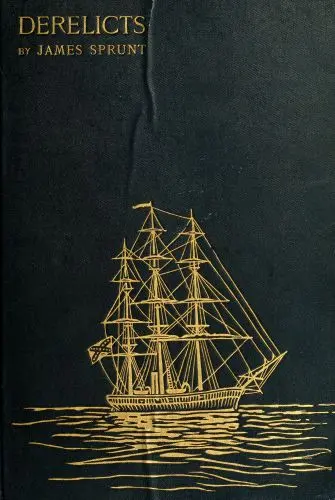
Derelicts: An Account of Ships Lost at Sea in General Commercial Traffic And a Brief History of Blockade Runners Stranded Along the North Carolina Coast, 1861-1865 — digital edition cover

THE CLASSIC COLLECTION · 1920

Derelicts: An Account of Ships Lost at Sea in General Commercial Traffic And a Brief History of Blockade Runners Stranded Along the North Carolina Coast, 1861-1865

"Derelicts: An Account of Ships Lost at Sea in General Commercial Traffic" by James Sprunt is a historical account written in the early 20th century. The work discusses the fate of numerous vessels that were abandoned at sea, particularly during the American Civil War, detailing blockade runners and other ships lost along the North Carolina coast. It captures the narrative of their journeys, the challenges they faced, and the broader implications of maritime navigation during a turbulent period in U.S. history. The opening of the book sets the stage by introducing the author's long-standing interest in the stories of derelict ships and the blockade runners that encountered various fates during the Civil War. Sprunt reflects on episodes from his own life, including his role as a paymaster on some of these ships, conveying a deep sense of nostalgia and urgency to document these stories before they fade from memory. He establishes that many of these derelict ships still hold their secrets, and introduces the term "derelict" within a legal context, while describing the dangers they pose to maritime traffic. The beginning of the book combines personal recollections, historical insights, and vivid imagery of life at sea, drawing readers into the perilous world of nautical adventures amidst the backdrop of war.

Introduction adapted from the source catalogue; source summaries may be automatically generated.

Start reading ↓

Free to read · English · 59,755 words · No account needed

MAKE TIME FOR A GOOD BOOK

Derelicts: An Account of Ships Lost at Sea in General Commercial Traffic And a Brief History of Blockade Runners Stranded Along the North Carolina Coast, 1861-1865

On by default. Untick to stop anonymous reading totals. Each page counts after 10 seconds in view. How this works.

Anonymous counting is on unless you have switched it off.

Derelicts: An Account of Ships Lost at Sea in General Commercial Traffic And a Brief History of Blockade Runners Stranded Along the North Carolina Coast, 1861-1865

Meanwhile, I observed with some curiosity that we were off our regular course, and also, with feelings of dismay, that we were approaching a long, low, rakish-looking war vessel, barque-rigged and under steam, which was evidently lying to and awaiting us, but my apprehension was changed to wonder and amazement as I beheld flying apeak the new white flag of the Confederacy. It was a sight I shall never forget; alone upon the wide sea, hunted by a hundred adversaries, the corvette Florida, under the gallant Maffitt, had circumnavigated the globe and spread consternation among the merchant marine of the Stars and Stripes without the loss of a man. She was a beautiful vessel and had been handled with consummate skill and daring. There was something pathetic in the object of our meeting, which had been secretly prearranged, for a boat was immediately lowered, into which were placed sundry parcels of opium for the hospital service of the Southern Army, probably from the hold of one of her prizes; and this sympathetic offering from these homeless fellows on the high sea to their sick and wounded comrades in the field hospitals, for the mitigation of their sufferings, appealed strongly to our hearts.

We tarried briefly, dipping in a parting salute to each other our respective ensigns, probably the first and the last time that the conquered banner was used to exchange courtesies with the same flag at sea. The corvette proceeded under her new commander, Capt. Charles M. Morris, cruising near and far until she reached Bahia, Brazil, in which neutral port she was attacked while disarmed, and captured at night by the Wachusett, and later, it is said, was conveniently cast away near the last resting place of her famous commander, Captain Maffitt.

Our third and last day at sea began auspiciously, but we were drawing toward the coast much farther north than our usual landfall. At about half past three in the afternoon we were startled by the lookout in the crow's nest, with a lusty "Sail ho!" "Whereaway?" called the officer of the watch. "On the port quarter, sir, heading toward us." We were in a bad position, to the northward of Cape Lookout, but the stranger had not yet perceived us. In our eagerness for more steam, however, the telltale smoke was vomited from our funnels, and in a short time it was evident that we were being overhauled by a faster vessel under crowded canvas and full steam. The rising wind favored him, because we had but two sails, fore and aft, which served to steady us in a seaway, but this added little to our speed. As the stranger drew rapidly nearer, pushing us toward a lee shore, she opened fire with her rifled cannon, and for the first time in my life I heard the scream of a hostile shell as it passed between our funnels and plunged into the sea a half mile beyond. The sensation was most unpleasant; had we been able to return the fire, the excitement of battle must have been exhilarating, but to be hunted like a rabbit and pelted with Parrott shells and 11-inch projectiles was enough to reduce my backbone to such laxation that my trembling knees refused to bear it. The cruiser's aim was deadly, for the 11-inch shells came tumbling end over end with such fearful accuracy that many of them passed only a few feet from my head. Others sent the salt spray flying into our faces; and yet there were, up to six o'clock, no casualties of any importance. The admirable conduct of our naval passengers soon inspired me with courage--such is the influence of veterans beside raw troops--and, strangely enough, as the firing of single batteries was changed to broadsides, my despairful feelings gave way to hope and confidence. Our pursuer was now fairly abeam and sailing the same course. Why she did not destroy us utterly at such short range must have appeared to them incomprehensible, because we easily distinguished without glasses the movements of their gunners and the working of their crew at quarters; and our pursuer must have been surprised at the audacity of our passengers, who tranquilly measured with their watches the intervals between the firing of his projectiles and their passage overhead. They also used their sextants continuously during the chase, and it was doubtless owing to their superior knowledge and fortitude that our commander held on his course in the face of imminent destruction, for, be it remembered, we were loaded to the hatch combings with gunpowder for Lee's army. As the sun sank lower on the horizon, so sank our hopes of escape, for every moment seemed to be drawing us nearer to the end. Even our passengers became disheartened and said at last that it was a useless risk to all the lives on board. They accordingly proceeded to their cabins and destroyed their official papers, and threw overboard some valuable side arms and rifles, and I, by the captain's orders, took the Confederate mail bag and government dispatches to the furnace and saw them go up in smoke. Orders were now given to lower the boats to the rail, for what purpose I do not know, when a strange thing happened. There was a loud explosion in the forward fireroom, not made by the bursting of a shell but accompanied by a cloud of steam. Immediately the stokers and firemen swarmed up the iron ladders to the deck, terror-stricken and bewildered. They had been kept at their work for hours at the point of a pistol in the hands of desperate and determined men, but now, panic-stricken, they rushed aft, not knowing what they would do. Our chief engineer quietly reported the collapse of one of our boilers, cause unknown, steam reduced nearly one-half in consequence, but our slackened speed proved to be the means of our salvation. The sun had gone behind a cloud bank, a mist hung over the land to leeward, our ship, painted the dull grey color of the sand dunes along the shore line, was obscured from the view of the enemy, which was quite visible to us, forging ahead and firing wildly. Our engines were stopped and sails lowered, every eye was upon the cruiser. Would she discover our desperate expedient? Had she done so, I believe our crew would have been ordered to the boats and the Lilian abandoned, with a lighted fuse for her destruction. But the cruiser drew farther away, firing his broadsides at an invisible foe. Cautiously and slowly we limped to windward, crossing the wake of our discomfited antagonist, and laying our course straight and true for Wilmington. It was now eight o'clock in the evening, a hundred miles between us and our dangerous destination, and daylight comes early in the summer months. By the closest calculation we might, without accidents, reach the Cape Fear by sunrise, and then in our disabled condition how could we hope to run the gauntlet of the blockading fleet? It was resolved to do it or die. Fortune had favored us in an extremity, perhaps she would still be kind. We had an anxious night; sleep, even after the excitement and exhaustion of the previous day, was impossible. We saw the first faint streaks of day off Masonboro Sound, where our watchful Gregory picked up the signal lights ashore and passed the word along the beach for our protection by the fort. It was a cloudy morning; on and on we drove the little ship; she seemed to feel the crisis while she labored like a sentient being to meet her fate as speedily as possible. At last, in the friendly haze of dawn, we were among them; blockaders to the right of us, blockaders to the left of us, blockaders ahead of us loomed up like monsters of the deep. Craig coolly but anxiously peered ahead. Long Tom, well forward on the turtleback, whispered the words which a line of picked men reported to the bridge. Again and again we stopped for the passage of a picket barge or gunboat in the darkness ahead, who saw us not, and for the bearings, which in our devious course we had lost in confusion. Once more we slowly proceeded, when suddenly, out of the darkness and close aboard, flashed the fiery train of a rocket, and a deep, commanding voice, just over the side, shouted "Heave to, or I'll sink you." Quickly our bridge responded "Aye, aye, sir, we stop the engines." "Back your engines, sir, and stand by for my boats," called the lusty man-of-war. But our paddles were not reversed. Lockhart said he never heeded such an order with the bar at hand; on the contrary our engines were evidently running away with the ship, and, while the confident blockader, diverted from his guns, was engaged in lowering his boats, the Lilian was gliding away toward the bar. A trail of rockets and Drummond lights and bombshells from the rest of the fleet followed in our wake, but the friendly flash of signals from the fort encouraged us, while Gregory, with his masked lights, revealed to them our steady progress until we anchored under the Confederate guns. It was now broad daylight and the blockading fleet had sullenly withdrawn to a safe distance. We proceeded toward Fort Anderson and came to anchor at quarantine. The clouds had passed away, revealing in the brightness of the morning light the stately white columns of Orton House in the distance. Accompanied by our faithful Scipio and escorted beyond the fort by its courteous Colonel Hedrick, we proceeded in silence through St. Philip's churchyard and the dead colonial town of Brunswick, past Russellboro, where Governor Tryon met the first armed colonists (the cradle of American independence), through the long avenue of oaks, where, looking ahead, we beheld a sight which cheered our hearts; my friend and his daughter surrounded by the yelping hounds returning from a chase, for reynard's brush was at her saddlebow. With mutual exclamations of astonishment and delight we learned that the young captain had written by a flag of truce of his convalescence in a Northern hospital. I will not say the touching words that Scipio heard, as, with hands clasped by master and mistress, and with bowed head, he received their tearful benedictions. My friend has long since gone to his eternal rest and Scipio's white soul soon followed him. They are buried at Orton in a grove where the mocking bird builds its nest and sings; where, above the murmur of the tree tops, which bend to the soft south wind, is heard the distant booming of the sea, and in their death they were not divided.

Your reading position is saved on this browser. Take it to another device with a library code. Reading pages adapt to text, rather than matching a printed edition.

BEHIND THE WORDS

About James Sprunt

James Sprunt (1846–1924). Explore Derelicts: An Account of Ships Lost at Sea in General Commercial Traffic And a Brief History of Blockade Runners Stranded Along the North Carolina Coast, 1861-1865 in this collection. These books span history.

Explore this author’s books →

THE READERS’ VERDICT

How did this story stay with you?

Not rated yet
Your rating for Derelicts: An Account of Ships Lost at Sea in General Commercial Traffic And a Brief History of Blockade Runners Stranded Along the North Carolina Coast, 1861-1865

Be the first to share your verdict.

One rating per browser, which you can change or remove. A necessary browser identifier remembers your vote. How ratings work

A GOOD STORY DESERVES COMPANY

Pass this book along.

A great read is even better when it’s shared.

SEND A LITTLE INSPIRATION

Share this book

BEHIND THE BOOK

Edition & source details.

Title
Derelicts: An Account of Ships Lost at Sea in General Commercial Traffic And a Brief History of Blockade Runners Stranded Along the North Carolina Coast, 1861-1865
Author
James Sprunt
Publication year
1920
Digital edition publisher
Project Gutenberg
Gutenberg release date
2017-12-31
Language
English
Source edition imprint
Not stated in source catalogue
Source identifier
Project Gutenberg #56277
Contributors
No additional named contributors in source metadata

Public-domain source & licence

This eBook is for the use of anyone anywhere in the United States and most other parts of the world at no cost and with almost no restrictions whatsoever. You may copy it, give it away or re-use it under the terms of the Project Gutenberg License included with this eBook or online at www.gutenberg.org. If you are not located in the United States, you will have to check the laws of the country where you are located before using this eBook. Read the source licence.

Full source licence and obtaining an original copy

The original source file, including credits and licence, is retained by this library. Request an original-format copy at no charge. Please include the book title and Project Gutenberg identifier #56277.

the full Project Gutenberg License must appear
prominently whenever any copy of a Project Gutenberg work (any work
on which the phrase “Project Gutenberg” appears, or with which the
phrase “Project Gutenberg” is associated) is accessed, displayed,
performed, viewed, copied or distributed:

This eBook is for the use of anyone anywhere in the United States and most
other parts of the world at no cost and with almost no restrictions
whatsoever. You may copy it, give it away or re-use it under the terms
of the Project Gutenberg™ License included with this eBook or online
at www.gutenberg.org. If you
are not located in the United States, you will have to check the laws
of the country where you are located before using this eBook.

1.E.2. If an individual Project Gutenberg electronic work is
derived from texts not protected by U.S. copyright law (does not
contain a notice indicating that it is posted with permission of the
copyright holder), the work can be copied and distributed to anyone in
the United States without paying any fees or charges. If you are
redistributing or providing access to a work with the phrase “Project
Gutenberg” associated with or appearing on the work, you must comply
either with the requirements of paragraphs 1.E.1 through 1.E.7 or
obtain permission for the use of the work and the Project Gutenberg
trademark as set forth in paragraphs 1.E.8 or 1.E.9.

1.E.3. If an individual Project Gutenberg electronic work is posted
with the permission of the copyright holder, your use and distribution
must comply with both paragraphs 1.E.1 through 1.E.7 and any
additional terms imposed by the copyright holder. Additional terms
will be linked to the Project Gutenberg License for all works
posted with the permission of the copyright holder found at the
beginning of this work.

1.E.4. Do not unlink or detach or remove the full Project Gutenberg
License terms from this work, or any files containing a part of this
work or any other work associated with Project Gutenberg.

1.E.5. Do not copy, display, perform, distribute or redistribute this
electronic work, or any part of this electronic work, without
prominently displaying the sentence set forth in paragraph 1.E.1 with
active links or immediate access to the full terms of the Project
Gutenberg License.

1.E.6. You may convert to and distribute this work in any binary,
compressed, marked up, nonproprietary or proprietary form, including
any word processing or hypertext form. However, if you provide access
to or distribute copies of a Project Gutenberg work in a format
other than “Plain Vanilla ASCII” or other format used in the official
version posted on the official Project Gutenberg website
(www.gutenberg.org), you must, at no additional cost, fee or expense
to the user, provide a copy, a means of exporting a copy, or a means
of obtaining a copy upon request, of the work in its original “Plain
Vanilla ASCII” or other form. Any alternate format must include the
full Project Gutenberg License as specified in paragraph 1.E.1.

1.E.7. Do not charge a fee for access to, viewing, displaying,
performing, copying or distributing any Project Gutenberg works
unless you comply with paragraph 1.E.8 or 1.E.9.

1.E.8. You may charge a reasonable fee for copies of or providing
access to or distributing Project Gutenberg electronic works
provided that:

• You pay a royalty fee of 20% of the gross profits you derive from
the use of Project Gutenberg works calculated using the method
you already use to calculate your applicable taxes. The fee is owed
to the owner of the Project Gutenberg trademark, but he has
agreed to donate royalties under this paragraph to the Project
Gutenberg Literary Archive Foundation. Royalty payments must be paid
within 60 days following each date on which you prepare (or are
legally required to prepare) your periodic tax returns. Royalty
payments should be clearly marked as such and sent to the Project
Gutenberg Literary Archive Foundation at the address specified in
Section 4, “Information about donations to the Project Gutenberg
Literary Archive Foundation.”

• You provide a full refund of any money paid by a user who notifies
you in writing (or by e-mail) within 30 days of receipt that s/he
does not agree to the terms of the full Project Gutenberg™
License. You must require such a user to return or destroy all
copies of the works possessed in a physical medium and discontinue
all use of and all access to other copies of Project Gutenberg™
works.

• You provide, in accordance with paragraph 1.F.3, a full refund of
any money paid for a work or a replacement copy, if a defect in the
electronic work is discovered and reported to you within 90 days of
receipt of the work.

• You comply with all other terms of this agreement for free
distribution of Project Gutenberg™ works.


1.E.9. If you wish to charge a fee or distribute a Project
Gutenberg™ electronic work or group of works on different terms than
are set forth in this agreement, you must obtain permission in writing
from the Project Gutenberg Literary Archive Foundation, the manager of
the Project Gutenberg™ trademark. Contact the Foundation as set
forth in Section 3 below.

1.F.

1.F.1. Project Gutenberg volunteers and employees expend considerable
effort to identify, do copyright research on, transcribe and proofread
works not protected by U.S. copyright law in creating the Project
Gutenberg™ collection. Despite these efforts, Project Gutenberg™
electronic works, and the medium on which they may be stored, may
contain “Defects,” such as, but not limited to, incomplete, inaccurate
or corrupt data, transcription errors, a copyright or other
intellectual property infringement, a defective or damaged disk or
other medium, a computer virus, or computer codes that damage or
cannot be read by your equipment.

1.F.2. LIMITED WARRANTY, DISCLAIMER OF DAMAGES - Except for the “Right
of Replacement or Refund” described in paragraph 1.F.3, the Project
Gutenberg Literary Archive Foundation, the owner of the Project
Gutenberg™ trademark, and any other party distributing a Project
Gutenberg™ electronic work under this agreement, disclaim all
liability to you for damages, costs and expenses, including legal
fees. YOU AGREE THAT YOU HAVE NO REMEDIES FOR NEGLIGENCE, STRICT
LIABILITY, BREACH OF WARRANTY OR BREACH OF CONTRACT EXCEPT THOSE
PROVIDED IN PARAGRAPH 1.F.3. YOU AGREE THAT THE FOUNDATION, THE
TRADEMARK OWNER, AND ANY DISTRIBUTOR UNDER THIS AGREEMENT WILL NOT BE
LIABLE TO YOU FOR ACTUAL, DIRECT, INDIRECT, CONSEQUENTIAL, PUNITIVE OR
INCIDENTAL DAMAGES EVEN IF YOU GIVE NOTICE OF THE POSSIBILITY OF SUCH
DAMAGE.

1.F.3. LIMITED RIGHT OF REPLACEMENT OR REFUND - If you discover a
defect in this electronic work within 90 days of receiving it, you can
receive a refund of the money (if any) you paid for it by sending a
written explanation to the person you received the work from. If you
received the work on a physical medium, you must return the medium
with your written explanation. The person or entity that provided you
with the defective work may elect to provide a replacement copy in
lieu of a refund. If you received the work electronically, the person
or entity providing it to you may choose to give you a second
opportunity to receive the work electronically in lieu of a refund. If
the second copy is also defective, you may demand a refund in writing
without further opportunities to fix the problem.

1.F.4. Except for the limited right of replacement or refund set forth
in paragraph 1.F.3, this work is provided to you ‘AS-IS’, WITH NO
OTHER WARRANTIES OF ANY KIND, EXPRESS OR IMPLIED, INCLUDING BUT NOT
LIMITED TO WARRANTIES OF MERCHANTABILITY OR FITNESS FOR ANY PURPOSE.

1.F.5. Some states do not allow disclaimers of certain implied
warranties or the exclusion or limitation of certain types of
damages. If any disclaimer or limitation set forth in this agreement
violates the law of the state applicable to this agreement, the
agreement shall be interpreted to make the maximum disclaimer or
limitation permitted by the applicable state law. The invalidity or
unenforceability of any provision of this agreement shall not void the
remaining provisions.

1.F.6. INDEMNITY - You agree to indemnify and hold the Foundation, the
trademark owner, any agent or employee of the Foundation, anyone
providing copies of Project Gutenberg™ electronic works in
accordance with this agreement, and any volunteers associated with the
production, promotion and distribution of Project Gutenberg™
electronic works, harmless from all liability, costs and expenses,
including legal fees, that arise directly or indirectly from any of
the following which you do or cause to occur: (a) distribution of this
or any Project Gutenberg work, (b) alteration, modification, or
additions or deletions to any Project Gutenberg work, and (c) any
Defect you cause.

Section 2. Information about the Mission of Project Gutenberg

Project Gutenberg is synonymous with the free distribution of
electronic works in formats readable by the widest variety of
computers including obsolete, old, middle-aged and new computers. It
exists because of the efforts of hundreds of volunteers and donations
from people in all walks of life.

Volunteers and financial support to provide volunteers with the
assistance they need are critical to reaching Project Gutenberg’s
goals and ensuring that the Project Gutenberg collection will
remain freely available for generations to come. In 2001, the Project
Gutenberg Literary Archive Foundation was created to provide a secure
and permanent future for Project Gutenberg and future
generations. To learn more about the Project Gutenberg Literary
Archive Foundation and how your efforts and donations can help, see
Sections 3 and 4 and the Foundation information page at www.gutenberg.org.

Section 3. Information about the Project Gutenberg Literary Archive Foundation

The Project Gutenberg Literary Archive Foundation is a non-profit
501(c)(3) educational corporation organized under the laws of the
state of Mississippi and granted tax exempt status by the Internal
Revenue Service. The Foundation’s EIN or federal tax identification
number is 64-6221541. Contributions to the Project Gutenberg Literary
Archive Foundation are tax deductible to the full extent permitted by
U.S. federal laws and your state’s laws.

The Foundation’s business office is located at 41 Watchung Plaza #516,
Montclair NJ 07042, USA, +1 (862) 621-9288. Email contact links and up
to date contact information can be found at the Foundation’s website
and official page at www.gutenberg.org/contact

Section 4. Information about Donations to the Project Gutenberg
Literary Archive Foundation

Project Gutenberg™ depends upon and cannot survive without widespread
public support and donations to carry out its mission of
increasing the number of public domain and licensed works that can be
freely distributed in machine-readable form accessible by the widest
array of equipment including outdated equipment. Many small donations
($1 to $5,000) are particularly important to maintaining tax exempt
status with the IRS.

The Foundation is committed to complying with the laws regulating
charities and charitable donations in all 50 states of the United
States. Compliance requirements are not uniform and it takes a
considerable effort, much paperwork and many fees to meet and keep up
with these requirements. We do not solicit donations in locations
where we have not received written confirmation of compliance. To SEND
DONATIONS or determine the status of compliance for any particular state
visit www.gutenberg.org/donate.

While we cannot and do not solicit contributions from states where we
have not met the solicitation requirements, we know of no prohibition
against accepting unsolicited donations from donors in such states who
approach us with offers to donate.

International donations are gratefully accepted, but we cannot make
any statements concerning tax treatment of donations received from
outside the United States. U.S. laws alone swamp our small staff.

Please check the Project Gutenberg web pages for current donation
methods and addresses. Donations are accepted in a number of other
ways including checks, online payments and credit card donations. To
donate, please visit: www.gutenberg.org/donate.

Section 5. General Information About Project Gutenberg electronic works

Professor Michael S. Hart was the originator of the Project
Gutenberg concept of a library of electronic works that could be
freely shared with anyone. For forty years, he produced and
distributed Project Gutenberg eBooks with only a loose network of
volunteer support.

Project Gutenberg eBooks are often created from several printed
editions, all of which are confirmed as not protected by copyright in
the U.S. unless a copyright notice is included. Thus, we do not
necessarily keep eBooks in compliance with any particular paper
edition.

Most people start at our website which has the main PG search
facility: www.gutenberg.org.

This website includes information about Project Gutenberg,
including how to make donations to the Project Gutenberg Literary
Archive Foundation, how to help produce our new eBooks, and how to
subscribe to our email newsletter to hear about new eBooks.


KEEP YOUR CURIOSITY GOING

Your next chapter awaits.

Your privacy choices

Reading is always free. You can change these settings at any time.

Book banners link to our books on simonward.net. They do not use advertising cookies or tracking.

Privacy & cookie policy · Reading data and privacy controls