THE CLASSIC COLLECTION✦An outlaw’s diary: the CommuneCLASSIC FREE BOOKS
An outlaw’s diary: the Commune
Cécile Tormay
THE CLASSIC COLLECTION · 1920
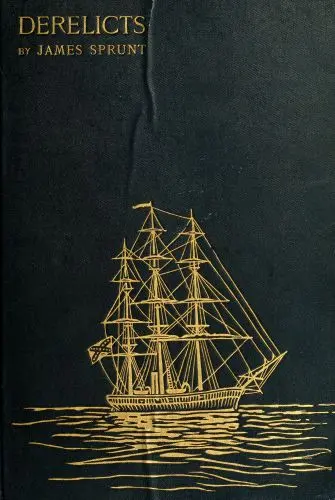
"Derelicts: An Account of Ships Lost at Sea in General Commercial Traffic" by James Sprunt is a historical account written in the early 20th century. The work discusses the fate of numerous vessels that were abandoned at sea, particularly during the American Civil War, detailing blockade runners and other ships lost along the North Carolina coast. It captures the narrative of their journeys, the challenges they faced, and the broader implications of maritime navigation during a turbulent period in U.S. history. The opening of the book sets the stage by introducing the author's long-standing interest in the stories of derelict ships and the blockade runners that encountered various fates during the Civil War. Sprunt reflects on episodes from his own life, including his role as a paymaster on some of these ships, conveying a deep sense of nostalgia and urgency to document these stories before they fade from memory. He establishes that many of these derelict ships still hold their secrets, and introduces the term "derelict" within a legal context, while describing the dangers they pose to maritime traffic. The beginning of the book combines personal recollections, historical insights, and vivid imagery of life at sea, drawing readers into the perilous world of nautical adventures amidst the backdrop of war.
Introduction adapted from the source catalogue; source summaries may be automatically generated.
Free to read · English · 59,755 words · No account needed
MAKE TIME FOR A GOOD BOOK
On by default. Untick to stop anonymous reading totals. Each page counts after 10 seconds in view. How this works.
Anonymous counting is on unless you have switched it off.
Our first night at sea was clear and beautiful, the air, cool and grateful, contrasted with the severe and at times almost suffocating warmth of the limestone islands. After the evening meal, Gregory and I, snugly ensconced in the lee of the cabin, which was on deck, sat far into the night gazing with wonder upon the tranquil glory of the stars, which shone with exceeding splendor, and talking with sad hearts of the waning light of the star of the Confederacy, which had reached its zenith at Chancellorsville and which sank so disastrously at the later battle of Gettysburg. The wind was light, but the rush of the staunch little ship at full speed brought to our listening ears the faint sound of a bell, not that of a ship striking the change of the watch, but a continuous peal of irregular strokes. In a few moments it ceased, and I have often wondered what it meant, for no sail was visible that night. Alert and eager for its repetition, which came not, our wonderment was increased by the cry of a human voice in the darkness ahead, which was also observed by the lookouts aloft and alow, and, while Long Tom was rapidly climbing the ratlines of the foremast to the crosstrees, our captain appeared on the bridge and brought the ship to a full stop. In painful silence all eyes and ears were strained to catch a sight or sound from the mysterious object ahead. Again and again the long-drawn, wailing cry. Could it be a castaway? The sailor's instinct and sympathy is never so much aroused as by such an incident. Shifting our course a point or two, we proceeded slowly ahead; the cry grew clearer, with despairful lamentations; again our course was changed, the paddles slowly turning. Ignoring the usual precaution of silence on board at night, the captain ordered the officer of the deck to answer with a hail. Immediately the voice responded, and in a few moments Long Tom reported to the commander on the bridge, "A nigger in a ship's boat, sir." "What," said the captain, "can he be doing out here in a boat 160 miles from land?" "I'm blessed if I know, sir, but I'm telling you the truth." "Cast-away, sir, close aboard," was the second officer's report a few moments later. "Heave him a line," said the commander. The falls of the davits were soon hooked on and the boat, with its lonesome occupant, hoisted to the deck. The next morning, when I was dressing, the chief steward knocked at my door and gravely asked if I would see the man whom we had rescued the night before, "for," said he, "there is something mysterious about his plight which he refuses to make known to me." On going forward I found a negro man of about fifty years of age, apparently in deep distress; mutual recognition was instantaneous; the poor fellow fell at my feet and embraced my knees, with broken sobs of "Oh, Marse Jeems, Marse Jeems, Marse Jeems!" His story was soon told in the homely and pathetic vernacular of the old-time Southern darkey. He had long been the butler and body servant of my friend at Orton plantation, whose lovely daughter had given her heart to a manly young neighbor before he went away to the war which had desolated many Southern homes. The fearful news of disaster had come from Gettysburg, in which her lover was engaged with his company on Culp's Hill. He had been shot through the lungs and was left dying on the field, which was later occupied by the enemy. Then a veil was drawn, for all subsequent inquiries as to his death and the disposal of his body were unavailing. The poor girl at Orton, grief stricken, haunted by fears of the worst, and mocked by her efforts to seek him beyond the lines, slowly faded to a shadow of her former self. Again and again my friend returned from a hopeless search among the living and the dead, when, he, too, began to pine away, for the war had robbed him of all but the child whom he adored, and now she was slipping away from him. It was then that this Nature's nobleman in a black skin came forward and desired his liberty to go through the lines in Virginia and never return until he brought the body dead, or news of his young master living, to the dear mistress whom he loved more than his own life. In vain my friend refused. How could he, a slave, overcome obstacles which the master, with all his influence, had failed to overcome? At last he gave the desired pass to proceed to the missing boy's command upon this mission of mercy, which was countersigned by the proper authority, and the faithful fellow proceeded on foot toward his destination. What followed, "in weariness and painfulness, in watchings often, in hunger and thirst, in fastings often, in cold and nakedness," would fill a volume. He reached the regiment at last, and carried to many hungry hearts the news of their loved ones at home, but he was told that his quest was in vain; the captain was dead, a Federal surgeon who approached him on the field had found his wounds mortal, had received from him his sword, to be sent home to the young mistress, with fond words of his devotion to the last; he had better return home. But no, he attempted that night to slip through the lines toward the Federal Army; he was caught, brought back, and sentenced to be shot at sunrise. How he was saved, as by a miracle, through the recognition of the officer of the firing squad, and sent back to Wilmington need not be told.
Your reading position is saved on this browser. Take it to another device with a library code. Reading pages adapt to text, rather than matching a printed edition.
BEHIND THE BOOK
This eBook is for the use of anyone anywhere in the United States and most other parts of the world at no cost and with almost no restrictions whatsoever. You may copy it, give it away or re-use it under the terms of the Project Gutenberg License included with this eBook or online at www.gutenberg.org. If you are not located in the United States, you will have to check the laws of the country where you are located before using this eBook. Read the source licence.
The original source file, including credits and licence, is retained by this library. Request an original-format copy at no charge. Please include the book title and Project Gutenberg identifier #56277.
KEEP YOUR CURIOSITY GOING
Cécile Tormay

Moritz Busch
John L. Ransom
Frances Wright
Cécile Tormay

Mabel Potter Daggett