THE CLASSIC COLLECTION✦An outlaw’s diary: the CommuneCLASSIC FREE BOOKS
An outlaw’s diary: the Commune
Cécile Tormay
THE CLASSIC COLLECTION · 1920
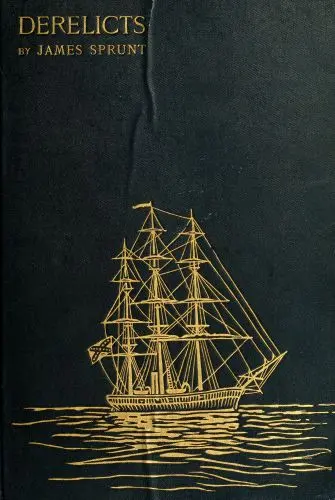
"Derelicts: An Account of Ships Lost at Sea in General Commercial Traffic" by James Sprunt is a historical account written in the early 20th century. The work discusses the fate of numerous vessels that were abandoned at sea, particularly during the American Civil War, detailing blockade runners and other ships lost along the North Carolina coast. It captures the narrative of their journeys, the challenges they faced, and the broader implications of maritime navigation during a turbulent period in U.S. history. The opening of the book sets the stage by introducing the author's long-standing interest in the stories of derelict ships and the blockade runners that encountered various fates during the Civil War. Sprunt reflects on episodes from his own life, including his role as a paymaster on some of these ships, conveying a deep sense of nostalgia and urgency to document these stories before they fade from memory. He establishes that many of these derelict ships still hold their secrets, and introduces the term "derelict" within a legal context, while describing the dangers they pose to maritime traffic. The beginning of the book combines personal recollections, historical insights, and vivid imagery of life at sea, drawing readers into the perilous world of nautical adventures amidst the backdrop of war.
Introduction adapted from the source catalogue; source summaries may be automatically generated.
Free to read · English · 59,755 words · No account needed
MAKE TIME FOR A GOOD BOOK
On by default. Untick to stop anonymous reading totals. Each page counts after 10 seconds in view. How this works.
Anonymous counting is on unless you have switched it off.
A tardy recognition of the rights of American possession was made later by the Spanish Government, and the Virginius was delivered to an American man-of-war. While towing the unfortunate craft off Cape Fear and bound for a Northern port, the Virginius sprang a leak, or, some say, was scuttled, and found her grave in the ocean depths beneath us.
The following strange story was told to me many years ago, and, although some of the details have been forgotten, the incident, which was declared to be quite true, led to one of the most extraordinary exploits of the War between the States in the famous recapture of the Emily St. Pierre.
While Great Britain was at war with France in the year 1813, a small Scotch brig was approaching the British Channel on the last leg of her voyage from the West Indies for Greenock on the river Clyde. She had successfully eluded strange sails and the captain was quite hopeful of reaching his destination without encountering a French privateer, but alas, when the brig was within a few days' sail of the "land o'cakes," a smarter vessel, bearing the tricolor at her peak, overhauled the Scotsman, and, with a round shot across her bows, compelled her surrender. A French prize crew was placed on board with orders to sail the brig to the nearest French port for adjudication. The Scotch captain and his cabin boy were retained on board as prisoners, the former to assist in the working of the brig and the latter to wait upon the prize crew. With the enemy's flag apeak, the little brig was headed for the enemy's country and was soon alone upon the sea. With the accustomed discipline of the man-of-war somewhat relaxed, the Frenchmen, wishing to make merry over their good fortune, sought among the brig stores the red wine to which they were accustomed, instead of which they broached a cask of Jamaica rum, under whose masterful potency they became as dead men. The Scotsman was quick to seize his opportunity, and with the lone assistance of his cabin boy he dragged every man Jack into his forecastle and securely tied them to their bunks; the officers were likewise secured in the cabin and the course of the brig laid straight and true again for bonnie Scotland. On the following morning while the brig was slowly proceeding under light canvas, which the master himself had set while the boy steered, another Frenchman gave chase and the hopes of the Scotsman gave way to despair as the swift cruiser overhauled him hand over hand. Turning to the French officer whom he had secured to the poop deck for the fresh air, he was astonished to find him in a state of terror instead of in triumph at the prospect of his release. Quickly the Frenchman explained in his own language, with which the Scotch captain was familiar, that his disgraceful plight and that of his crew would result in his speedy courtmartial and execution at the yard arm; that if the Scotch captain would accept his parole, restore to him his uniform and sword, assume with his cabin boy the uniforms of two of his Frenchmen, hoist the French ensign and leave the rest to him, he would extricate the brig, resume his bonds, and cast his lot in Scotland, for he could never see his own country again. This was quickly done, for the alternative but assured the brig's recapture. On came the armed Frenchman. Boom! went one of her guns. The brig rounded to, and in response to his countryman's hail, the quondam prize master shouted through his trumpet that he was of the French privateer, in charge of a prize ship, taking her to a French port. The commander of the armed vessel waved a salute and sailed away quite satisfied. The status quo ante of the brig was resumed, as arranged, the Clyde was reached in safety, and the descendants of the French prize crew can account for some of the mysterious French names still heard in the Scottish Highlands to this day. And, mirabile dictu, the cabin boy of the brig became the hero of the following true story and was subsequently well known as the captain of a Confederate blockade-running steamer into Wilmington. It was during the fourth year of the war that this very extraordinary man, Capt. William Wilson, appeared in Cape Fear waters in command of a steamer which ran the blockade at Wilmington perhaps three or four times; but there was nothing unusual about this incident, and perhaps for that reason I have forgotten her name. There was, however, something very unusual about Wilson, whose unequalled bravery in recapturing his ship the Emily St. Pierre, of Charleston, S.C., in 1861, was, of all the stirring incidents of the blockade, the most admirable example of personal pluck and endurance. I have been told by a kinsman of Miss Emily St. Pierre, for whom the ship was named, that she still lives in Charleston, and I am repeating this story of Wilson's wonderful exploits at his request. Although not strictly a story of the Cape Fear, it will be none the less interesting to our readers, and I reproduce the account published in Chambers's Edinburg Journal entitled "A Matter-of-Fact Story."
Your reading position is saved on this browser. Take it to another device with a library code. Reading pages adapt to text, rather than matching a printed edition.
BEHIND THE BOOK
This eBook is for the use of anyone anywhere in the United States and most other parts of the world at no cost and with almost no restrictions whatsoever. You may copy it, give it away or re-use it under the terms of the Project Gutenberg License included with this eBook or online at www.gutenberg.org. If you are not located in the United States, you will have to check the laws of the country where you are located before using this eBook. Read the source licence.
The original source file, including credits and licence, is retained by this library. Request an original-format copy at no charge. Please include the book title and Project Gutenberg identifier #56277.
KEEP YOUR CURIOSITY GOING
Cécile Tormay

Moritz Busch
John L. Ransom
Frances Wright
Cécile Tormay

Mabel Potter Daggett