THE CLASSIC COLLECTION✦An outlaw’s diary: the CommuneCLASSIC FREE BOOKS
An outlaw’s diary: the Commune
Cécile Tormay
THE CLASSIC COLLECTION · 1920
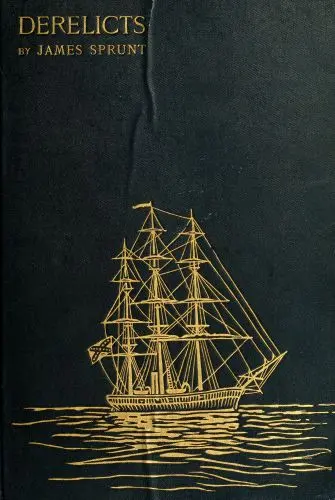
"Derelicts: An Account of Ships Lost at Sea in General Commercial Traffic" by James Sprunt is a historical account written in the early 20th century. The work discusses the fate of numerous vessels that were abandoned at sea, particularly during the American Civil War, detailing blockade runners and other ships lost along the North Carolina coast. It captures the narrative of their journeys, the challenges they faced, and the broader implications of maritime navigation during a turbulent period in U.S. history. The opening of the book sets the stage by introducing the author's long-standing interest in the stories of derelict ships and the blockade runners that encountered various fates during the Civil War. Sprunt reflects on episodes from his own life, including his role as a paymaster on some of these ships, conveying a deep sense of nostalgia and urgency to document these stories before they fade from memory. He establishes that many of these derelict ships still hold their secrets, and introduces the term "derelict" within a legal context, while describing the dangers they pose to maritime traffic. The beginning of the book combines personal recollections, historical insights, and vivid imagery of life at sea, drawing readers into the perilous world of nautical adventures amidst the backdrop of war.
Introduction adapted from the source catalogue; source summaries may be automatically generated.
Free to read · English · 59,755 words · No account needed
MAKE TIME FOR A GOOD BOOK
On by default. Untick to stop anonymous reading totals. Each page counts after 10 seconds in view. How this works.
Anonymous counting is on unless you have switched it off.
"These facts explain why the United States fleet was unable wholly to stop blockade running. It was, indeed, impossible to do so; the result to the very close of the war proves this assertion, for, in spite of the vigilance of the fleet, many blockade runners were afloat when Fort Fisher was captured. In truth the passage through the fleet was little dreaded; for although the blockade runner might receive a shot or two, she was rarely disabled; and in proportion to the increase of the fleet the greater would be the danger, we knew, of their firing into each other. As the boys before the deluge used to say, they would be very apt to 'miss the cow and kill the calf.' The chief danger was upon the open sea, many of the light cruisers having great speed. As soon as one of them discovered a blockade runner during daylight, she would attract other cruisers in the vicinity by sending up a dense column of smoke, visible for many miles in clear weather. A cordon of fast steamers stationed ten or fifteen miles apart, inside the Gulf Stream, and in the course from Nassau and Bermuda to Wilmington and Charleston, would have been more effectual in stopping blockade running than the whole United States Navy concentrated off those ports; and it was unaccountable to us why such a plan did not occur to good Mr. Welles; but it was not our place to suggest it. I have no doubt, however, that the fraternity to which I then belonged would have unanimously voted thanks and a service of plate to the Honorable Secretary of the United States Navy for this oversight. I say inside the Gulf Stream, because every experienced captain of a blockade runner made a point to cross the stream early enough in the afternoon, if possible, to establish the ship's position by chronometer, so as to escape the influence of that current upon his dead reckoning. The lead always gave indication of our distance from the land, but not, of course, of our position; and the numerous salt works along the coast, where evaporation was produced by fire, and which were at work night and day, were visible long before the low coast could be seen. Occasionally the whole inward voyage would be made under adverse conditions. Cloudy, thick weather and heavy gales would prevail so as to prevent any solar or lunar observations, and reduce the dead reckoning to mere guesswork. In these cases the nautical knowledge and judgment of the captain would be taxed to the utmost. The current of the Gulf Stream varies in velocity and (within certain limits) in direction; and the stream itself, almost as well defined as a river within its banks under ordinary circumstances, is impelled by a strong gale toward the direction in which the wind is blowing, overflowing its banks, as it were. The countercurrent, too, inside of the Gulf Stream, is much influenced by the prevailing winds. Upon one occasion while in command of the R.E. Lee, formerly the Clyde-built iron steamer Giraffe, we had experienced very heavy and thick weather, and had crossed the stream and struck soundings about midday. The weather then clearing, so that we could obtain an altitude near meridian, we found ourselves at least forty miles north of our supposed position, and near the shoals which extend in a southerly direction off Cape Lookout. It would be more perilous to run out to sea than to continue on our course, for we had passed through the offshore line of blockaders, and the sky had become perfectly clear. I determined to personate a transport bound to Beaufort, which was in the possession of the United States forces and the coaling station of the fleet blockading Wilmington. The risk of detection was not very great, for many of the captured blockade runners were used as transports and dispatch vessels. Shaping our course for Beaufort and slowing down as if we were in no haste to get there, we passed several vessels, showing United States colors to them all. Just as we were crossing through the ripple of shallow water off the 'tail' of the shoals, we dipped our colors to a sloop of war which passed three or four miles to the south of us. The courtesy was promptly responded to, but I have no doubt her captain thought me a lubberly and careless seaman to shave the shoals so closely. We stopped the engines when no vessel was in sight, and I was relieved of a heavy burden of anxiety as the sun sank below the horizon, and the course was shaped at full speed for Masonboro Inlet.
Your reading position is saved on this browser. Take it to another device with a library code. Reading pages adapt to text, rather than matching a printed edition.
BEHIND THE BOOK
This eBook is for the use of anyone anywhere in the United States and most other parts of the world at no cost and with almost no restrictions whatsoever. You may copy it, give it away or re-use it under the terms of the Project Gutenberg License included with this eBook or online at www.gutenberg.org. If you are not located in the United States, you will have to check the laws of the country where you are located before using this eBook. Read the source licence.
The original source file, including credits and licence, is retained by this library. Request an original-format copy at no charge. Please include the book title and Project Gutenberg identifier #56277.
KEEP YOUR CURIOSITY GOING
Cécile Tormay

Moritz Busch
John L. Ransom
Frances Wright
Cécile Tormay

Mabel Potter Daggett