THE CLASSIC COLLECTION✦Sunshine and snowCLASSIC FREE BOOKS
Sunshine and snow
Harold Bindloss

THE CLASSIC COLLECTION · 1907
"Delilah of the Snows" by Harold Bindloss is a novel written in the early 20th century. The story follows Walter Ingleby, a young man of humble background, who navigates societal expectations and his ambitions while forming a connection with Grace Coulthurst, the daughter of a local gentleman. The novel delves into themes of class distinction, ambition, and the struggle for personal identity amidst the constraints of social hierarchy. The opening of the book introduces Walter Ingleby as he reflects on the disparity between his social status and the exclusive company he has been permitted to join for a tennis match. His admiration for Grace Coulthurst comes to light when he encounters her outside the match and engages in a conversation that reveals his unacknowledged feelings and his awareness of social limits. The tone is filled with youthful yearning and awkwardness as Ingleby grapples with his place in society while aspiring for something more. This interplay of characters establishes the groundwork for exploring their relationships and the impact of societal norms on their personal ambitions and interactions.
Introduction adapted from the source catalogue; source summaries may be automatically generated.
Free to read · English · 103,408 words · No account needed
MAKE TIME FOR A GOOD BOOK
On by default. Untick to stop anonymous reading totals. Each page counts after 10 seconds in view. How this works.
Anonymous counting is on unless you have switched it off.
"I think we need not go into that," he said. "Perhaps I did wrong, but it would only lead us away from the topic I want to talk about. Has it occurred to you that unless you put a stop to his presumption that miner fellow might get ideas into his head?"
Grace appreciated his courage in persisting, especially in view of the result of her previous thrust; but while she was not exactly sure of her sentiments towards Ingleby, he was, at least, the man who loved her, which counted a good deal in his favour. Esmond, she was quite aware, chiefly loved himself.
"Isn't that a trifle vague? What ideas do you mean?" she asked.
Esmond stood silent a moment or two, for his task was becoming unpleasantly difficult; but his bitterness against Ingleby rashly determined him to go on.
"I should prefer not to be more definite--and I'm not sure that it is necessary," he said. "Still, one might, perhaps, venture to warn you that the miners and my troopers, who, of course, have eyes, have already found an entertaining topic."
Grace Coulthurst's face grew a trifle colourless with anger, though she did not quite believe him.
"So you can listen while your policemen discuss--me?" she said.
"No," said Esmond unguardedly. "I would have risked my commission by thrashing the man I heard mention you."
A sardonic gleam crept into Grace's eyes. "Then, since you haven't done it, it is a little difficult to understand how you could be aware of what they are saying."
The man's embarrassment was evident, but it lasted only a moment, and he made a little abrupt gesture.
"I'm no match for you at this game, Grace," he said. "Of course, I'm taking a great liberty, but if you think a little you might find some excuse for me."
"For playing the spy on me?"
Esmond's lips set tight, and the bronze in his cheeks took on a still deeper tinge; but there was, as is usually the case, good as well as evil in him, and he was to some extent endeavouring just then to discharge what he considered a duty.
"I suppose I deserve it, and I am in your hands, but you can be angry with me afterwards if you will let me speak. We are old friends, and I feel that implies a certain responsibility. There is nobody else in this country except the major who would concern himself about you, and he, with all due respect to him, seldom sees beyond his nose."
There was a suggestion of genuine solicitude in his voice now, but Grace was, unfortunately, far from being conciliated.
Your reading position is saved on this browser. Take it to another device with a library code. Reading pages adapt to text, rather than matching a printed edition.
Harold Bindloss
Harold Bindloss
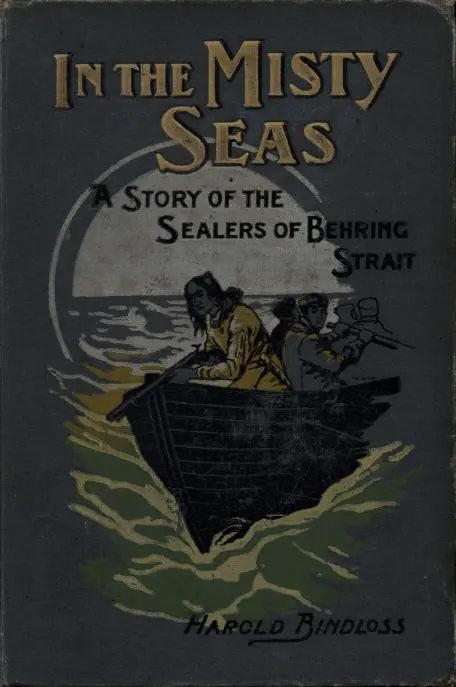
Harold Bindloss
Harold Bindloss
BEHIND THE BOOK
This eBook is for the use of anyone anywhere in the United States and most other parts of the world at no cost and with almost no restrictions whatsoever. You may copy it, give it away or re-use it under the terms of the Project Gutenberg License included with this eBook or online at www.gutenberg.org. If you are not located in the United States, you will have to check the laws of the country where you are located before using this eBook. Read the source licence.
The original source file, including credits and licence, is retained by this library. Request an original-format copy at no charge. Please include the book title and Project Gutenberg identifier #38635.
KEEP YOUR CURIOSITY GOING
Coulson Kernahan

Maurice Baring
Frances Wright
Cécile Tormay

Frederic Jesup Stimson

W. H. P. (William Henry Pope) Jarvis