THE CLASSIC COLLECTION✦Sunshine and snowCLASSIC FREE BOOKS
Sunshine and snow
Harold Bindloss
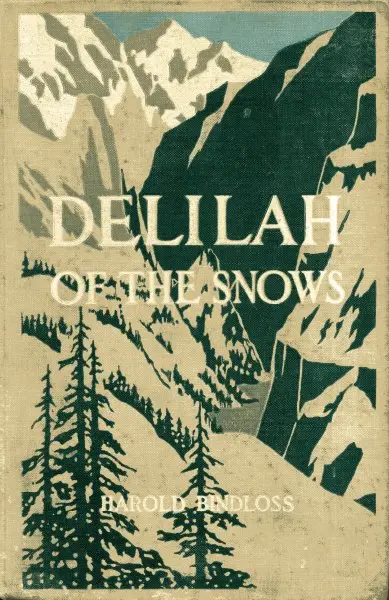
THE CLASSIC COLLECTION · 1907
"Delilah of the Snows" by Harold Bindloss is a novel written in the early 20th century. The story follows Walter Ingleby, a young man of humble background, who navigates societal expectations and his ambitions while forming a connection with Grace Coulthurst, the daughter of a local gentleman. The novel delves into themes of class distinction, ambition, and the struggle for personal identity amidst the constraints of social hierarchy. The opening of the book introduces Walter Ingleby as he reflects on the disparity between his social status and the exclusive company he has been permitted to join for a tennis match. His admiration for Grace Coulthurst comes to light when he encounters her outside the match and engages in a conversation that reveals his unacknowledged feelings and his awareness of social limits. The tone is filled with youthful yearning and awkwardness as Ingleby grapples with his place in society while aspiring for something more. This interplay of characters establishes the groundwork for exploring their relationships and the impact of societal norms on their personal ambitions and interactions.
Introduction adapted from the source catalogue; source summaries may be automatically generated.
Free to read · English · 103,408 words · No account needed
MAKE TIME FOR A GOOD BOOK
On by default. Untick to stop anonymous reading totals. Each page counts after 10 seconds in view. How this works.
Anonymous counting is on unless you have switched it off.
Esmond took down the register, which was not remarkably well kept, and had some little trouble in tracing out the information he desired. At last, however, he read, "Thomas Leger, Free miner's certificate, Five dollars; also Five dollars, Walter Ingleby."
He made a careful note of the date, and then turned over the pages systematically. Later on he found, "Walter Ingleby, Five dollars," but there was no further entry for Leger. Then he put the book back, and the major glanced at him.
"Check!" he said. "I almost think I've got you, Mr. Sewell. You found
what you wanted, Reggie?"
"Yes, sir," said Esmond, whose eyes now rested on Grace and Ingleby. "I
fancy I have."
He crossed the room in a leisurely fashion, and Ingleby rose when Grace
turned to him.
"You have no doubt come across Mr. Ingleby in the course of your duties, Reggie, but I should like to present him formally as one of my friends," she said.
Esmond made Ingleby, who responded as briefly, a little curt
inclination.
"I have," he said, "certainly met Mr. Ingleby at least twice already."
"I believe I remember one occasion," said Grace, with a little twinkle in her eyes. She had naturally not heard of the second encounter. "I'm not sure you were in quite as good a temper as usual that night. Still, you see, circumstances are very different now."
Esmond laughed, but there was a dryness in his tone which Ingleby
afterwards remembered.
"Circumstances have a trick of changing somewhat rapidly in this country," he said. "You have, I believe, bottomed on gold, Mr. Ingleby?"
"Yes," said Ingleby.
"You struck it rich?"
"No," said Ingleby. "Still, the signs are promising. We hope to be more fortunate when we have driven our adit."
"How long do you expect to be over it?"
"It is a little difficult to tell."
Esmond appeared to reflect, and Grace, who watched him, did not quite
understand his face.
"Well," he said, "I suppose placer mining is always a trifle uncertain. One would almost fancy that baking was more profitable. Your friend Miss Leger seems to be doing well, or is it your venture?"
Ingleby wondered if this was meant for Miss Coulthurst's enlightenment; but he could not very well permit his dislike of the man, who would seize such an opportunity, to become apparent then, and there was also something in Esmond's tone which suggested that he might, after all, have a different purpose. Unfortunately, he had no notion of what that purpose was.
"She is," he said quietly, "selling a good deal of bread."
Your reading position is saved on this browser. Take it to another device with a library code. Reading pages adapt to text, rather than matching a printed edition.
Harold Bindloss
Harold Bindloss
Harold Bindloss
Harold Bindloss
BEHIND THE BOOK
This eBook is for the use of anyone anywhere in the United States and most other parts of the world at no cost and with almost no restrictions whatsoever. You may copy it, give it away or re-use it under the terms of the Project Gutenberg License included with this eBook or online at www.gutenberg.org. If you are not located in the United States, you will have to check the laws of the country where you are located before using this eBook. Read the source licence.
The original source file, including credits and licence, is retained by this library. Request an original-format copy at no charge. Please include the book title and Project Gutenberg identifier #38635.
KEEP YOUR CURIOSITY GOING
Coulson Kernahan

Maurice Baring
Frances Wright
Cécile Tormay

Frederic Jesup Stimson

W. H. P. (William Henry Pope) Jarvis