THE CLASSIC COLLECTION✦A dead man’s diaryCLASSIC FREE BOOKS
A dead man’s diary
Coulson Kernahan
THE CLASSIC COLLECTION · 1923
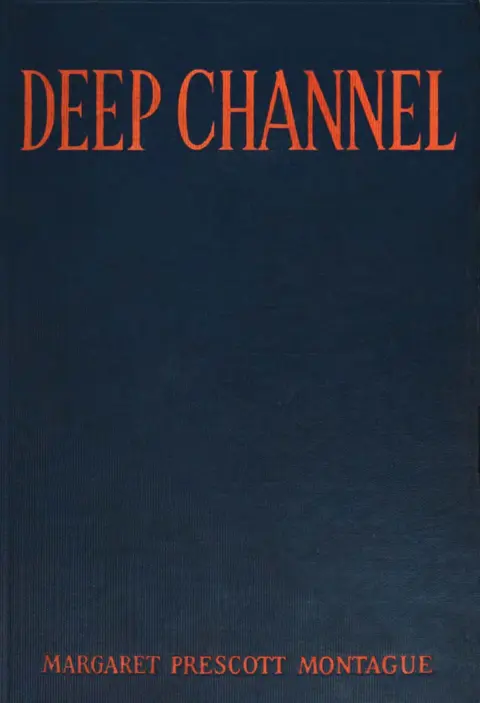
"Deep Channel" by Margaret Prescott Montague is a novel written in the early 20th century. The narrative centers on Julie Rose, a sensitive and timid woman navigating her life in the small village of Hart’s Run. Through her interactions and internal struggles, the book explores themes of fear, societal expectations, and the quest for personal strength amidst an overwhelming environment. The opening of the novel intricately weaves Julie's childhood experiences, highlighting her timid nature and the challenges she faces growing up. We witness her fraught encounters with bullies, particularly with a boy named Edward Black, which establish her deep-seated fears. The narrative vividly depicts her internal turmoil, especially regarding her inability to pray publicly, reflecting her overarching anxiety about being judged and how it shapes her interactions. As Julie grapples with her self-perception and connection to others, we glimpse her relationships with her family and community, setting a stage for her burgeoning path toward self-acceptance and courage. The beginning effectively introduces readers to Julie's complex emotional landscape, drawing us into her world and the social dynamics at play.
Introduction adapted from the source catalogue; source summaries may be automatically generated.
Free to read · English · 55,437 words · No account needed
MAKE TIME FOR A GOOD BOOK
On by default. Untick to stop anonymous reading totals. Each page counts after 10 seconds in view. How this works.
Anonymous counting is on unless you have switched it off.
“Well, the feller that gets it’ll be lucky,” he said. Still he did not go; and in a moment he spoke again, feeling his way uncertainly. “Speaking about being scared--I mean, you said you got scared easy?”
“Yes, I do,” she answered, to help him out as he hesitated. “I’m awful timid; sudden noises always make me jump.”
“Yes, I know. And I was thinking how it was with that boy.”
“What boy?” she asked.
“The feller they had to send back from camp. Chapin, I think was the name. You heard about him?”
He waited, looking down at her.
Suddenly Julie comprehended a strained anxiety in his tone, and her
heart began to beat quickly.
“Yes, I heard,” she said, and kept her eyes down on her knitting now, not to look too closely at him.
“They said he just cried”--he swallowed nervously--“all the time in camp. They said they couldn’t do a thing with him.”
“I know; I heard.” Julie knit faster.
“They said everybody’d laugh at him from now on,” he continued.
Julie raised her eyes and looked straight up at him. “I never will,”
she promised.
He drew a free breath. He seemed to have been waiting for her to say this. “I didn’t b’lieve you would,” he said.
“I never will,” she answered faithfully again, as though making a
solemn compact with him.
She saw his hands that clutched the back of the chair tremble slightly, and a faint hot moisture broke out upon his forehead. Then he stooped closer to her, daring all.
“She said--my wife said--that was just what I’d do in camp.”
“You wouldn’t,” she cried sharply. “You wouldn’t! I know you wouldn’t.”
“But--but I might,” he faltered, moistening his lips. “It’s--it’s just what I might do.”
“You would not!” Julie repeated violently, clutching her knitting so tight that one of the bone needles snapped in two.
“She said I would,” he persisted. “And then she went off to the show. I was all alone. I got to studyin’ about it. I thought--I thought--”
“I know,” she interjected quickly. “I know, I understand how it is.”
He moistened his lips once more, and tried again. “And--and I thought maybe she was right,” he got out at last.
“She is not right. She isn’t!”
“And everybody’s laughin’ at the Chapin boy--”
“I’ll never laugh at him.”
“An’ I thought--” He swallowed again. “I thought, ‘Maybe it’ll be you they’ll all be laughin’ at next week.’” He paused a moment. “And--and now you know it all,” he ended.
Your reading position is saved on this browser. Take it to another device with a library code. Reading pages adapt to text, rather than matching a printed edition.
BEHIND THE BOOK
This eBook is for the use of anyone anywhere in the United States and most other parts of the world at no cost and with almost no restrictions whatsoever. You may copy it, give it away or re-use it under the terms of the Project Gutenberg License included with this eBook or online at www.gutenberg.org. If you are not located in the United States, you will have to check the laws of the country where you are located before using this eBook. Read the source licence.
The original source file, including credits and licence, is retained by this library. Request an original-format copy at no charge. Please include the book title and Project Gutenberg identifier #69369.
KEEP YOUR CURIOSITY GOING
Coulson Kernahan

Maurice Baring
Frances Wright
Cécile Tormay

Frederic Jesup Stimson

W. H. P. (William Henry Pope) Jarvis