THE CLASSIC COLLECTION✦The sprightly romance of MarsacCLASSIC FREE BOOKS
The sprightly romance of Marsac
Molly Elliot Seawell
THE CLASSIC COLLECTION · 1894
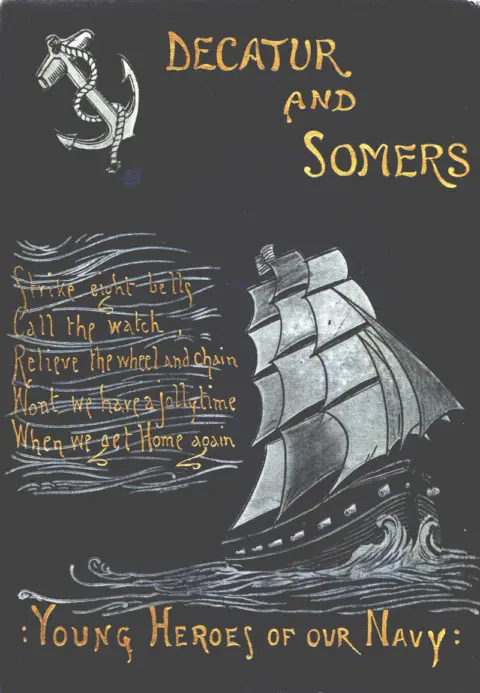
"Decatur and Somers" by Molly Elliot Seawell is a historical novel written in the late 19th century. The book revolves around two young naval officers, Stephen Decatur and Dick Somers, during the late 18th and early 19th centuries, exploring their camaraderie, adventures in military service, and encounters with piracy during the early years of the United States Navy. The story captures the youthful ambition and spirit of these characters, set against the backdrop of maritime conflict. At the start of the novel, readers are introduced to the tranquil setting of Delaware Bay in June 1798, where the frigate "United States," nicknamed "Old Wagoner," is preparing for a significant naval engagement. The narrative introduces Decatur and Somers as midshipmen aboard this ship, highlighting their contrasting personalities—Decatur's boldness and Somers's quiet reliability. Their friendship is a central theme as they navigate their initial experiences in naval training, face the challenges of “running” by their peers, and engage in a fight that unexpectedly earns Somers respect among his messmates. The opening sets the stage for their adventures, with hints of the naval conflicts ahead, including a looming war with France and encounters with privateers.
Introduction adapted from the source catalogue; source summaries may be automatically generated.
Free to read · English · 42,799 words · No account needed
MAKE TIME FOR A GOOD BOOK
On by default. Untick to stop anonymous reading totals. Each page counts after 10 seconds in view. How this works.
Anonymous counting is on unless you have switched it off.
One afternoon, as Decatur and Somers were strolling along a mountain path that led to the famed fountain of Cyane, above the city, a man wearing the costume of a Sicilian peasant came up to them, and, touching his cap, said, in the lingua franca which both Somers and Decatur understood:
“Signors, are you not American naval officers?”
“Yes,” answered Decatur, while Somers eyed the man closely.
“Then I have a communication for you from the American captain now held
at Tripoli.”
“Give it to us, then,” said Decatur.
“It is not here,” answered the man, with a sly look. “But if you will come to-night, at nine o’clock, to the tavern of the Three Doves, up a little higher beyond the fountain of Cyane, I will introduce you to a pilot, brother of Salvatore Catalano, who is employed by the American squadron. This other Catalano is a pilot too, and, wishing to oblige the Americans, as you have taken his brother into your service, he managed to communicate with the American captain. He has a letter for you, from him, and he will bring it to the Three Doves to-night, at eight. Shall I tell him you will be there?”
“Certainly, without fail!” replied Decatur.
The Sicilian then touched his cap again, and disappeared in a path by the side of the mountain road.
“Do you know,” said Somers, who had taken no part in the colloquy, “that I have much doubt whether such a person as Catalano’s brother exists? and I am perfectly certain that our peasant friend is really a sailor.”
“Why?” asked Decatur, surprised.
“First—well, I can only say, as the sailors do, ‘by the cut of his jib.’ Besides, he did not bow, as these peasants do here; and the way he touched his cap was very like a salute. And you perceive he made no demand for money. Now, that is the only thing that would induce these people to take the risk of communicating with Captain Bainbridge.”
Decatur stopped in his walk, much struck by what Somers said.
“And did you notice,” continued Somers, “that although he was dark and had black eyes, like the Sicilians, he was of altogether different build? He was larger and stouter, and his features were aquiline. His eyes were of a sleepy black, like a Turk’s—not soft and bright, like these handsome peasants about here.”
“At all events,” said Decatur, “we can not refuse to keep our appointment, for it is possible that these suspicions may be only suspicions after all, and we could not lose the chance of hearing from Captain Bainbridge.”
Your reading position is saved on this browser. Take it to another device with a library code. Reading pages adapt to text, rather than matching a printed edition.
Molly Elliot Seawell
Molly Elliot Seawell
Molly Elliot Seawell
Molly Elliot Seawell
BEHIND THE BOOK
This eBook is for the use of anyone anywhere in the United States and most other parts of the world at no cost and with almost no restrictions whatsoever. You may copy it, give it away or re-use it under the terms of the Project Gutenberg License included with this eBook or online at www.gutenberg.org. If you are not located in the United States, you will have to check the laws of the country where you are located before using this eBook. Read the source licence.
The original source file, including credits and licence, is retained by this library. Request an original-format copy at no charge. Please include the book title and Project Gutenberg identifier #63209.
KEEP YOUR CURIOSITY GOING
Cécile Tormay

Moritz Busch
Coulson Kernahan
John L. Ransom

Maurice Baring
Frances Wright