THE CLASSIC COLLECTION✦The sprightly romance of MarsacCLASSIC FREE BOOKS
The sprightly romance of Marsac
Molly Elliot Seawell
THE CLASSIC COLLECTION · 1894
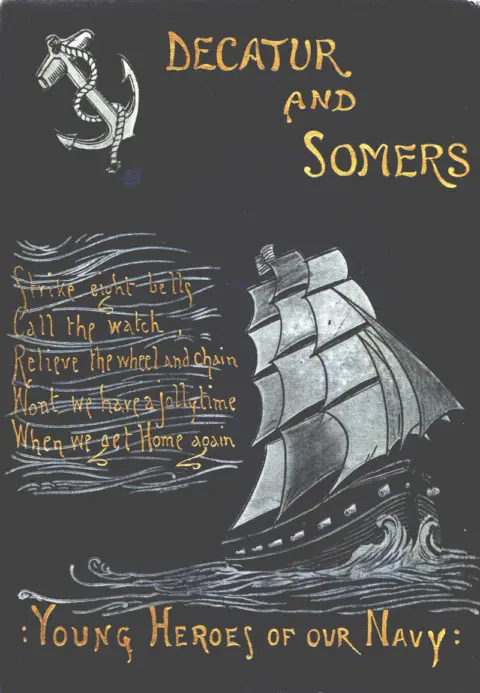
"Decatur and Somers" by Molly Elliot Seawell is a historical novel written in the late 19th century. The book revolves around two young naval officers, Stephen Decatur and Dick Somers, during the late 18th and early 19th centuries, exploring their camaraderie, adventures in military service, and encounters with piracy during the early years of the United States Navy. The story captures the youthful ambition and spirit of these characters, set against the backdrop of maritime conflict. At the start of the novel, readers are introduced to the tranquil setting of Delaware Bay in June 1798, where the frigate "United States," nicknamed "Old Wagoner," is preparing for a significant naval engagement. The narrative introduces Decatur and Somers as midshipmen aboard this ship, highlighting their contrasting personalities—Decatur's boldness and Somers's quiet reliability. Their friendship is a central theme as they navigate their initial experiences in naval training, face the challenges of “running” by their peers, and engage in a fight that unexpectedly earns Somers respect among his messmates. The opening sets the stage for their adventures, with hints of the naval conflicts ahead, including a looming war with France and encounters with privateers.
Introduction adapted from the source catalogue; source summaries may be automatically generated.
Free to read · English · 42,799 words · No account needed
MAKE TIME FOR A GOOD BOOK
On by default. Untick to stop anonymous reading totals. Each page counts after 10 seconds in view. How this works.
Anonymous counting is on unless you have switched it off.
Macdonough, without a word, folded his arms, and made no move toward the water-butt. The other British officers, standing about, looked rather uncomfortable at the discourtesy shown the young midshipman, but none of them attempted to repair it or to teach manners to the captain’s son. Macdonough, who not many years after captured seventeen British ensigns in one day, stood, insulted and indignant, in silence, upon the deck of the British ship.
In a few moments the deserter, who had been supplied with dry clothes, appeared on deck. As he was an able-bodied fellow, he would be very acceptable among the crew of the Thunderer, so the captain addressed him in very mild terms:
“Well, my man, are you a British or an American citizen?”
“British, sir,” responded the deserter boldly.
“This man,” said Macdonough to Captain Lockyer, “is an American citizen from the State of New York. He enlisted as an American citizen, and I can prove it by one of our quartermasters in the boat.—Here, Dixon!”
Danny Dixon, hearing his name, now appeared over the side, touching his
cap politely.
“Do you not know this man, John Hally, to be an American citizen?” asked
Macdonough.
“Yes, sir,” replied the quartermaster. “I’ve knowed him for ten year, and sailed two cruises with him. He’s got a family on Long Island. He ain’t no more British nor I am.”
“Perhaps you are, then,” said Captain Lockyer. “Your crews are full of British subjects.”
“No, sir,” answered Danny, very civilly. “I was born in Philadelphy, and I’ve been in the ’Merican navy ever since I were eleven year old, when I was a powder-monkey aboard o’ the Bunnum Richard, that ’ere old hulk with forty-two guns, when she licked the bran-new S’rapis, fifty guns. The Richard had Cap’n Paul Jones for a cap’n.”
Angry as Macdonough was, he could scarcely keep from laughing at Danny’s sly dig. But Captain Lockyer was furious.
“Is this the state of discipline prevailing among your crew—allowing them to harangue their superiors on the quarter-deck?” he asked cuttingly, of Macdonough.
“Captain Bainbridge, sir, of the Essex, is fully capable of maintaining discipline without any suggestion from the officers of the Thunderer,” answered Macdonough firmly, “and the question to be decided is, whether the word of the officers and men of the Essex is to be taken, or this man’s, regarding his citizenship.”
“It is the practice in the British navy to take the word of the man himself, as being most likely to know the facts in the case,” said Captain Lockyer, “and I decline to give up this man.”
Your reading position is saved on this browser. Take it to another device with a library code. Reading pages adapt to text, rather than matching a printed edition.
Molly Elliot Seawell

Molly Elliot Seawell
Molly Elliot Seawell
Molly Elliot Seawell
BEHIND THE BOOK
This eBook is for the use of anyone anywhere in the United States and most other parts of the world at no cost and with almost no restrictions whatsoever. You may copy it, give it away or re-use it under the terms of the Project Gutenberg License included with this eBook or online at www.gutenberg.org. If you are not located in the United States, you will have to check the laws of the country where you are located before using this eBook. Read the source licence.
The original source file, including credits and licence, is retained by this library. Request an original-format copy at no charge. Please include the book title and Project Gutenberg identifier #63209.
KEEP YOUR CURIOSITY GOING
Cécile Tormay

Moritz Busch
Coulson Kernahan
John L. Ransom

Maurice Baring
Frances Wright