The age of the crusades
James M. (James Meeker) Ludlow
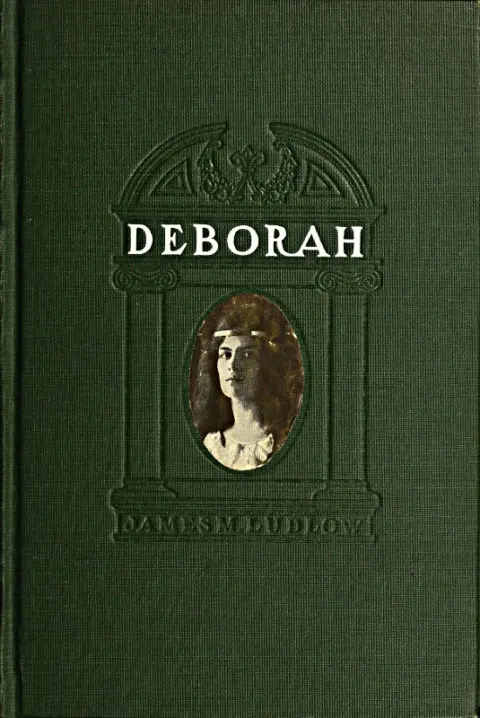
THE CLASSIC COLLECTION · 1901
"Deborah: A Tale of the Times of Judas Maccabaeus" by James M. Ludlow is a historical novel written in the early 20th century, set during the tumultuous period of the Maccabean Revolt against the Seleucid Empire. The story introduces us to Deborah, the daughter of Elkiah, who navigates the oppressive regime of King Antiochus Epiphanes and grapples with family loyalty and personal courage amidst political and social upheaval. At the start of the book, we witness the lavish celebrations in Antioch led by King Antiochus, who is determined to outshine all rivals with grand displays of power and wealth. In this setting, we are introduced to Captain Dion, a Greek officer, and his Jewish friend Glaucon, as they engage in conversations about the political situation regarding Jerusalem, where violence and oppression are rampant. Meanwhile, the blind seer Caleb and Deborah, who is caught between the Jewish traditions and the seductive allure of Hellenistic culture, reveal the struggles of their family as they confront the challenges posed by both the tyranny of the Seleucids and the treachery of those who betray their own people. The complex character dynamics established in this opening portion set the stage for a gripping narrative of struggle, identity, and resilience.
Introduction adapted from the source catalogue; source summaries may be automatically generated.
Free to read · English · 102,808 words · No account needed
MAKE TIME FOR A GOOD BOOK
On by default. Untick to stop anonymous reading totals. Each page counts after 10 seconds in view. How this works.
Anonymous counting is on unless you have switched it off.
"A soldier's hunger is soon satisfied, but his thirst is like the river Oceanus that runs round the earth and has no end," cried Apollonius. "Let's to the potation. Who shall be master of the feast?"
"Dion! Dion!" was shouted, with clapping and cheers.
Apollonius whispered to his next neighbor:
"The master of the feast, according to custom, must remain sober. We must have Dion's tongue loosened with wine, or we shall not skim the cream of his wit. Call for Kallisthenes. He is duller drunk than sober."
"Kallisthenes! Kallisthenes!" went round the table, as the suggestion of the host was whispered from one to another.
"This is a deserved honor," shouted Apollonius, "for the man who fired the gates of the Jews' Temple."
"Aye, it was a valiant deed, for there wasn't so much as a lame Jew to stop him," said Sotades to Dion, who reclined next to him.
"If Apollonius is scattering heroic honors to-night, he should send for the High Priest, Menelaos, for he stole the golden candlesticks from the Holy Place before we could get hold of them," said another.
"Menelaos! The Jew turned Greek! Dion says he once frightened an Ethiopian into a white man. So Menelaos became a Greek. That Jew's lips would poison the wine. Let him get ready for his feast with the worms of Gehenna," grunted the Governor.
Kallisthenes at once assumed the prerogative of Ruler of the Feast. He put on a chaplet of ivy, and proclaimed the laws for the hour.
"Hear ye, my subjects, the rules of the feast, which all shall obey under penalty of the wrath of the gods. May Bacchus and Aphrodite both desert the wretch who fails in his duty."
"Law the first--The wine shall not be mixed with more than half water."
"What goblets shall we use?" asked one. "If the larger ones, I vote for one part wine to three parts water, as Hesiod recommends."
"A frog's drink, as Pharecrates called it," replied the Ruler. "Half and half it shall be, and he who shirks the large goblet shall drink from the crater itself. Are we not all philosophers? And did not Socrates drink from the wine cooler?"
"Agreed! Agreed!" echoed round the circle.
One ruddy-faced veteran knelt in mock adoration at the feet of the
Feast Master:
"I humbly crave that, since I was born in distant Phrygia, we to-night follow the custom of the barbarians, and drink no water at all. Let us be inspired with the unadulterated soul of the god."
"Bacchus pardon thy gluttony for the sake of thy piety," said the
Master.
Your reading position is saved on this browser. Take it to another device with a library code. Reading pages adapt to text, rather than matching a printed edition.
James M. (James Meeker) Ludlow
James M. (James Meeker) Ludlow
James M. (James Meeker) Ludlow
James M. (James Meeker) Ludlow
BEHIND THE BOOK
This eBook is for the use of anyone anywhere in the United States and most other parts of the world at no cost and with almost no restrictions whatsoever. You may copy it, give it away or re-use it under the terms of the Project Gutenberg License included with this eBook or online at www.gutenberg.org. If you are not located in the United States, you will have to check the laws of the country where you are located before using this eBook. Read the source licence.
The original source file, including credits and licence, is retained by this library. Request an original-format copy at no charge. Please include the book title and Project Gutenberg identifier #53851.
KEEP YOUR CURIOSITY GOING
Cécile Tormay

Moritz Busch
Coulson Kernahan
John L. Ransom

Maurice Baring
Frances Wright