The age of the crusades
James M. (James Meeker) Ludlow
THE CLASSIC COLLECTION · 1901
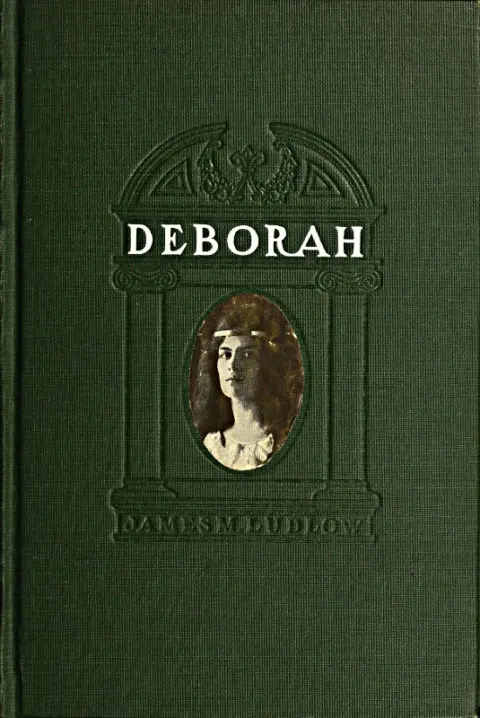
"Deborah: A Tale of the Times of Judas Maccabaeus" by James M. Ludlow is a historical novel written in the early 20th century, set during the tumultuous period of the Maccabean Revolt against the Seleucid Empire. The story introduces us to Deborah, the daughter of Elkiah, who navigates the oppressive regime of King Antiochus Epiphanes and grapples with family loyalty and personal courage amidst political and social upheaval. At the start of the book, we witness the lavish celebrations in Antioch led by King Antiochus, who is determined to outshine all rivals with grand displays of power and wealth. In this setting, we are introduced to Captain Dion, a Greek officer, and his Jewish friend Glaucon, as they engage in conversations about the political situation regarding Jerusalem, where violence and oppression are rampant. Meanwhile, the blind seer Caleb and Deborah, who is caught between the Jewish traditions and the seductive allure of Hellenistic culture, reveal the struggles of their family as they confront the challenges posed by both the tyranny of the Seleucids and the treachery of those who betray their own people. The complex character dynamics established in this opening portion set the stage for a gripping narrative of struggle, identity, and resilience.
Introduction adapted from the source catalogue; source summaries may be automatically generated.
Free to read · English · 102,808 words · No account needed
MAKE TIME FOR A GOOD BOOK
On by default. Untick to stop anonymous reading totals. Each page counts after 10 seconds in view. How this works.
Anonymous counting is on unless you have switched it off.
"God forbid that even in war there should be such miscarriage as that a son's hand should be raised against him who begat him."
Simon interposed, "If they be father and son, it does not disprove
their treason."
"Perhaps accounts for it," said Eliezar, with a shrug.
"Silence, my brothers!" commanded Judas.
Turning to the elder prisoner, he asked:
"Are you General Agathocles? Does Dion speak truth?"
The venerable Greek stood erect, yet trembled with rage, as he replied:
"Maccabæus, never before has man questioned the truthfulness of either Agathocles or his son without biting the dust. Give me my sword, and let the gods decide betwixt us."
"Your pardon," instantly replied Judas. "God forbid that I should wrong
one in bonds!"
The Greek as quickly rejoined, and with equal courtesy:
"Your pardon, Maccabæus! I forget that I am your prisoner, and that the question is right. Let me speak further. There has been no treason to either Jew or Greek. I was fairly taken in fight. Dion's sword, wielded in your service, conquered mine. This wound"--pointing to the bruise upon his forehead--"is the witness. But one sword, Maccabæus, could have accomplished this--not your own, though so famed for its skill and weight. Only the arm that Agathocles has trained could get the better of Agathocles himself--if it be not bombast for an old man to say such things. I was first my own Dion's captive before I became yours. Treat me as any other whom your men have taken. War asks no mercy. Do with me as you will. And for Dion, I ask only your justice, Maccabæan."
"Both shall have justice," replied Judas. "But what is justice? God is just, and we--we are only men."
He sat down again upon the broken statue of Hermes, and with his sword-point drew lines upon the ground.
"In one of his moods again," whispered Simon.
But the spell was quickly off. He stood up. His sword trembled in his hand from the nervous tension with which he grasped it.
"General Agathocles, you are my prisoner. I must maintain discipline."
"That is just and wise, if an old man of many wars may counsel a younger one. Maintain discipline, or abandon the art of war. Do with me according to your custom."
"We have no custom in this regard," replied Judas. "It is not our wont to take prisoners. But I will imitate a custom of your own service, hard and cruel though it often is. With the Greeks the captive is the spoil of his captor, to kill, sell, or keep as his slave. Is it not so?"
"It is so," replied Agathocles.
Your reading position is saved on this browser. Take it to another device with a library code. Reading pages adapt to text, rather than matching a printed edition.
James M. (James Meeker) Ludlow
James M. (James Meeker) Ludlow
James M. (James Meeker) Ludlow
James M. (James Meeker) Ludlow
BEHIND THE BOOK
This eBook is for the use of anyone anywhere in the United States and most other parts of the world at no cost and with almost no restrictions whatsoever. You may copy it, give it away or re-use it under the terms of the Project Gutenberg License included with this eBook or online at www.gutenberg.org. If you are not located in the United States, you will have to check the laws of the country where you are located before using this eBook. Read the source licence.
The original source file, including credits and licence, is retained by this library. Request an original-format copy at no charge. Please include the book title and Project Gutenberg identifier #53851.
KEEP YOUR CURIOSITY GOING
Cécile Tormay

Moritz Busch
Coulson Kernahan
John L. Ransom

Maurice Baring
Frances Wright