THE CLASSIC COLLECTION✦My diaries, being a personal narrative of events 1888-1914, Part 2 (1900-1914)CLASSIC FREE BOOKS
My diaries, being a personal narrative of events 1888-1914, Part 2 (1900-1914)
Wilfrid Scawen Blunt
THE CLASSIC COLLECTION · 1902
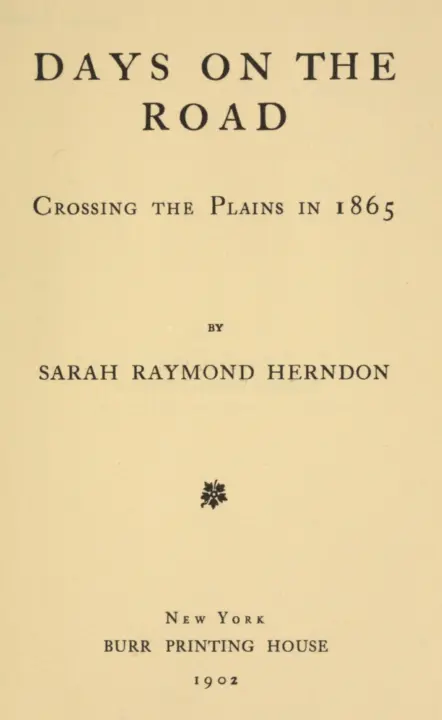
"Days on the Road: Crossing the Plains in 1865" by Sarah Raymond Herndon is a historical account written in the early 20th century. The book recounts the author's journey as a woman crossing the plains during a time of westward expansion in America, sharing her thoughts, feelings, and the experiences of her traveling companions. It explores themes of adventure, hardship, family, and the quest for a better life in the new territories. The opening of the narrative sets the stage for the journey, beginning with reflections on the decision to leave behind familiar comforts for the uncertainties of life on the frontier. The narrator contemplates the human spirit's restlessness that drives people to seek new homes and opportunities. Excited yet apprehensive, she shares the initial experiences of setting out with her family and companions, such as their first camp, discussions about the future, and the dynamics among the traveling group. As they traverse the landscape, the tone is a mix of nostalgia, humor, and trepidation, painting a vivid picture of the challenges faced by those embarking on such a perilous journey.
Introduction adapted from the source catalogue; source summaries may be automatically generated.
Free to read · English · 45,989 words · No account needed
MAKE TIME FOR A GOOD BOOK
On by default. Untick to stop anonymous reading totals. Each page counts after 10 seconds in view. How this works.
Anonymous counting is on unless you have switched it off.
“Why, how do you do, Mr. Smith? Am glad to see you, of course I am in earnest about crossing the plains, but where did you come from? I supposed you would be at the Missouri River before this time, have you turned back?”
“Oh, no, we are waiting for better roads and good company.”
“Come, go with us, I will promise you good company, and the roads will
improve.”
“Where are Cash and Neelie? I have not seen them.”
“They did not stop, when I waited to see the wagons over the
difficulties.”
“Then I have missed seeing them; was in the mill when they passed. Remember me to them. We will start again to-morrow, and will overtake you in a few days, perhaps.”
“Hope you will, good-bye until we meet again.”
“Farewell, may you enjoy as pleasant a trip as you anticipate.”
“Thank you,” and waving him good-bye, I spoke to Dick, and he cantered up the hill past the mill and the wagons. I soon caught up with Cash and Neelie.
“Guess who I saw at the mill?”
“Did you see any one we know?”
“Yes, an especial friend of yours, Cash, Bob Smith, of Liberty.”
“Oh, dear, I wish I had seen him. Was Thad Harper with him? Are they
going back home?”
“No; they are waiting for better roads and good company. I did not see Thad Harper. Bob said they will overtake us in a few days.”
“I hope they will, they would be quite an addition to our party.”
“Yes, but they won’t; do you suppose they are going to let us see them cooking and washing dishes? Not if they know themselves. Then they would have to play the agreeable once in a while, and that is what they are not going to do on a trip of this kind. I do not expect to see them, they would rather stay where they are another week than join our party.”
“I believe you are right, Neelie, for he did not say good-bye as if he expected to see me very soon.”
When it was time to stop for lunch, we found a very nice place and waited for the wagons. While at lunch we saw an emigrant wagon, drawn by three yoke of oxen, coming up the road, and were somewhat surprised to see it turn from the road and come toward our camp. It proved to be Mr. John Milburn, of Etna, and his sister Augusta. They have traveled in one day and a half the distance we have been two and a half days coming.
Your reading position is saved on this browser. Take it to another device with a library code. Reading pages adapt to text, rather than matching a printed edition.
BEHIND THE BOOK
This eBook is for the use of anyone anywhere in the United States and most other parts of the world at no cost and with almost no restrictions whatsoever. You may copy it, give it away or re-use it under the terms of the Project Gutenberg License included with this eBook or online at www.gutenberg.org. If you are not located in the United States, you will have to check the laws of the country where you are located before using this eBook. Read the source licence.
The original source file, including credits and licence, is retained by this library. Request an original-format copy at no charge. Please include the book title and Project Gutenberg identifier #62610.
KEEP YOUR CURIOSITY GOING
Wilfrid Scawen Blunt
Wilfrid Scawen Blunt

E. W. (Edgar Watson) Howe
Cécile Tormay

Moritz Busch
John L. Ransom