
The Writing of News A Handbook with Chapters on Newspaper Correspondence and Copy Reading
Charles G. (Charles Griffith) Ross
THE CLASSIC COLLECTION · 1884
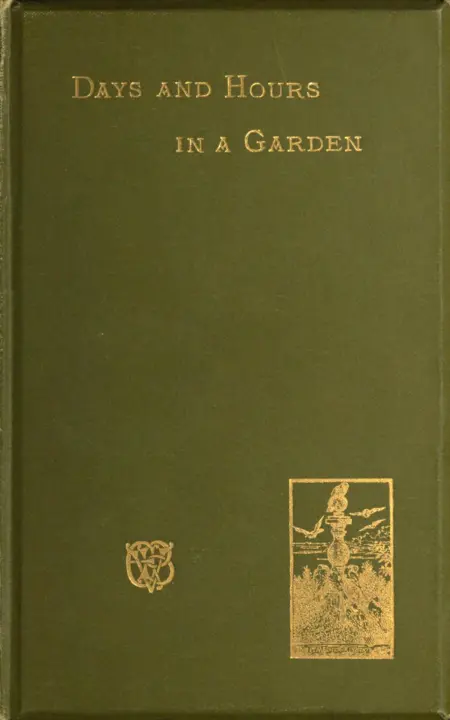
"Days and Hours in a Garden" by E. V. B. is a reflective account written in the late 19th century. This work offers a meditative exploration of gardening and nature, focusing on the daily joys and challenges of maintaining a garden. The narrative weaves personal observations about plants, wildlife, and the seasons, revealing a deep affection for the beauty and complexity of the natural world. The opening of the book sets a tranquil tone as the author shares the history of their garden, which is only eleven years old, alongside the reflections of how it has transformed and matured over time. The text paints a lively picture of the garden's inhabitants, including birds and the memories attached to the flora and fauna, while alluding to poignant reflections on change and loss. Through rich descriptions, the author captures the rhythm of nature and the cyclical changes within the garden, revealing a thoughtful appreciation of both its beauty and its inevitable transformations.
Introduction adapted from the source catalogue; source summaries may be automatically generated.
Free to read · English · 32,717 words · No account needed
MAKE TIME FOR A GOOD BOOK
On by default. Untick to stop anonymous reading totals. Each page counts after 10 seconds in view. How this works.
Anonymous counting is on unless you have switched it off.
From the south front a lot of Everlasting Pea has wound itself round between the wall and the Yew buttress, taking up fully one half of the porch. It is well named Everlasting! One has nothing to do but to dig it up, and cut and hack it away, and the next year it will appear strong and hearty and in double quantity. It takes no hint that there may be too much of a good thing! And yet, when it looks so fresh and handsome, with its large bright flowers, it would be cruel to wish it away. So let it be, to teach its lesson and to smother as it will. The white Irises are nearly over, and Wood Strawberries begin to redden under the windows. An old Maiden’s Blush Rose, covered with buds, peeps in at the dining-room window on one side, and on the other is the lovely pink of a most perfect Moss Rose. The parterr in front of the window is bedded out, of course. I know that it soon will be a blaze of well-chosen colour; but excepting the golden mount of Stonecrop in the centre, I do not take much personal interest in its summer phase. It is fortunate for the garden’s character that this should be so; for as the invention of new combinations of plants and colours would be to me impossible, this is left always in our Gardener’s hands, with full confidence that the result will be as perfect as such things can be. From the dining-room window we can also see, between the Sumac and a Box tree, near where a Pæony showers crimson on the daisies, a tiny mound of turf. It has been there since the end of last month; and under it lies the dear little favourite of nine summers--Clutie, the little black Skye terrier. She always loved the dining-room!... We can now almost walk all round the garden in deep cool shade, such growth the trees have made! The Broad Walk must always be exposed to the sun; but from the west of it, across the lawn where the old bowling-green once was, the distance from shade to shade lessens year by year as the trees grow on. There is a charming well-shaded welt along the grass, of purple Pansies and white Pinks, in two thick lines; and on the sunny side a very bright dash of Limnanthes Douglasii has made a self-sown edging. As if it enjoyed the pleasant coolness of a north-west border, one lovely double Narcissus still lingers on in her early freshness. When hot sunbeams pierce the shade, every day I think must be her last. The Spurge Laurel has relapsed into the plain dulness of its summer state, but the Iris bank upon which it grows is as lovely as heart can desire. Cedar and Copper Beech and one or two Firs cast light shadows upon the company of Irises, and help them not to wither up too quickly. The prevailing hue is lilac, with stronger tones, and yellows intermixed. Each one in turn seems loveliest, but one chief beauty (Iris pallida) has broad petals of soft grey, most delicately flushed with pink. Then there are lilacs marked with deeper lines and white with lilac edges (Iris aphylla), finely pencilled; Enchantress, and several other yellow Variegatas, with lines of red or brown; pale yellow, with the three outer petals intense velvety-purple; and one pale bluish, with deep blue-purple velvet outside, and bright yellow brush, well marked. These two are much better than gay Darius, or the handsome sullen Versailles. The sober old Marquise (Iris lurida), too--who is, however, more like Mrs. Delany in dove-coloured mode silk hood!--after long delay, is there amongst the best. Does any plant exist that loves not a corner or an edge? I think not one; so a little corner here, where a narrow grass path crosses the Iris bank into the Beechen close, is made especially lovely by the undesigned grouping of three Irises, enriched by a background of green Ferns and Beech. The centre of the group is a deep red-purple Iris (from Vesuvius), a finely coloured yellow and purple, and between them a pure white. These grow tall and stately from out their straight stiff leaves, while a little Welsh Poppy, established there by chance, brings in its crumpled lemon-gold with the happiest effect. Colour effects, wherever they appear in our garden, are seldom planned. Somehow it does not come naturally to think, “Here there shall be blue Larkspur and white Lilies,” or there red Poppies and something else. But it is quite an exquisite delight to find the most beautiful accidents of colour in unexpected places all about the garden. Then these chances may give hints, which we can take or not. At a corner behind the dovecote there is a grand crimson Pæony, mixed up with brilliant orange Marigolds, some of them black-eyed; red and yellow are splendid, if well used. Against the dark brown of a Cryptomeria Elegans stands a tall Tulip, like white china painted and streaked blood-red; at least it is over now, but I see it all the same. Then there is a patch of Welsh Poppy, growing just as one finds a patch of Gentian or white Crocus on the Alps--and with it London Pride, a mass of feathery red, growing in the same way. Under the trees, one meets a pallid Columbine, looking like a ghost, and just by chance in the lilac Iris bed occurs one rich carmine Rose. I do not even think the delicately refined colour combination of dwarf-growing Gloire de Dijon Roses and bronze Heartsease was quite intentional; they mix, however, strangely well. And the bed of pink Roses--Prevost and Jules Margottin--with the white Pink “Mrs. Sinkins,” promises to be an equal success.
Your reading position is saved on this browser. Take it to another device with a library code. Reading pages adapt to text, rather than matching a printed edition.
BEHIND THE BOOK
This eBook is for the use of anyone anywhere in the United States and most other parts of the world at no cost and with almost no restrictions whatsoever. You may copy it, give it away or re-use it under the terms of the Project Gutenberg License included with this eBook or online at www.gutenberg.org. If you are not located in the United States, you will have to check the laws of the country where you are located before using this eBook. Read the source licence.
The original source file, including credits and licence, is retained by this library. Request an original-format copy at no charge. Please include the book title and Project Gutenberg identifier #69862.
KEEP YOUR CURIOSITY GOING
Charles G. (Charles Griffith) Ross
Hannah Webster Foster

Emily Lawless
Edwin Hamlin Carr

Charles De Lano Hine
Andrew Ure