THE CLASSIC COLLECTION✦An outlaw’s diary: the CommuneCLASSIC FREE BOOKS
An outlaw’s diary: the Commune
Cécile Tormay
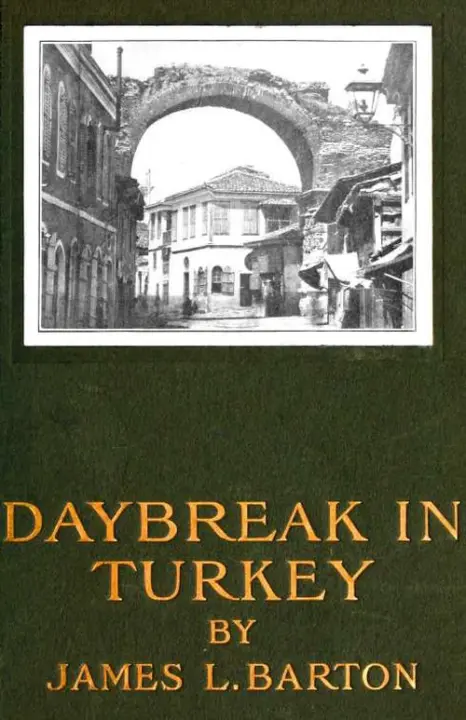
THE CLASSIC COLLECTION · 1908
"Daybreak in Turkey" by James L. Barton is a historical account written in the early 20th century. The book addresses the significant socio-political changes taking place in the Ottoman Empire during a period of transformation from absolute monarchy towards constitutional governance. The author seeks to explore the complex interactions between various ethnic and religious groups in Turkey, as well as their implications for the future of the region. The opening of the work provides context for the author's intentions, emphasizing that the material presented is not merely an attempt to gain popular acclaim amid a revolutionary backdrop, but rather a serious exploration of the historical, religious, and social dynamics affecting Turkey. Barton highlights the need for a comprehensive understanding of the empire's diverse challenges stemming from its multi-ethnic population, which includes Turks, Armenians, Greeks, and various Muslim communities. He sets the stage for an examination of how these elements come together to shape the evolving political landscape, hinting at both the hopes and the complexities of reform in Turkey.
Introduction adapted from the source catalogue; source summaries may be automatically generated.
Free to read · English · 69,746 words · No account needed
MAKE TIME FOR A GOOD BOOK
On by default. Untick to stop anonymous reading totals. Each page counts after 10 seconds in view. How this works.
Anonymous counting is on unless you have switched it off.
The Turkish empire may now be defined as covering Macedonia in Europe, extending west to Greece, northward to include Albania, Bulgaria, and Adrianople,—all of Asia Minor to the Russian and Persian borders upon the east, Syria and Arabia, with two small sections of Africa and a few islands in the Mediterranean. It exercises no actual control of Egypt, while its hold upon parts of Arabia is constantly contested by the people themselves.
The size and population of territory under direct control of Turkey are:
Europe 65,350 sq. miles; 6,130,200 inhabitants Asia 693,610 “ “ 16,898,700 “ Africa 398,900 “ “ 1,000,000 “ ————————— —————————— 1,157,860 24,028,900
Under indirect control:
Bulgaria and Eastern Roumelia 37,200 sq. miles; 3,744,300 inhabitants Bosnia, etc. 19,800 “ “ 1,591,100 “ Crete 3,330 “ “ 310,400 “ Cyprus 3,710 “ “ 237,000 “ Samos 180 “ “ 54,840 “ Egypt 400,000 “ “ 9,820,700 “ ———————— —————————— 464,220 “ “ 15,758,340 “
This makes a total area covered by both the immediate and quasi possessions of the sultan 1,622,080 square miles, with a population of 39,787,240. These are the figures given by the Statesman’s Year-Book, the best attainable authority upon the subject; but even these must be taken largely as estimates and not as the results of a careful and reliable census,—something that never takes place in Turkey.
It may be said, therefore, that at the present time the sultan of Turkey actually rules over only Constantinople, the Macedonian provinces in Europe and Asia Minor to the borders of Russia and Persia, extending south through Syria and into Arabia. This includes an area of about 704,000 square miles, and a population of about 23,500,000.
These countries directly and indirectly governed by the Turkish empire command the interest of the Biblical, classical, and historical student beyond any other part of the earth. No other land possesses so many antiquities of such priceless worth. Turkey is the stage upon which many of the best-known characters of literature and history have lived and acted. It is the battle-field where, for more than thirty-five centuries, contending civilizations and hostile religions, under ambitious leadership, have met in bloody conflict. There is hardly a section of it that has not been connected directly with some well-known historical personage or race or that has not given the setting to some event of world-wide renown. This is true from Salonica on the Ægean Sea to Persia upon the east, and from Trebizond upon the Black Sea at the north to Aden at the southern point of Arabia. The ruins of massive castles and fortresses, moats and walled cities, that tell of former strength, of pride and of conflict, are found in almost every part of the empire. Inscriptions in many languages adorn the cliffs or are built into walls now crumbling to ruin. Fragments of ancient roads with arches of bridges and of aqueducts still standing, as old as our Christian era, tell of the engineering skill of the early possessors of the land.
Your reading position is saved on this browser. Take it to another device with a library code. Reading pages adapt to text, rather than matching a printed edition.
BEHIND THE BOOK
This eBook is for the use of anyone anywhere in the United States and most other parts of the world at no cost and with almost no restrictions whatsoever. You may copy it, give it away or re-use it under the terms of the Project Gutenberg License included with this eBook or online at www.gutenberg.org. If you are not located in the United States, you will have to check the laws of the country where you are located before using this eBook. Read the source licence.
The original source file, including credits and licence, is retained by this library. Request an original-format copy at no charge. Please include the book title and Project Gutenberg identifier #61583.
KEEP YOUR CURIOSITY GOING
Cécile Tormay

Moritz Busch
John L. Ransom
Frances Wright
Cécile Tormay

Mabel Potter Daggett