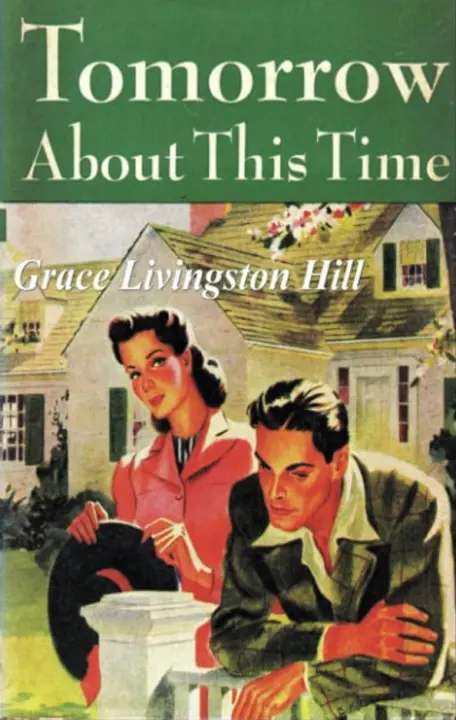
Tomorrow about this time
Grace Livingston Hill
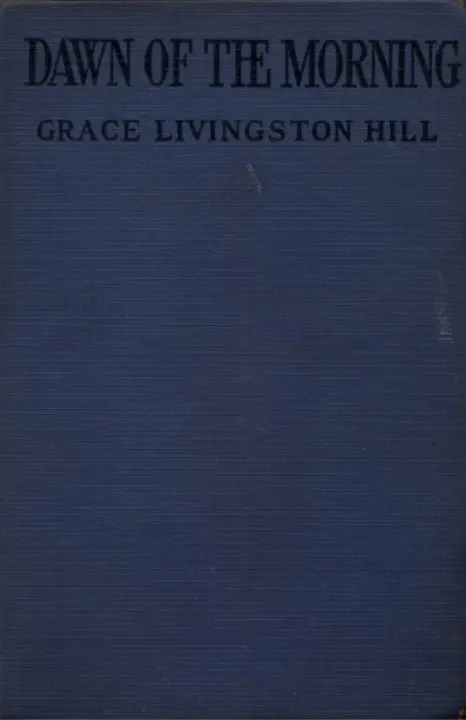
THE CLASSIC COLLECTION · 1911
"Dawn of the Morning" by Grace Livingston Hill is a novel written in the early 20th century. This poignant story revolves around the life of a young girl named Dawn Van Rensselaer, who grapples with the turmoil of her family dynamics and the lost love of her mother. Amid a backdrop of stern authority, the novel explores themes of familial betrayal, the search for identity, and the longing for belonging as Dawn faces an uncertain future tinged with unease about her father's remarriage and the impending arranged marriage awaiting her. The opening of the novel establishes a somber tone, highlighting Dawn's troubling relationship with her father and her yearning for her long-lost mother. The narrative begins by depicting Dawn's life within the confines of her father's colonial home, where she feels stifled and estranged from both her father and her cruel stepmother. Her memories are haunted by the divorce that separated her from her mother, and the little girl wrestles with her rejection of her stepmother, determining that she will never accept her new role in this fractured family. As Dawn matures, she faces the reality of an impending marriage that strikes terror into her heart, underscoring her desire to escape a life devoid of love and happiness. This narrative fosters a growing sense of tension, foreshadowing significant changes that will challenge Dawn's perceptions of love, duty, and family.
Introduction adapted from the source catalogue; source summaries may be automatically generated.
Free to read · English · 94,748 words · No account needed
MAKE TIME FOR A GOOD BOOK
On by default. Untick to stop anonymous reading totals. Each page counts after 10 seconds in view. How this works.
Anonymous counting is on unless you have switched it off.
"Oh, I guess they can do it," said Charles, with a sigh. The new railroad made him think of his wedding journey. Oh, to take it over again and never let his bride out of his sight!
Betty read on:
"Governor Howard, of Maryland, has set July 4th as a day of prayer that the cholera may decline. Governor Cass says----"
but a low moan from Charles made her fly to another column to distract
his mind:
"Here's the report of the meeting of the Foreign Mission Board in New York. Would you like to hear that? It looks interesting. The evening address was made by the Honorable Stephen Van Rensselaer. Why----" Betty stopped in dismay, but Charles answered the wonder in her tone quietly:
"Yes, Betty, Stephen Van Rensselaer is a cousin of Mr. Van Rensselaer. He is a fine speaker. Read about it."
But Charles did not attend, though Betty rattled off a lot of statistics glibly, inwardly blaming herself for constantly coming upon things that would remind Charles of his loss.
"There are twelve missions now, with fifty-five stations, under the Board. Seven are in India, two in Asia, four in the Mediterranean, seven in the Sandwich Islands, twenty-seven among the southwestern Indians, four among the northeastern Indians, and four among the Indians of New York State. There are seventy-five missionaries, four physicians, four printers, eighteen teachers, twenty farmers and mechanics, and one hundred and thirty-one females, married and single, sent out from this country."
"My! Isn't that a lot!" commented Betty.
Just below the report of the missionary meeting was a brief paragraph. She plunged into it without stopping to glance it over.
"Disappeared. A female dressed in a white straw bonnet trimmed with white satin ribbon, a black silk gown, white crepe shawl with flowered border, black silk stockings, and chocolate-colored parasol."
"Oh!" cried Betty in dismay, and then went wildly on to the next column, not daring to look at her brother:
"The Honorable William Wort has purchased a plantation in Florida, and is going to work it with hired hands. This will do more toward opening the eyes of the slaveholders than all the declamatory efforts of the free States since the adoption of the Constitution."
"That is quoted from the United States Gazette, Charles, and the editor of this paper has a long, dry-looking comment on it. Do you want to hear it?"
Betty looked uneasily at her brother, but his white face was turned
toward the wall.
"Here's an article about Barnabas Bidwell, and something about General Prosper Wetmore. Doesn't father know General Wetmore, Charles?" Betty felt she was not getting on well at all.
Your reading position is saved on this browser. Take it to another device with a library code. Reading pages adapt to text, rather than matching a printed edition.
Grace Livingston Hill
Grace Livingston Hill
Grace Livingston Hill
Grace Livingston Hill
BEHIND THE BOOK
This eBook is for the use of anyone anywhere in the United States and most other parts of the world at no cost and with almost no restrictions whatsoever. You may copy it, give it away or re-use it under the terms of the Project Gutenberg License included with this eBook or online at www.gutenberg.org. If you are not located in the United States, you will have to check the laws of the country where you are located before using this eBook. Read the source licence.
The original source file, including credits and licence, is retained by this library. Request an original-format copy at no charge. Please include the book title and Project Gutenberg identifier #37698.
KEEP YOUR CURIOSITY GOING
Coulson Kernahan

Maurice Baring
Frances Wright
Cécile Tormay

Frederic Jesup Stimson

W. H. P. (William Henry Pope) Jarvis