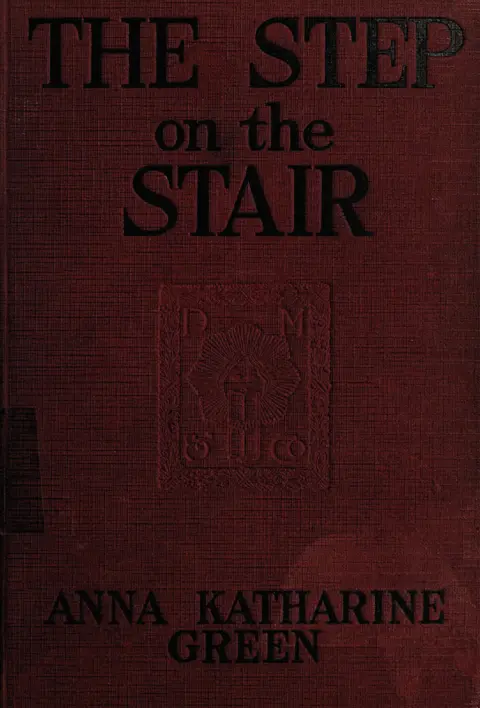
The step on the stair
Anna Katharine Green
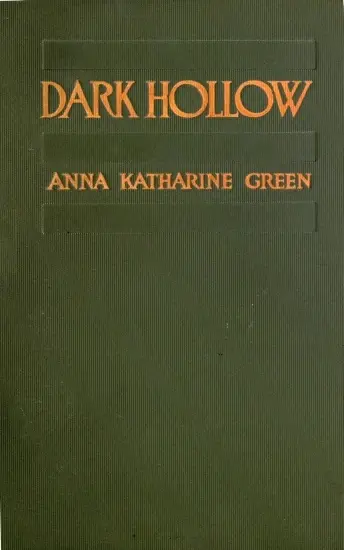
THE CLASSIC COLLECTION · 1914
"Dark Hollow" by Anna Katharine Green is a novel written during the early 20th century. The story begins in a small town where the respected Judge Ostrander has maintained an eerie isolation from society following a series of personal tragedies. The narrative centers around the mysterious events surrounding his home and the appearance of a veiled woman who enters his property, stirring up curiosity and concern among the townsfolk. As tensions rise, the community grapples with the implications of her presence and the judge's reclusive nature. At the start of the novel, we are introduced to the local gossip surrounding Judge Ostrander's home, which has remained closed off to the public for years. The opening scene highlights a small group of townspeople who notice the judge's gate ajar, an unusual occurrence that prompts speculation about the sudden intrusion. Amidst the commotion, a man named Bela, who serves as the judge's loyal caretaker, is mentioned as a central figure. The townspeople recall the judge's past sorrows, including the loss of his son and a close friend, setting the stage for the unfolding drama. Tension builds as the community decides to intrude upon the judge's sanctuary, ultimately discovering him in a cataleptic state while questions about the mysterious woman linger in the air. The opening chapters effectively set the tone for a story filled with intrigue, emotion, and the complexities of human relationships.
Introduction adapted from the source catalogue; source summaries may be automatically generated.
Free to read · English · 90,943 words · No account needed
MAKE TIME FOR A GOOD BOOK
On by default. Untick to stop anonymous reading totals. Each page counts after 10 seconds in view. How this works.
Anonymous counting is on unless you have switched it off.
"Oliver"--his voice was low but very distinct, "never have a secret; never hide within your bosom a thought you fear the world to know. If you've done wrong--if you have disobeyed the law either of God or man--seek not to hide what can never be hidden so long as God reigns or men make laws. I have suffered, as few men have suffered and kept their reason intact. Now that my wickedness is known, the whole page of my life defaced, content has come again. I am no longer a deceiver, my very worst is known."
"Oliver?"--This some minutes later. "Are we alone?"
"Quite alone, father. Mrs. Scoville is busy and Reuther--Reuther is in the room above. I can hear her light step overhead."
The judge was silent. He was gazing wistfully at the wall where hung the portrait of his young wife. He was no longer in his own room, but in the cheery front parlour. This Deborah had insisted upon. There was, therefore, nothing to distract him from the contemplation I have mentioned.
"There are things I want to say to you. Not many; you already know my story. But I do not know yours, and I cannot die till I do. What took you into the ravine that evening, Oliver, and why, having picked up the stick, did you fling it from you and fly back to the highway? For the reason I ascribed to Scoville? Tell me, that no cloud may remain between us. Let me know your heart as well as you now know mine."
The reply brought the blood back into his fading cheek.
"Father, I have already explained all this to Mr. Andrews, and now I will explain it to you. I never liked Mr. Etheridge as well as you did, and I brooded incessantly in those days over the influence which he seemed to exert over you in regard to my future career. But I never dreamed of doing him a harm, and never supposed that I could so much as attempt any argument with him on my own behalf till that very night of infernal complications and coincidences. The cause of this change was as follows: I had gone up stairs, you remember, leaving you alone with him as I knew you desired. How I came to be in the room above I don't remember, but I was there and leaning out of the window directly over the porch when you and Mr. Etheridge came out and stood in some final debate on the steps below. He was talking and you were listening, and never shall I forget the effect his words and tones had upon me. I had supposed him devoted to you, and here he was addressing you tartly and in an ungracious manner which bespoke a man very different from the one I had been taught to look upon as superior. The awe of years yielded before this display, and finding him just human like the rest of us, the courage which I had always lacked in approaching him took instant possession of me, and I determined with a boy's unreasoning impulse to subject him to a personal appeal not to add his influence to the distaste you at present felt for the career upon which I had set my heart. Nothing could have been more foolish and nothing more natural, perhaps, than the act which followed. I ran down into the ravine with the wild intention, so strangely duplicated in yourself a few minutes later, of meeting and pleading my cause with him at the bridge, but unlike you, I took the middle of the ravine for my road and not the secluded path at the side. It was this which determined our fate, father, for here I ran up against the chestnut tree, saw the stick and, catching it up without further thought than of the facility it offered for whittling, started with it down the ravine. Scoville was not in sight. The moment was the one when he had quit looking for Reuther and wandered away up the ravine. I have thought since that perhaps the glimpse he had got of his little one peering from the scene of his crime may have stirred even his guilty conscience and sent him off on this purposeless ramble; but, however this was, I did not see him or anybody else as I took my way leisurely down towards the bridge, whittling at the stick and thinking of what I should say to Mr. Etheridge when I met him. And now for Fate's final and most fatal touch! Nothing which came into my mind struck me quite favourably. The encounter which seemed such a very simple matter when I first contemplated it, began to assume quite a different aspect as the moment for it approached. By the time I had come abreast of the Hollow, I was tired of the whole business, and hearing his whistle and knowing by it that he was very near, I plunged up the slope to avoid him, and hurried straight away into town. That is my story, father. If I heard your steps approaching as I plunged across the path into which I had thrown the stick in my anger at having broken the point of my knife-blade upon it, I thought nothing of them then. Afterwards I believed them to be Scoville's, which may account to you for my silence about this whole matter both before and during the trial. I was afraid of the witness-stand and of what might be elicited from me if I once got into the hands of the lawyers. My abominable reticence in regard to his former crime would be brought up against me, and I was yet too young, too shy and uninformed to face such an ordeal of my own volition. Unhappily, I was not forced into it, and--But we will not talk of that, father."
Your reading position is saved on this browser. Take it to another device with a library code. Reading pages adapt to text, rather than matching a printed edition.
Anna Katharine Green
Anna Katharine Green
Anna Katharine Green
Anna Katharine Green
BEHIND THE BOOK
This eBook is for the use of anyone anywhere in the United States and most other parts of the world at no cost and with almost no restrictions whatsoever. You may copy it, give it away or re-use it under the terms of the Project Gutenberg License included with this eBook or online at www.gutenberg.org. If you are not located in the United States, you will have to check the laws of the country where you are located before using this eBook. Read the source licence.
The original source file, including credits and licence, is retained by this library. Request an original-format copy at no charge. Please include the book title and Project Gutenberg identifier #5121.
KEEP YOUR CURIOSITY GOING
Coulson Kernahan

Maurice Baring
Frances Wright
Cécile Tormay

Frederic Jesup Stimson

W. H. P. (William Henry Pope) Jarvis