
The lost dirigible
Ralph Henry Barbour
THE CLASSIC COLLECTION · 1915
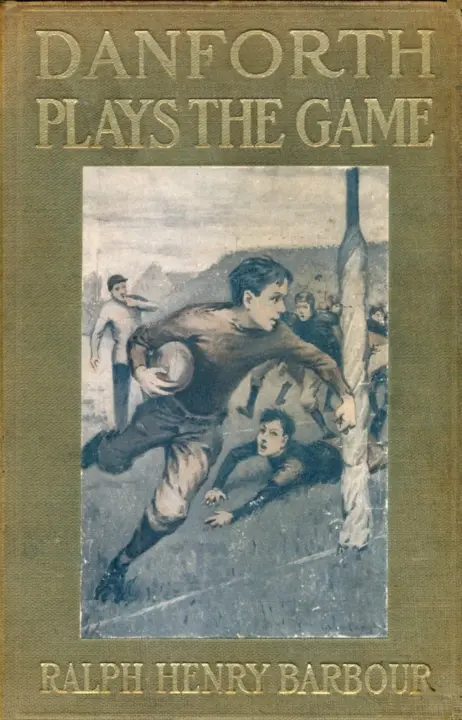
"Danforth Plays the Game: Stories for Boys Little and Big" by Ralph Henry Barbour is a collection of stories likely written in the early 20th century. The book centers on Harry Danforth, a new student at Barnstead Academy, who faces the challenges of fitting in and proving himself on the football field. The themes focus on sportsmanship, perseverance, and the trials of adolescence, appealing to young readers interested in adventure and athletics. The opening of "Danforth Plays the Game" introduces Harry as he arrives at football practice, where he faces teasing from older boys about his appearance and inexperience. Despite feeling embarrassed and out of place, Harry is eager to prove himself and hopes to earn a position on the school's football team. The narrative highlights his transition from being a novice on Squad Z to gaining confidence and recognition in more advanced squads, suggesting an overarching journey of growth and resilience. As Harry navigates friendships, rivalries, and the pressure of competition, readers are likely to find relatable moments that resonate with their own experiences.
Introduction adapted from the source catalogue; source summaries may be automatically generated.
Free to read · English · 57,227 words · No account needed
MAKE TIME FOR A GOOD BOOK
On by default. Untick to stop anonymous reading totals. Each page counts after 10 seconds in view. How this works.
Anonymous counting is on unless you have switched it off.
Pinky brightened. Jonesie looked coldly incredulous. The terrier, having failed in his hunt, sighed and returned to his rôle of interested audience. He was really a nice little dog. Clean him up, thought Jonesie, and he’d look fine. He was all white except for a dark-brown patch over his left eye and ear, which gave him a peculiarly philosophical expression. His yellow-brown eyes were bright and intelligent, and the occasional wag of that pathetic button that had once been a perfectly good tail showed friendliness. Jonesie was melting, but you’d never have suspected it. Pinky stooped and snapped his fingers and said, “Here, pup,” in a coaxing voice. The dog wagged the remains of his tail frantically, but moved not an inch. Jonesie frowned.
“Shucks, he don’t even come when he’s called!” he said.
“Not to strangers, he don’t,” replied the stableman triumphantly. “He’s got to know you first. Sign of a good dog, that is. He won’t never know but one master.” Then, with a quick glance at Pinky, “Leastway, two,” he added hurriedly.
“Let’s buy him,” urged Pinky, sotto voce.
“What’s the use? They won’t let you have dogs in dormitories. Besides, he isn’t worth any ten dollars.”
“We could keep him here at the stable,” said Pinky eagerly. “You’d board him for us, wouldn’t you?” he asked the stableman. The latter nodded hesitantly.
“I guess so. I’ve got a stall he could have.”
The boys went over and patted the dog, and the dog licked their hands and strove to reach their faces with his eager pink tongue. “Nice dogums,” said Pinky. “Didums want to belong to us?”
The dog replied to the best of his ability that he did, becoming quite
wrought up about it.
“What’s his name?” asked Jonesie.
“Well, I call him Teddy. He ain’t rightly got a name yet.”
“How much would you keep him for if we took him?”
“Well, feed’s high nowadays,” replied the man thoughtfully. “But――say a dollar and a half a week.”
Pinky whistled and looked doubtfully at his friend. Jonesie smiled compassionately on the owner of the dog.
“We weren’t thinking of having him fed on steak and mushrooms,” he explained patiently. “Just dog biscuit and a bone now and then would do, I guess.”
“Well, say a dollar, then.”
“Say four dollars a month,” returned Jonesie, “and we pay the end of
the month.”
“All right, son. What might your name happen to be?”
“Jones.”
“That so? Thought likely it was Isaacs.”
“You’re a punk thinker, then. How much will you take for the flea-trap?”
Your reading position is saved on this browser. Take it to another device with a library code. Reading pages adapt to text, rather than matching a printed edition.
Ralph Henry Barbour
Ralph Henry Barbour

Ralph Henry Barbour

Ralph Henry Barbour
BEHIND THE BOOK
This eBook is for the use of anyone anywhere in the United States and most other parts of the world at no cost and with almost no restrictions whatsoever. You may copy it, give it away or re-use it under the terms of the Project Gutenberg License included with this eBook or online at www.gutenberg.org. If you are not located in the United States, you will have to check the laws of the country where you are located before using this eBook. Read the source licence.
The original source file, including credits and licence, is retained by this library. Request an original-format copy at no charge. Please include the book title and Project Gutenberg identifier #64150.
KEEP YOUR CURIOSITY GOING

Fanny Van de Grift Stevenson

Isabel Anderson

Abby Morton Diaz
Helen Hunt Jackson
Charles King
Mary Frances Blaisdell