Discovering “Evelina”: An Old-fashioned Romance A Companion Book to “The Jessamy Bride”
Frank Frankfort Moore
THE CLASSIC COLLECTION · 1880
"Daireen" by Frank Frankfort Moore is a novel written in the late 19th century. The story revolves around Standish Macnamara, the heir to the once-illustrious Macnamara family in Munster, and his tumultuous relationship with his father, The Macnamara. As their dialogue reveals the remnants of ancestral pride and contrasting modern sensibilities, the plot unfolds with themes of love, identity, and the struggle against tradition, highlighted by Standish's affection for Daireen Gerald, a member of the upstart Gerald family. The opening of the novel introduces us to a strained father-son relationship through a humorous yet poignant exchange between The Macnamara and Standish. The Macnamara, eager to uphold his family's noble lineage, pressures Standish to pursue Daireen. However, Standish is torn between duty and his personal feelings, expressing disdain for the expectations placed upon him by his father and society. The narrative cleverly blends humor and pathos as The Macnamara’s pride and Standish's frustration ultimately set the stage for conflicts that promise to unfold, foreshadowing a deeper exploration of their characters and the societal norms surrounding them.
Introduction adapted from the source catalogue; source summaries may be automatically generated.
Free to read · English · 108,520 words · No account needed
MAKE TIME FOR A GOOD BOOK
On by default. Untick to stop anonymous reading totals. Each page counts after 10 seconds in view. How this works.
Anonymous counting is on unless you have switched it off.
“We should do it for ever,” cried Lottie. “Now, you know, my dear good Mrs. Crawford, I have been in India, and I have had experience of your picnics when we were at the hills--oh, the most delightful little affairs--every one used to look forward to them.”
Mrs. Crawford laughed gently as she patted Lottie on the cheek. “Ah, they were now and again successes, were they not? How I wish Daireen had been with us.”
“Egad, she would not be with us now, my dear,” said the major. “Eh, George, what do you say, my boy?”
“For shame, major,” cried Mrs. Crawford, glancing towards Lottie.
“Eh, what?” said the bewildered Boot Commissioner, who meant to be very gallant indeed. It was some moments before he perceived how Miss Vincent could construe his words, and then he attempted an explanation, which made matters worse. “My dear, I assure you I never meant that your attractions were not--not--ah--most attractive, they were, I assure you--you were then most attractive.”
“And so far from having waned,” said Colonel Gerald, “it would seem that every year has but----”
“Why, what on earth is the meaning of this raid of compliments on poor little me?” cried the young lady in the most artless manner, glancing from the major to the colonel with uplifted hands.
“Let us hasten to the carriages, and leave these old men to talk their nonsense to each other,” said Mrs. Crawford, putting her arm about one of the daughters of the member of the Legislative Council--a young lady who had found the companionship of Standish Macnamara quite as pleasant as her sister had the guidance of the judge's son up the ravine--and so they descended to where the carriages were waiting to take them towards Cape Town. Daireen and her father were to walk to the Dutch cottage, which was but a short distance away, and with them, of course, Standish.
“Good-bye, my dear child,” said Mrs. Crawford, embracing Daireen, while the others talked in a group. “You are looking pale, dear, but never mind; I will drive out and have a long chat with you in a couple of days,” she whispered, in a way she meant to be particularly impressive.
Then the carriage went off, and Daireen put her hand through her father's arm, and walked silently in the silent evening to the house among the aloes and Australian oaks, through whose leaves the fireflies were flitting in myriads.
“She is a good woman,” said Colonel Gerald. “An exceedingly good woman, only her long experience of the sort of girls who used to be sent out to her at India has made her rather misjudge the race, I think.”
Your reading position is saved on this browser. Take it to another device with a library code. Reading pages adapt to text, rather than matching a printed edition.
Frank Frankfort Moore
Frank Frankfort Moore
Frank Frankfort Moore
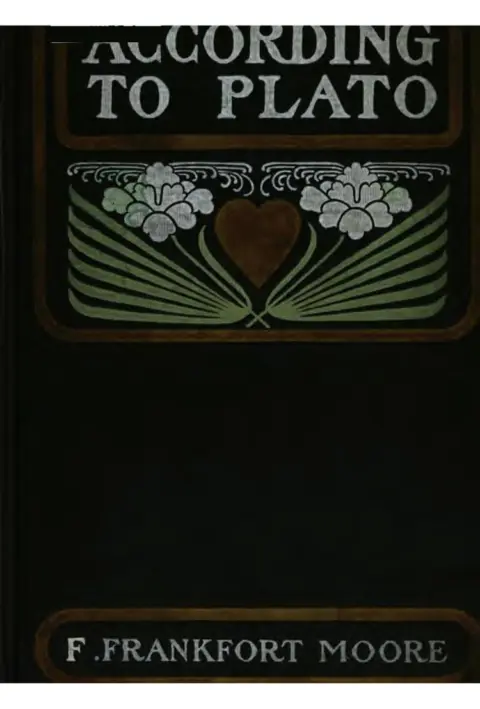
Frank Frankfort Moore
BEHIND THE BOOK
This eBook is for the use of anyone anywhere in the United States and most other parts of the world at no cost and with almost no restrictions whatsoever. You may copy it, give it away or re-use it under the terms of the Project Gutenberg License included with this eBook or online at www.gutenberg.org. If you are not located in the United States, you will have to check the laws of the country where you are located before using this eBook. Read the source licence.
The original source file, including credits and licence, is retained by this library. Request an original-format copy at no charge. Please include the book title and Project Gutenberg identifier #51938.
KEEP YOUR CURIOSITY GOING
Coulson Kernahan

Maurice Baring
Frances Wright
Cécile Tormay

Frederic Jesup Stimson

W. H. P. (William Henry Pope) Jarvis