THE CLASSIC COLLECTION✦The story of Aaron (so named) the son of Ben AliCLASSIC FREE BOOKS
The story of Aaron (so named) the son of Ben Ali
Joel Chandler Harris
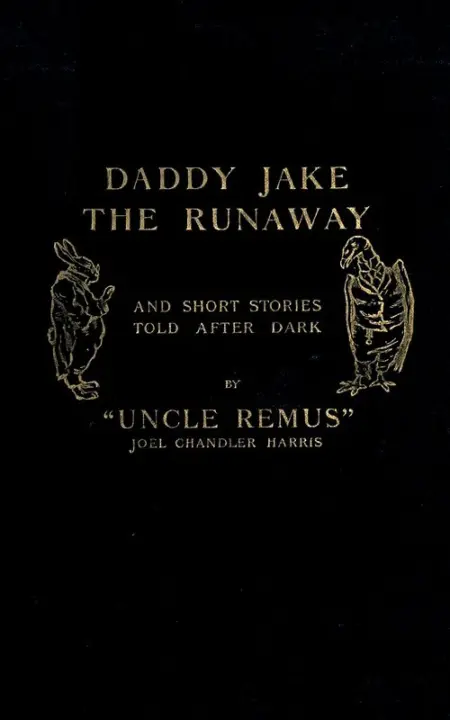
THE CLASSIC COLLECTION · 1889
"Daddy Jake the Runaway" by Joel Chandler Harris is a collection of short stories written in the late 19th century. The primary tale introduces Daddy Jake, an elderly, trusted servant on the Gaston plantation during the tumultuous period of the American Civil War. The narrative explores themes of loyalty, trust, and the complexities of relationships on the plantation, particularly through the eyes of the children Lucien and Lillian, who seek out Daddy Jake after he runs away. The opening of the book sets the stage with the sudden disappearance of Daddy Jake, who is fondly known to the plantation children. After a quarrel with the newly appointed overseer, he strikes back in self-defense and decides to flee into the woods, fearing severe repercussions under the law. As the plantation family grapples with his absence, Lucien and Lillian embark on their own adventure to find him, using a boat to drift down the river in search of their beloved Daddy Jake. Their innocent determination contrasts sharply with the adult anxieties surrounding the social and legal implications of a runaway slave during a time of war. The story unfolds with a mix of humor and heartfelt moments, painting a rich tapestry of plantation life and the bonds among its characters.
Introduction adapted from the source catalogue; source summaries may be automatically generated.
Free to read · English · 37,044 words · No account needed
MAKE TIME FOR A GOOD BOOK
On by default. Untick to stop anonymous reading totals. Each page counts after 10 seconds in view. How this works.
Anonymous counting is on unless you have switched it off.
Mr. Cosby sighed, and turned away. “Well,” said he, “I hope niggers ’s got souls, but I know right p’int-blank that they ain’t got no hearts.”
Now, what was Big Sam laughing at?
He was laughing because he had found out where Lucien and Lillian were. How did he find out? In the simplest manner imaginable. Sandy Bill and Big Sam were sitting in Mr. Cosby’s back yard eating their breakfast, while little Willyum was eating his in the kitchen. It was the first time the two older negroes had had an opportunity of talking together since they started from home the day before.
“Sam,” said Sandy Bill, “did you see whar de chillun landed w’en we come ’long des a’ter sun-up dis mornin’?”
“Dat I didn’t,” said Sam, wiping his mouth with the back of his hand—“dat I didn’t, an’ ef I had I’d a hollered out ter Marster.”
“Dat w’at I wuz feared un,” said Sandy Bill.
“Feared er what?” asked Big Sam.
“Feared you’d holler at Marster ef you seed whar dey landed. Dat how come I ter run foul er yo’ boat.”
“Look yer, nigger man, you ain’t done gone ’stracted, is you?”
“Shoo, chile! don’t talk ter me ’bout gwine ’stracted. I got ez much sense ez Ole Zip Coon.”
“Den whyn’t you tell Marster? Ain’t you done see how he troubled in he
min’?”
“I done see dat, en it makes me feel bad; but t’er folks got trouble, too, lots wuss’n Marster.”
“Is dey los’ der chillun?”
“Yes—Lord! dey done los’ eve’ybody. But Marster ain’t los’ no chillun
yit.”
“Den wat we doin’ way down yer?” asked Big Sam in an angry tone.
“Le’ me tell you,” said Sandy Bill, laying his hand on Big Sam’s shoulder; “le’ me tell you. Right cross dar fum whar I run foul er yo’ boat is de biggest cane-brake in all creation.”
“I know ’im,” said Big Sam. “Dey calls ’im Hudson’s cane-brake.”
“Now you talkin’,” said Sandy Bill. “Well, ef you go dar you ’ll fin’ right in the middle er dat cane-brake a heap er niggers dat you got ’quaintance wid—Randall Spivey, an’ Crazy Sue, an’ Cupid Mitchell, an’ Isaiah Little—dey er all dar; an’ ole man Jake, he dar too.”
“Look yer, nigger,” Sam exclaimed, “how you know?”
“I sent ’im dar. He come by me in de fiel’ an’ tole me he done kilt de overseer, an’ I up an’ tell ’im, I did, ‘Make fer Hudson’s cane-brake,’ an’ dar ’s right whar he went.”
Your reading position is saved on this browser. Take it to another device with a library code. Reading pages adapt to text, rather than matching a printed edition.
Joel Chandler Harris
Joel Chandler Harris
Joel Chandler Harris
Joel Chandler Harris
BEHIND THE BOOK
This eBook is for the use of anyone anywhere in the United States and most other parts of the world at no cost and with almost no restrictions whatsoever. You may copy it, give it away or re-use it under the terms of the Project Gutenberg License included with this eBook or online at www.gutenberg.org. If you are not located in the United States, you will have to check the laws of the country where you are located before using this eBook. Read the source licence.
The original source file, including credits and licence, is retained by this library. Request an original-format copy at no charge. Please include the book title and Project Gutenberg identifier #60804.
KEEP YOUR CURIOSITY GOING
Cécile Tormay

Moritz Busch
Coulson Kernahan
John L. Ransom

Maurice Baring
Frances Wright