THE CLASSIC COLLECTION✦An outlaw’s diary: the CommuneCLASSIC FREE BOOKS
An outlaw’s diary: the Commune
Cécile Tormay
THE CLASSIC COLLECTION · 1886
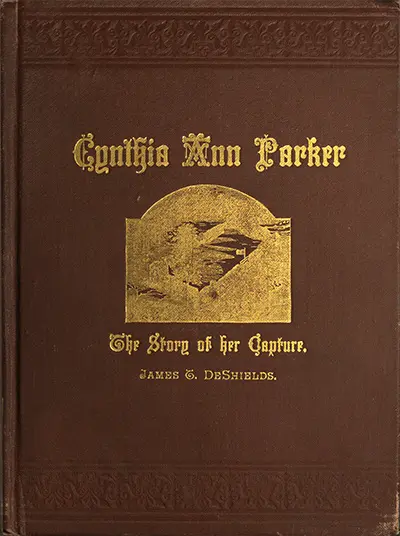
"Cynthia Ann Parker" by James T. DeShields is a historical account written in the late 19th century. The narrative focuses on the life of Cynthia Ann Parker, particularly detailing her capture during the massacre at Parker's Fort, her time spent as a captive among the Comanche tribes, and her eventual recapture by Texian Rangers. Through a blend of factual storytelling and dramatic events, the book explores themes of survival, cultural identity, and the tragic intersection of Native American and settler histories. The opening of the book sets the stage by describing the Parker family's early settlement in Texas and the devastating attack by Comanche and Kiowa tribes that led to the massacre at Parker's Fort in 1836. Cynthia Ann, only nine years old at the time, and her younger brother John are captured during this violence, while their family suffers severe casualties. As the chapter unfolds, it introduces the fort's defense, the sheer chaos of the attack, and the subsequent flight of the survivors. This tumultuous beginning establishes a historical context for Cynthia Ann's later adaptation to Comanche life, showcasing the harsh realities faced by the early settlers and the complexities of her later existence as both a white woman and a Comanche wife.
Introduction adapted from the source catalogue; source summaries may be automatically generated.
Free to read · English · 17,828 words · No account needed
MAKE TIME FOR A GOOD BOOK
On by default. Untick to stop anonymous reading totals. Each page counts after 10 seconds in view. How this works.
Anonymous counting is on unless you have switched it off.
“On the 18th of December, 1860, while marching up Pease river, I had some suspicions that Indians were in the vicinity, by reason of the buffalo that came running in great numbers from the north towards us, and while my command moved in the low ground I visited all neighboring high points to make discoveries. On one of these sand hills I found four fresh pony tracks, and being satisfied that Indian videtts had just gone, I galloped forward about a mile to a higher point, and riding to the top, to my inexpressable surprise, found myself within 200 yards of a Comanche village, located on a small stream winding around the base of the hill. It was a most happy circumstance that a piercing north wind was blowing, bearing with it clouds of sand, and my presence was unobserved and the surprise complete. By signaling my men as I stood concealed, they reached me without being discovered by the Indians, who were busy packing up preparatory to a move. By this time the Indians mounted and moved off north across the level plain. My command, with the detachment of the Second Cavalry, had out-marched and become separated from the citizen command, which left me about sixty men. In making disposition for attack, the sergeant and his twenty men were sent at a gallop, behind a chain of sand hills, to encompass them in and cut off their retreat, while with forty men I charged. The attack was so sudden that a considerable number were killed before they could prepare for defense. They fled precipitately right into the presence of the sergeant and his men. Here they met with a warm reception, and finding themselves completely encompassed, every one fled his own way, and was hotly pursued and hard pressed.
“The chief of the party, Peta Nocona, a noted warrior of great repute, with a young girl about fifteen years of age mounted on his horse behind him, and Cynthia Ann Parker, with a girl child about two years of age in her arms and mounted on a fleet pony, fled together, while Lieut. Tom. Kelliheir and I pursued them. After running about a mile Killiheir ran up by the side of Cynthia’s horse, and I was in the act of shooting when she held up her child and stopped. I kept on after the chief and about a half a mile further, when in about twenty yards of him I fired my pistol, striking the girl (whom I supposed to be a man, as she rode like one, and only her head was visible above the buffalo robe with which she was wrapped) near the heart, killing her instantly, and the same ball would have killed both but for the shield of the chief, which hung down, covering his back. When the girl fell from the horse she pulled him off also, but he caught on his feet, and before steadying himself, my horse, running at full speed, was very nearly upon top of him, when he was struck with an arrow, which caused him to fall to pitching or ‘bucking,’ and it was with great difficulty that I kept my saddle, and in the meantime, narrowly escaped several arrows coming in quick succession from the chief’s bow. Being at such disadvantage he would have killed me in a few minutes but for a random shot from my pistol (while I was clinging with my left hand to the pommel of my saddle) which broke his right arm at the elbow, completely disabling him. My horse then became quiet, and I shot the chief twice through the body, whereupon he deliberately walked to a small tree, the only one in sight, and leaning against it, began to sing a wild, wierd song. At this time my Mexican servant, who had once been a captive with the Comanches and spoke their language as fluently as his mother tongue, came up, in company with two of my men. I then summoned the chief to surrender, but he promptly treated every overture with contempt, and signalized this declaration with a savage attempt to thrust me with the lance which he held in his left hand. I could only look upon him with pity and admiration. For, deplorable as was his situation, with no chance of escape, his party utterly destroyed, his wife and child captured in his sight, he was undaunted by the fate that awaited him, and as he seemed to prefer death to life, I directed the Mexican to end his misery by a charge of buck-shot from the gun which he carried. Taking up his accouterments, which I subsequently sent Gov. Houston, to be deposited in the archives at Austin, we rode back to Cynthia Ann and Killiheir, and found him bitterly cursing himself for having run his pet horse so hard after an ‘old squaw.’ She was very dirty, both in her scanty garments and her person. But as soon as I looked on her face, I said, ‘Why, Tom, this is a white woman, Indians do not have blue eyes.’ On the way to the village, where my men were assembling with the spoils, and a large caballado of ‘Indian ponies,’ I discovered an Indian boy about nine years of age, secreted in the grass. Expecting to be killed, he began crying, but I made him mount behind me, and carried him along. And when in after years I frequently proposed to send him to his people, he steadfastly refused to go, and died in McLennan county last year.
Your reading position is saved on this browser. Take it to another device with a library code. Reading pages adapt to text, rather than matching a printed edition.
BEHIND THE BOOK
This eBook is for the use of anyone anywhere in the United States and most other parts of the world at no cost and with almost no restrictions whatsoever. You may copy it, give it away or re-use it under the terms of the Project Gutenberg License included with this eBook or online at www.gutenberg.org. If you are not located in the United States, you will have to check the laws of the country where you are located before using this eBook. Read the source licence.
The original source file, including credits and licence, is retained by this library. Request an original-format copy at no charge. Please include the book title and Project Gutenberg identifier #55857.
KEEP YOUR CURIOSITY GOING
Cécile Tormay

Moritz Busch
John L. Ransom
Frances Wright
Cécile Tormay

Mabel Potter Daggett