THE CLASSIC COLLECTION✦A dead man’s diaryCLASSIC FREE BOOKS
A dead man’s diary
Coulson Kernahan
THE CLASSIC COLLECTION · 1909
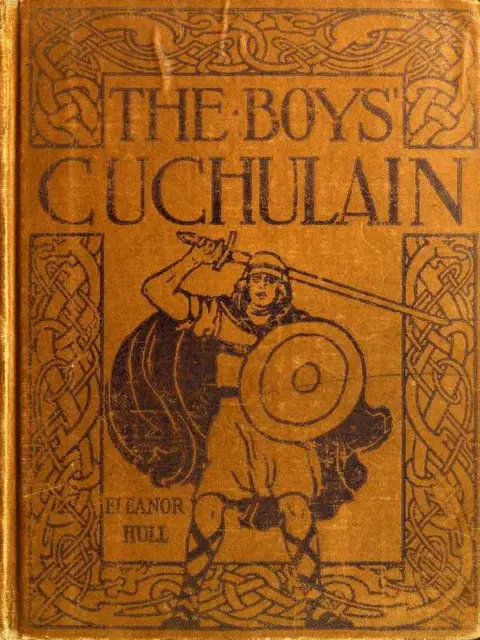
"Cuchulain, the Hound of Ulster" by Eleanor Hull is a retelling of ancient Irish legends and myths written in the early 20th century. This narrative centers on the legendary hero Cuchulain, a young warrior known for his incredible feats and tragic destiny, as he becomes embroiled in the conflicts of Ulster and encounters key figures like Conor, King of Ulster, and Queen Meave of Connaught. The story explores themes of chivalry, duty, and the harsh realities of warfare in early Irish society. At the start of the book, we are introduced to the political landscape of ancient Ireland, particularly the rivalry between King Conor of Ulster and Queen Meave of Connaught. The narrative elaborates on how Conor ascended to the throne through his ambitious mother, Ness, and the subsequent tensions that arise with Fergus mac Roy, the former king. As the characters strategize for war, Queen Meave seeks the advice of a prophetic Druid who forewarns her of a formidable young warrior named Cuchulain. Notably, Cuchulain's early life is depicted through anecdotes of his extraordinary childhood feats, showcasing his unmatched prowess and foreshadowing the legendary role he is destined to play in the unfolding conflicts.
Introduction adapted from the source catalogue; source summaries may be automatically generated.
Free to read · English · 80,401 words · No account needed
MAKE TIME FOR A GOOD BOOK
On by default. Untick to stop anonymous reading totals. Each page counts after 10 seconds in view. How this works.
Anonymous counting is on unless you have switched it off.
We may, then, take it that these tales were formed about the beginning of our era, although the earliest written documents that we have of them are not earlier than the eleventh and twelfth century. Between the time of their invention for the entertainment of the chiefs and kings of Ireland to the time of their incorporation in the great books which contain the bulk of the tales, they were handed down by word of mouth, every bard and professional story-teller (of whom there was at least one in every great man’s house) being obliged to know by heart a great number of these romances, and prepared at any moment to recite those which he might be called upon to give. In the course of centuries of recitation certain changes crept in, but in the main they come to us much as they were originally recited. In some tales, of which we have a number of copies of different ages, we can trace these changes and notice the additions and modifications that have been made.
Over a hundred distinct tales belonging to this one cycle alone are known to have existed, and of a great number of them one or more copies have come down to us, differing more or less from each other.
The old story-tellers who handed down the romantic tales of Ireland handled their material in a very free manner, expanding and altering as suited their own poetic feeling and the audience they addressed. A reciter of poetic power fearlessly re-arranged, enlarged or condensed. As a general rule, the older the form of a story the shorter, terser, and more barbaric is its character. In the long tale of the Táin bó Cuailgne, which forms the central subject of the whole cycle, the arrangement of the episodes and the number of incidents introduced is quite different in the oldest copy we have of it, that found in the compilation called (from the particular piece of parchment on which it was written) the “Book of the Dun (or Brown) Cow,” compiled in 1100 in the monastery of Clonmacnois on the Shannon, from the version in the Book of Leinster, a great vellum book drawn up and written for Dermot mac Morrough, the King of Leinster who invited Strongbow and the Normans to come over from Wales half a century later. The oldest form of the story is often the more manly and self-restrained; there is a tendency, as time goes on, not only to soften down the more barbarous and rougher portions, but to emphasise the pathetic and moving scenes, and to add touches of symbolism and imagination. Though they lack the brief dignity of the older versions, the more recent copies are often more attractive and full of poetry. For instance, we have in this book drawn largely on some comparatively recent (seventeenth-eighteenth century) MSS. in the British Museum, not hitherto translated, for the details (many of them full of poetic imagination) of the history of Cuchulain’s journey into Shadowland to learn feats of bravery,[1] and in the account of his death and the incidents that immediately follow it. In the different versions of the former story, the name of the country to which Cuchulain went is variously given as Alba or Scotland, Scythia, and the “Land of Scáthach,” i.e. the home of the woman-warrior from whom he learned. It is evident that Scythia is only a mistake for Scáthach, made by some scribe and copied by others. Scáth means a “Shadow,” and probably the original idea was purely symbolic, meaning that the hero had passed beyond the bounds of human knowledge into an invisible world of mystery called Shadowland. The writer of the copy that I have used returns to this original idea, and the whole story, in his hands, becomes symbolic and imaginative. So also, in the account of Cuchulain’s death, the modern scribe introduces new details which add to the beauty and striking effect of this most touching episode. To my mind the scribes, in making these additions, acted in a perfectly legitimate manner, and I have not hesitated in this book, which does not aim at being a text-book, but a book written for the pleasure of the young, to follow their example. I have freely, in minor points, re-arranged or pruned the tales, adding details from different sources as suited my purpose, and occasionally expanding an imaginative suggestion indicated, but not worked out, by the scribe. But I have seldom allowed myself deliberately to alter a story, or to introduce anything not found somewhere in the tales as they have come down to us. An exception is the story of Cuchulain’s visit to fairy-land, commonly known as the “Sickbed of Cuchulain,” which required a slight modification of the central situation in order to make it suitable reading for any children into whose hands the book might chance to fall; it was too poetic and touching an episode to be altogether omitted without loss to the conception of the cycle as a whole.
Your reading position is saved on this browser. Take it to another device with a library code. Reading pages adapt to text, rather than matching a printed edition.
BEHIND THE BOOK
This eBook is for the use of anyone anywhere in the United States and most other parts of the world at no cost and with almost no restrictions whatsoever. You may copy it, give it away or re-use it under the terms of the Project Gutenberg License included with this eBook or online at www.gutenberg.org. If you are not located in the United States, you will have to check the laws of the country where you are located before using this eBook. Read the source licence.
The original source file, including credits and licence, is retained by this library. Request an original-format copy at no charge. Please include the book title and Project Gutenberg identifier #52963.
KEEP YOUR CURIOSITY GOING
Coulson Kernahan

Maurice Baring
Frances Wright
Cécile Tormay
Francis Greenleaf Allinson & Anne C. E. (Anne Crosby Emery) Allinson

Frederic Jesup Stimson