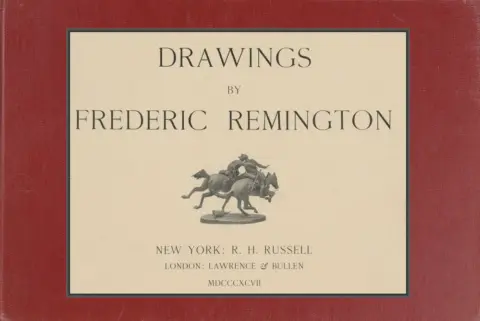
Drawings
Frederic Remington
THE CLASSIC COLLECTION · 1898
"Crooked Trails" by Frederic Remington is a historical account written in the late 19th century. The book explores the rugged and turbulent life of the Texas Rangers, depicting their encounters with Comanche warriors and Mexican bandits during a time of conflict and lawlessness in the American Southwest. Through vivid storytelling and illustrations, Remington captures the spirit of adventure and the harsh realities of frontier life. At the start of "Crooked Trails," readers are introduced to Colonel "Rip" Ford, an aging Texas Ranger who shares tales of his exploits from decades past. During an intimate gathering at the San Antonio Club, the Colonel recounts thrilling moments of battles against Native Americans and bandits, emphasizing the fierce resilience and bravery of the Rangers as they fought to protect their territory. As the narrative unfolds, the text portrays not only the valor and camaraderie of these early Texas lawmen but also the complexities of their encounters with both friends and foes in a landscape fraught with violence and survival.
Introduction adapted from the source catalogue; source summaries may be automatically generated.
Free to read · English · 34,784 words · No account needed
MAKE TIME FOR A GOOD BOOK
On by default. Untick to stop anonymous reading totals. Each page counts after 10 seconds in view. How this works.
Anonymous counting is on unless you have switched it off.
In 1753 he met his end at the hands of western Indians in the French interest, who shot him as he was helping to carry a battoe, and he was burried in the wilderness. My mother then returned to her home in Massassachusetts, journeying with a party of traders but I staid with the Dutch on these frontiers because I had learned the indian trade and liked the country. Not having any chances, I had little book learning in my youth, having to this day a regret concerning it. I read a few books, but fear I had a narrow knowledge of things outside the Dutch settlements. On the frontiers, for that matter, few people had much skill with the pen, nor was much needed. The axe and rifle, the paddle and pack being more to our hands in those rough days. To prosper though, men weare shrewd-headed enough. I have never seen that books helped people to trade sharper. Shortly afterwards our trade fell away, for the French had embroiled the Indians against us. Crown Point was the Place from which the Indians in their interest had been fitted out to go against our settlements, so a design was formed by His Majesty the British King to dispossess them of that place. Troops were levid in the Province and the war began. The Frenchers had the best of the fighting.
Our frontiers were beset with the Canada indians so that it was not safe to go about in the country at all. I was working for Peter Vrooman, a trader, and was living at his house on the Mohawk. One Sunday morning I found a negro boy who was shot through the body with two balls as he was hunting for stray sheep, and all this within half a mile of Vrooman's house. Then an express came up the valley who left word that the Province was levying troops at Albany to fight the French, and I took my pay from Vrooman saying that I would go to Albany for a soldier. Another young man and myself paddled down to Albany, and we both enlisted in the York levies. We drawed our ammunition, tents, kettles, bowls and knives at the Albany flats, and were drilled by an officer who had been in her Majesty's Service. One man was given five hundred lashes for enlisting in some Connecticut troops, and the orders said that any man who should leave His Majesty's service without a Regular discharge should suffer Death. The restraint which was put upon me by this military life was not to my liking, and I was in a mortal dread of the whippings which men were constantly receiving for breaches of the discipline. I felt that I could not survive the shame of being trussed up and lashed before men's eyes, but I did also have a great mind to fight the French which kept me along. One day came an order to prepare a list of officers and men who were willing to go scouting and be freed from other duty, and after some time I got my name put down, for I was thought too young, but I said I knew the woods, had often been to Andiatirocte (or Lake George as it had then become the fashion to call it) and they let me go. It was dangerous work, for reports came every day of how our Rangers suffered up country at the hands of the cruel savages from Canada, but it is impossible to play at bowls without meeting some rubs. A party of us proceeded up river to join Captain Rogers at Fort Edward, and we were put to camp on an Island. This was in October of the year 1757. We found the Rangers were rough borderers like ourselvs, mostly Hampshire men well used to the woods and much accustomed to the Enemy. They dressed in the fashion of those times in skin and grey duffle hunting frocks, and were well armed. Rogers himself was a doughty man and had a reputation as a bold Ranger leader. The men declaired that following him was sore service, but that he most always met with great success. The Fort was garrissoned by His Majesty's soldiers, and I did not conceive that they were much fitted for bush-ranging, which I afterwards found to be the case, but they would always fight well enough, though often to no good purpose, which was not their fault so much as the headstrong leadership which persisted in making them come to close quarters while at a disadvantage. There were great numbers of pack horses coming and going with stores, and many officers in gold lace and red coats were riding about directing here and there. I can remember that I had a great interest in this concourse of men, for up to that time I had not seen much of the world outside of the wilderness. There was terror of the Canada indians who had come down to our borders hunting for scalps--for these were continually lurking near the cantanements to waylay the unwary. I had got acquainted with a Hampshire borderer who had passed his life on the Canada frontier, where he had fought indians and been captured by them. I had seen much of indians and knew their silent forest habits when hunting, so that I felt that when they were after human beings they would be no mean adversaries, but I had never hunted them or they me.
Your reading position is saved on this browser. Take it to another device with a library code. Reading pages adapt to text, rather than matching a printed edition.
Frederic Remington
Frederic Remington
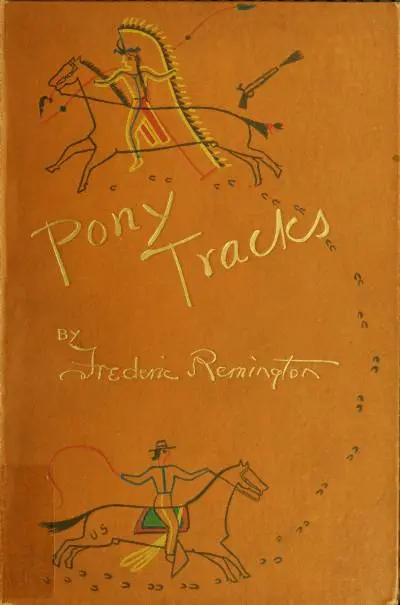
Frederic Remington
Frederic Remington
BEHIND THE BOOK
This eBook is for the use of anyone anywhere in the United States and most other parts of the world at no cost and with almost no restrictions whatsoever. You may copy it, give it away or re-use it under the terms of the Project Gutenberg License included with this eBook or online at www.gutenberg.org. If you are not located in the United States, you will have to check the laws of the country where you are located before using this eBook. Read the source licence.
The original source file, including credits and licence, is retained by this library. Request an original-format copy at no charge. Please include the book title and Project Gutenberg identifier #7867.
KEEP YOUR CURIOSITY GOING
Cécile Tormay

Moritz Busch
Coulson Kernahan
John L. Ransom

Maurice Baring
Frances Wright